
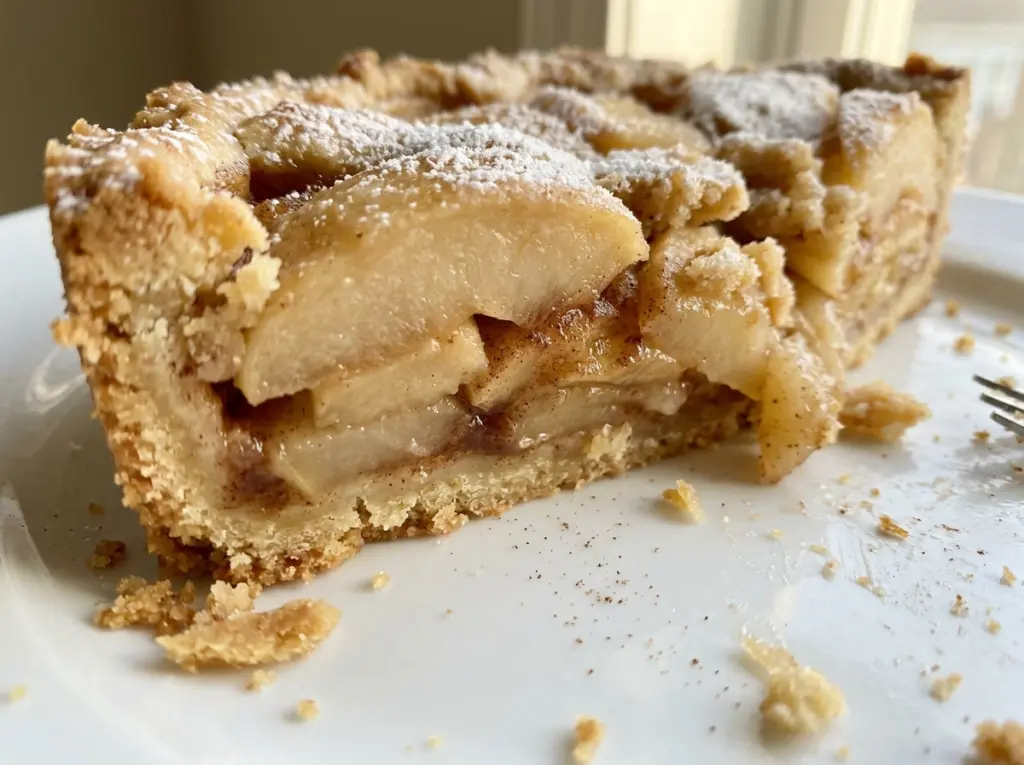
As the torte bakes, the custard rises softly around the apple slices, while the almonds on top turn lightly golden. The contrast is what I look forward to: tender, cinnamon-scented apples, a creamy topping, and a buttery crust that holds each slice.
I make the crust first and give it a short bake before adding the filling. That head start matters here because the apples and custard both bring moisture; the crust has a chance to set before either touches it. Firm apples keep their shape as they bake, and a little cornstarch helps catch the juices released in the oven.
This German Baked Apple Christmas Torte is rich without feeling heavy, with raisins tucked among the apples and a gentle tang from the sour cream. Let it cool before slicing, and you’ll get neat wedges with fruit and custard all the way to the bottom.
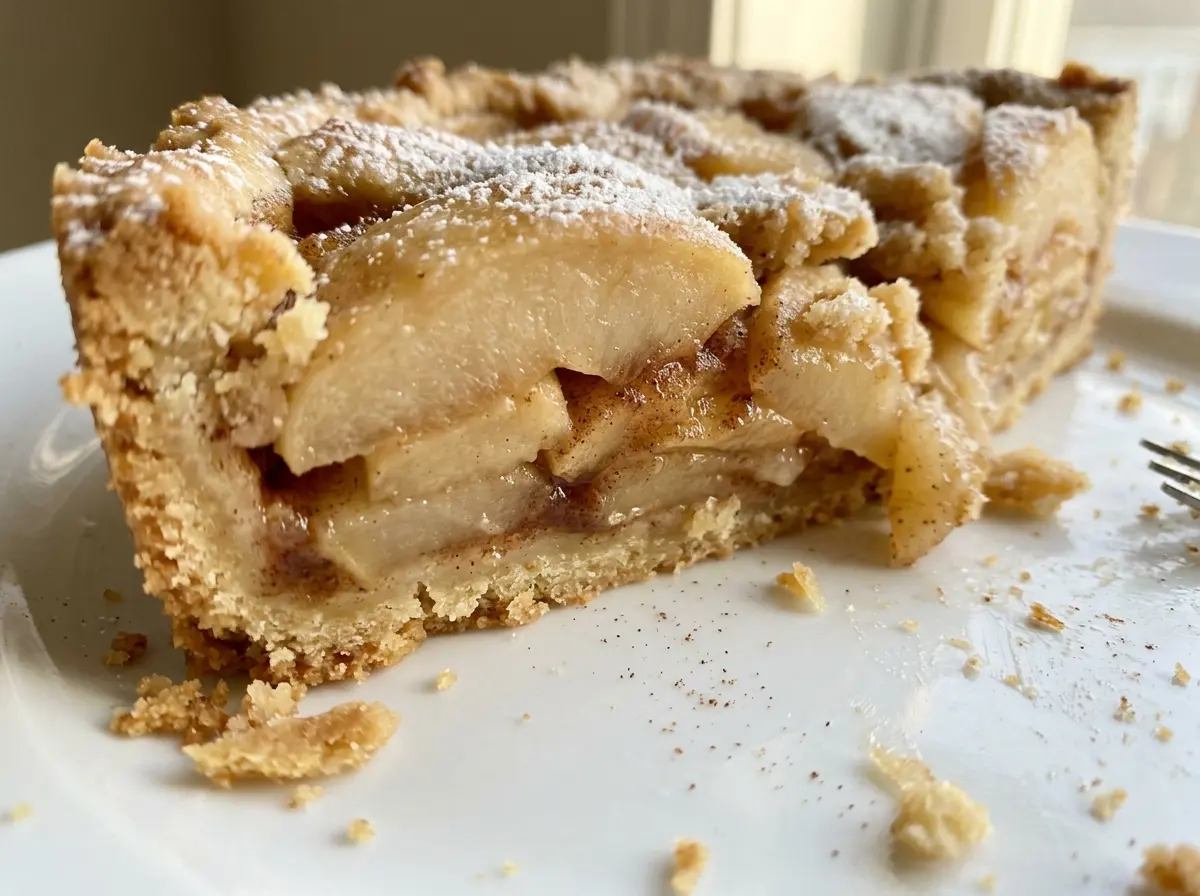
Kitchen Note
Give the torte its full cooling time before you release the springform sides. The custard continues to firm as it cools, so cutting too early is the quickest way to lose those clean slices.
Save this German Baked Apple Christmas Torte for its cinnamon apples, creamy custard, and buttery sliceable crust.
Why This Apple Torte Needs a Partially Baked Crust
A filled apple tart can turn soggy when fruit juices and custard soak straight into raw pastry. This torte avoids that by baking the shell on its own first. The flour and butter have time to set into a sturdy base before the filling goes in, so the finished crust can support the fruit and creamy topping instead of becoming damp underneath.
The crust shouldn’t be deeply browned at this stage. It only needs to look dry and just start to take on color; it will bake again once the custard is poured in. Pie weights hold the bottom in place while the sides set, and the brief bake without the weights dries the base. Skipping that second part leaves a less-set surface under the filling, while pushing the crust too dark now can make the edges overbake later. That pale, dry shell is the balance this torte needs.
What Makes the Apple Filling and Custard Work
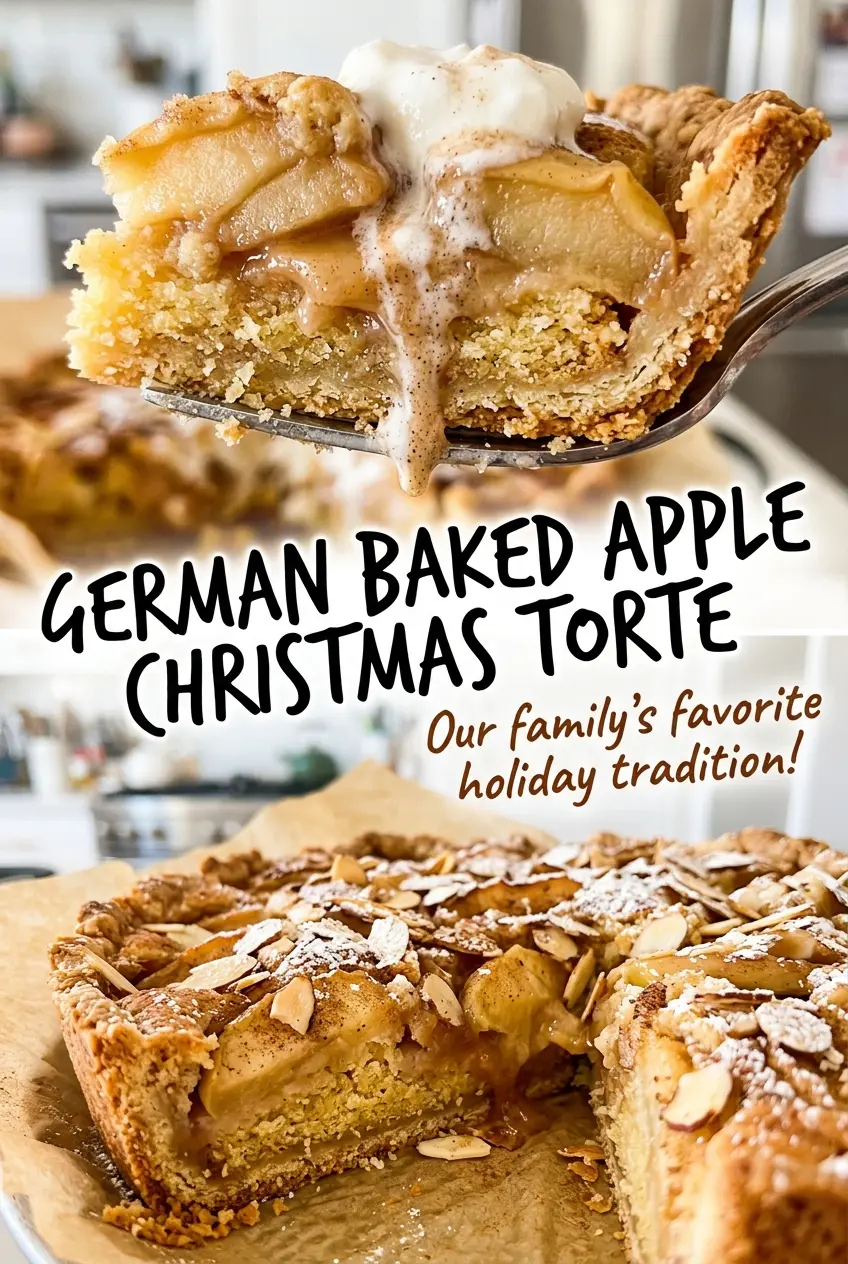
- Firm apples — They hold their shape instead of collapsing into sauce beneath the custard. Choose apples that feel solid and slice them thinly so they become tender within the bake. Peeling and coring before slicing also makes the filling easier to portion neatly.
- Cornstarch — This thickens the juice that comes out of the apples and helps keep it from pooling at the bottom of the crust. Keep it in the filling; leaving it out makes the fruit wetter. Toss the slices thoroughly so the starch doesn’t sit in dry clumps.
- Sour cream and heavy cream — Sour cream gives the custard a pleasant tang, while heavy cream rounds it out and keeps the topping rich. Full-fat sour cream is the best choice for a smooth, substantial custard. Full-fat plain Greek yogurt can replace the sour cream one-for-one; expect a slightly tangier result.
- Cold unsalted butter — Cold pieces cut into the flour create the crumbly pastry texture. There’s no need for an expensive butter here, but keep it cold while working it in; softened butter blends into the flour differently and makes the dough harder to handle.
- Eggs — The yolk helps bind the pastry, and the whole eggs set the custard around the apples. Use large eggs as listed so the custard sets to the intended consistency. Whisk the custard mixture until smooth before pouring, rather than leaving streaks of sour cream or egg.
Building the Torte in Four Stages
Bring the Pastry Together and Chill It
Heat the oven to 375°F and grease the bottom and sides of a 9-inch springform pan with the teaspoon of butter. Whisk the flour, sugar, and salt, then cut in the remaining butter until the mixture looks like coarse crumbs. Stir in the egg yolk and cold water just until the dough holds together; stop once it comes together instead of kneading it smooth. Press it over the bottom and about 1 1/2 inches up the sides, then refrigerate for 30 minutes.
Bake the Shell Until Dry
Line the chilled crust with parchment and fill it with pie weights. Bake for 15 minutes, then carefully remove the parchment and weights and bake for 5 minutes more. Look for a dry surface that’s just beginning to turn golden, not a deeply browned crust. If the dough has a small crack, press a bit of pastry over it before adding the filling so custard has less chance to seep through.
Coat and Arrange the Apples
Toss the peeled, cored, thinly sliced apples with lemon juice, raisins, brown sugar, cinnamon, nutmeg, and cornstarch. Turn the fruit until the spices and starch are distributed rather than clinging to a few slices. Arrange the mixture evenly in the baked shell so the apple layer isn’t piled high in the middle. Even distribution helps the custard settle around the fruit as it bakes.
Pour, Bake, and Let the Custard Set
Reduce the oven to 350°F. Whisk the eggs, sour cream, heavy cream, sugar, and vanilla until smooth, then pour the custard evenly over the apples and scatter the sliced almonds on top. Bake for 55 to 70 minutes, until the apples are tender and the custard is set with a center temperature of 160°F. The center is the last part to finish, so check its temperature rather than relying only on a browned top. Cool the torte in its pan on a wire rack before releasing the sides and slicing.
Three Easy Ways to Adapt This Apple Torte
Use dried cranberries in place of raisins
Swap the raisins for the same amount of dried cranberries. They bring a sharper, fruitier bite against the creamy custard, so the filling tastes a little less sweet.
Make the crust gluten-free
Use a cup-for-cup gluten-free all-purpose baking blend that includes xanthan gum in place of the all-purpose flour. The crust will be more delicate and may crumble more readily when sliced, but pressing it into the pan rather than rolling it keeps it manageable.
Replace the almonds with pecans
Use the same amount of chopped pecans instead of sliced almonds. They give the top a deeper, buttery crunch; chop them small enough to scatter evenly over the custard.
Storage and Reheating
- Refrigerator: Cover and refrigerate leftovers for 3 to 4 days. The crust softens a little as it sits, but the custard stays creamy.
- Freezer: Freezing isn’t recommended; the custard can turn grainy as it thaws, and the apples may release extra moisture.
- Reheating: Warm slices in a 300°F oven until the center reaches 165°F. Avoid high heat, which can make the custard tough around the edges before the middle warms through.
Questions That Come Up While Baking This Torte
German Baked Apple Christmas Torte
Ingredients
Equipment
Method
- Heat the oven to 375°F and grease the bottom and sides of a 9-inch springform pan with 1 teaspoon of the butter.
- Whisk the flour, sugar, and salt in a bowl.
- Cut in the remaining butter until the mixture resembles coarse crumbs.
- Stir in the egg yolk and cold water until the dough holds together.
- Press the dough evenly over the bottom and about 1 1/2 inches up the sides of the pan.
- Refrigerate for 30 minutes.
- Line the crust with parchment paper and fill with pie weights.
- Bake for 15 minutes, then remove the parchment and weights and bake for 5 minutes more, until the crust looks dry and is just beginning to turn golden.
- Toss the apples with the lemon juice, raisins, brown sugar, cinnamon, nutmeg, and cornstarch.
- Arrange the apple mixture evenly in the crust.
- Reduce the oven to 350°F.
- Whisk the eggs, sour cream, heavy cream, sugar, and vanilla until smooth.
- Pour the custard evenly over the apples.
- Sprinkle the sliced almonds over the top.
- Bake for 55 to 70 minutes, until the apples are tender and the custard is set with a center temperature of 160°F.
- Cool the torte in the pan on a wire rack for at least 2 hours before releasing the springform sides and slicing.




