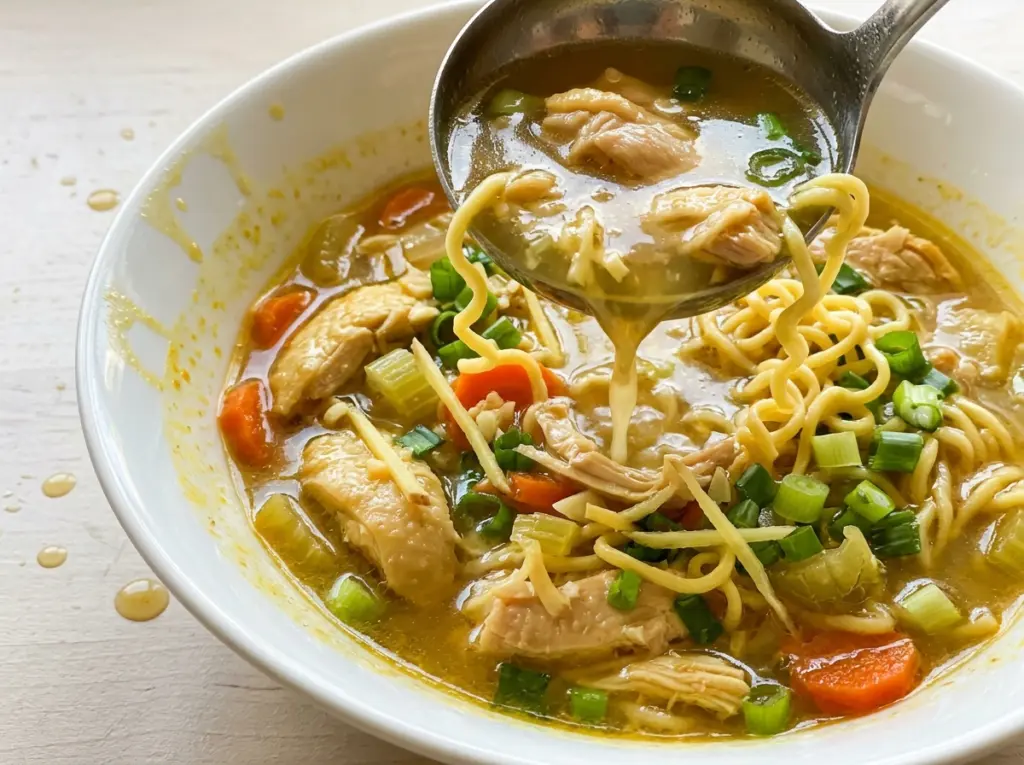
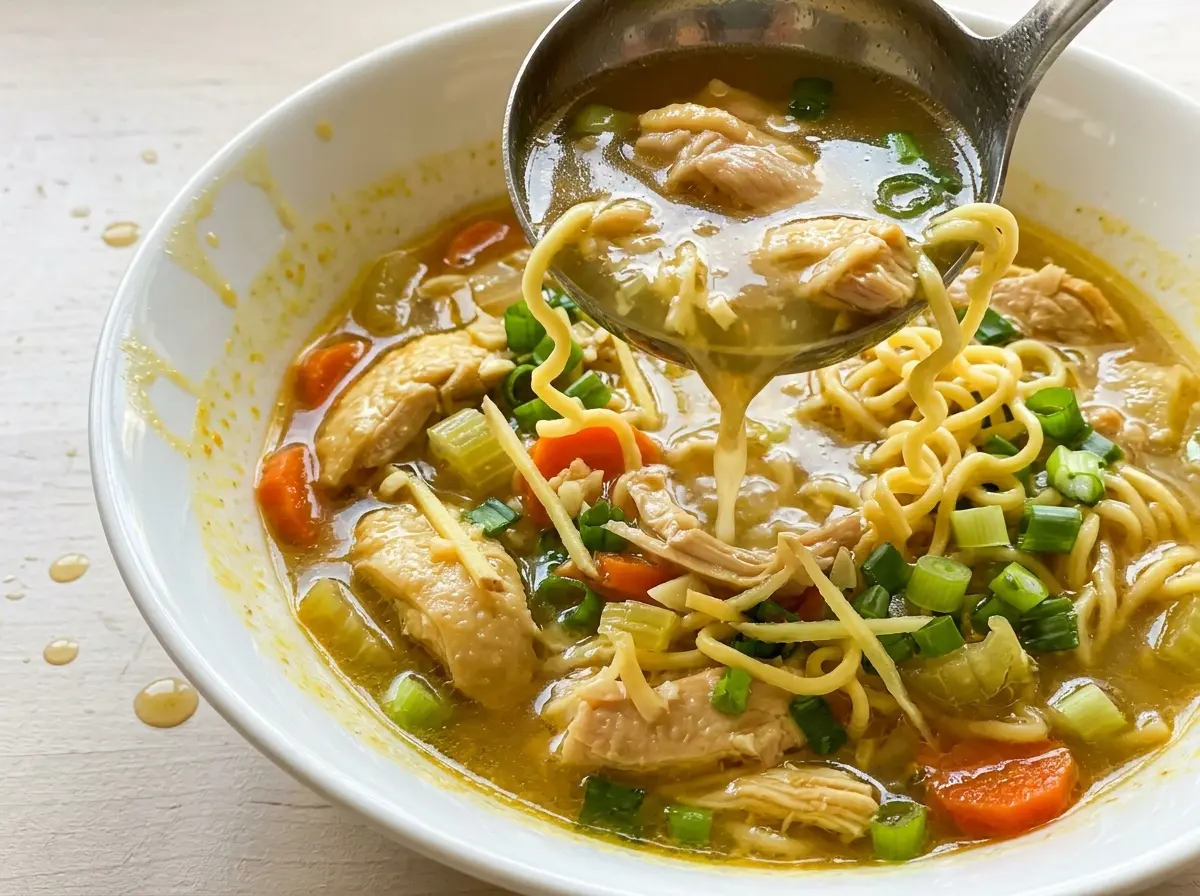
Once the broth reaches a gentle simmer, the ginger and garlic start to perfume the whole pot, and the chicken cooks right alongside the vegetables. That’s the moment this soup begins to feel like more than chicken noodle soup with a little extra seasoning. Ginger Garlic Chicken Noodle Soup has a savory, warming broth, tender shredded chicken, and wide noodles that make each bowl feel like a meal.
I keep the chicken thighs whole while they simmer, then shred them after a short rest. It’s a simple choice, but it means the chicken cooks gently in the broth instead of getting stirred around with the vegetables and noodles. The vegetables soften first, the ginger and garlic go in just long enough to turn fragrant, and the noodles cook in the same pot. The finished soup is full of tender noodles, fresh green onion, and chicken in a broth that tastes like ginger and garlic from the first spoonful.
Kitchen Note
Give the thighs their full five-minute rest before shredding. They’ll still be warm, but the brief pause makes them easier to handle and pull apart with two forks.
Save this Ginger Garlic Chicken Noodle Soup for a night when you want tender shredded chicken and a gingery broth in one comforting pot.
Why These Chicken Thighs Simmer Whole Before They’re Shredded
It might seem quicker to cut the chicken into small pieces before it goes into the pot. For this soup, keeping the thighs whole gives you a more forgiving simmer. Small pieces can cook through quickly while you’re still waiting for the vegetables and broth to come together; whole thighs give you a clear moment to check the thickest piece, lift the meat out, and shred it separately.
That order also keeps the noodles from getting tangled around chicken as they cook. The broth gets the full simmer with the chicken in it, then the meat comes back after the noodles are tender. Each ingredient gets its own short stretch of attention, instead of asking the chicken to cook through while the noodles soften in the same busy pot.
Use a gentle simmer rather than letting the broth boil hard once the chicken is in. A few steady bubbles are enough. If the surface is churning, lower the heat; a rolling boil can make it harder to keep the chicken tender and control the cooking. This is a straightforward soup, but the order makes the pot easier to manage.
What Ginger, Broth, and Wide Noodles Bring to This Soup

- Fresh ginger and garlic — Grated fresh ginger gives the broth a bright, clean warmth, while minced garlic brings a more savory aroma. Fresh ingredients matter here because they’re cooked briefly, not long enough to lose their distinct character. Add them after the vegetables have started to soften so they perfume the oil without sitting in the pot for the whole simmer.
- Low-sodium chicken broth — It gives you room to season the soup with soy sauce and kosher salt without starting from an overly salty base. A dependable everyday broth works well; there’s no need for a specialty stock. The broth is the soup’s main liquid, so choose one whose flavor you like on its own.
- Soy sauce — It adds a savory note that rounds out the chicken broth and ginger. It’s a small amount, but leaving it out will make the soup taste less layered. If you need a gluten-free bowl, the variation below explains how to swap it.
- Boneless, skinless chicken thighs — Thighs stay tender through the simmer and shred easily once cooked. Since they’ll be pulled apart before serving, uniform trimming isn’t necessary; just use boneless, skinless pieces so there’s no bone or skin to remove later.
- Wide egg noodles — Their broad shape gives the soup a substantial bite and holds up well during the brief cook in the broth. Check the package timing because noodle brands and shapes can vary. The noodles should be tender before the chicken and green onions go back into the pot.
- Onion, carrots, and celery — This trio creates a savory, gently sweet base. Slice the carrots and celery evenly so they soften at roughly the same pace, and dice the onion small enough to blend into a spoonful of soup.
How to Build the Soup in the Right Order
Soften the Vegetables First
Warm the neutral oil in a 6-quart Dutch oven over medium heat, then add the diced onion, sliced carrots, and sliced celery. Cook for 5–6 minutes, stirring occasionally, until the vegetables are beginning to soften. They shouldn’t need to be completely tender yet; they’ll keep cooking in the broth. Stir from the bottom so the onion doesn’t sit in one spot.
Let the Ginger and Garlic Turn Fragrant
Stir in the grated ginger and minced garlic after the vegetables have softened. Cook for about 30 seconds, stirring, until you can smell both clearly. This brief cook wakes up their aroma without leaving them in the hot pot long enough to scorch. Have the broth ready to add next.
Simmer the Chicken, Then Shred It
Add the chicken broth, soy sauce, kosher salt, black pepper, and whole chicken thighs. Bring the pot to a boil over high heat, then reduce the heat to maintain a gentle simmer and cook uncovered for 15–20 minutes. Check the thickest piece of chicken; it needs to reach 165°F. Transfer the cooked thighs to a plate, let them rest for 5 minutes, and shred them with two forks.
Cook the Noodles and Finish the Pot
Bring the broth back to a boil before adding the wide egg noodles. Cook them according to the package directions, usually 6–8 minutes, until tender; start checking at the earlier end of the package’s range. Stir the shredded chicken and thinly sliced green onions into the soup. Let everything simmer together for 1 minute, then serve while the noodles are tender and the green onions still taste fresh.
Two Useful Ways to Adapt This Pot of Chicken Noodle Soup
Make It Gluten-Free
Replace the wide egg noodles with gluten-free noodles and use gluten-free tamari in place of the soy sauce. Choose a low-sodium chicken broth that’s labeled gluten-free, too. Follow the noodle package’s cooking time; gluten-free noodles can soften at a different pace, so use tenderness rather than the usual 6–8 minutes as your cue.
Make a Noodle-Free, Broth-Forward Soup
Leave out the egg noodles and finish the broth with the shredded chicken and green onions. The soup will be lighter and more focused on the chicken, vegetables, and ginger-garlic broth, rather than having the hearty, starchy feel of a noodle soup. The rest of the cooking method stays the same.
Storage and Reheating
- Refrigerator: Store leftovers in a covered container for 3–4 days. The noodles will continue to absorb broth and soften as they sit.
- Freezer: Freeze the soup in airtight containers for up to 2–3 months. The noodles may be softer after thawing, but the soup is still suitable for reheating.
- Reheating: Warm leftovers gently in a saucepan over medium-low heat, stirring occasionally, until hot throughout. Avoid a hard boil, which can make the noodles overly soft.
Questions That Come Up When Making This Chicken Noodle Soup
Ginger Garlic Chicken Noodle Soup
Ingredients
Equipment
Method
- Heat the oil in a 6-quart Dutch oven over medium heat.
- Add the onion, carrots, and celery and cook, stirring occasionally, until beginning to soften, 5–6 minutes.
- Stir in the ginger and garlic and cook until fragrant, about 30 seconds.
- Add the broth, soy sauce, salt, pepper, and chicken.
- Bring to a boil over high heat.
- Reduce the heat to maintain a gentle simmer and cook uncovered for 15–20 minutes, until the thickest piece of chicken reaches 165°F.
- Transfer the chicken to a plate and let it rest for 5 minutes.
- Shred the chicken with two forks.
- Bring the broth to a boil.
- Add the egg noodles and cook according to the package directions, usually 6–8 minutes, until tender.
- Stir the shredded chicken and green onions into the soup and simmer for 1 minute before serving.