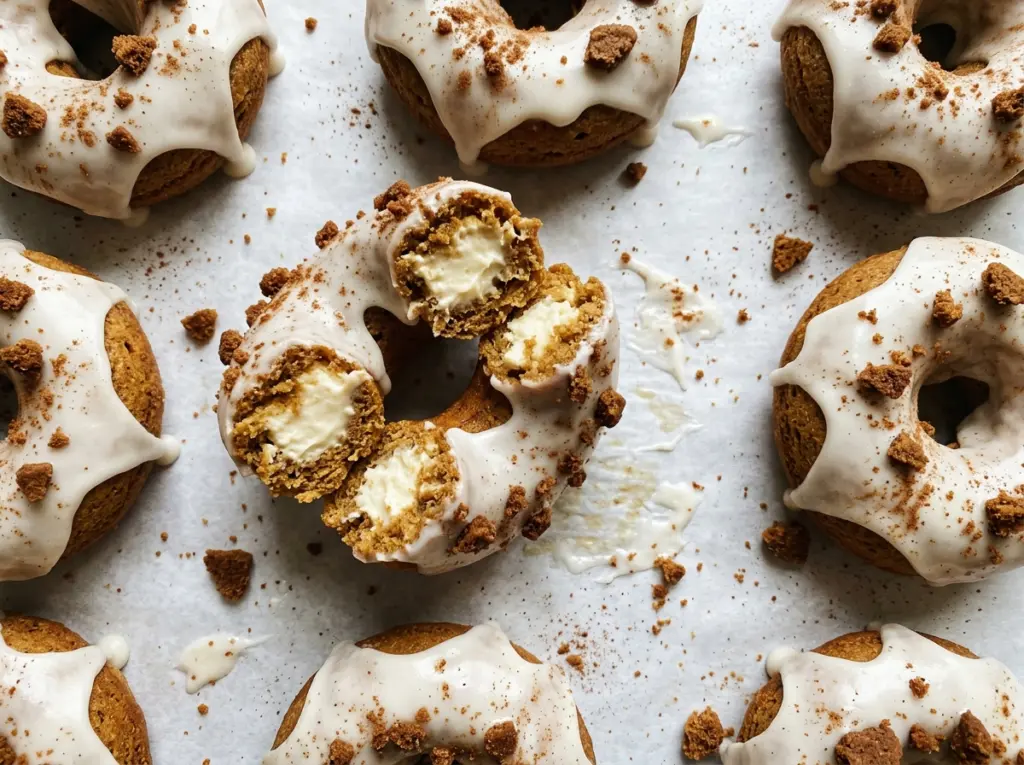
When a pan of these comes out of the oven, the tops spring back under a light touch and the kitchen smells like ginger, cinnamon, and molasses. I like that the batter bakes into tender little rings without the fuss of frying, and the cheesecake glaze gives each one a creamy finish. These gingerbread cheesecake donuts are a nice change from the usual glazed cake donut, with a warm spice flavor that still lets the tangy cream cheese come through.
Molasses gives the donuts their deep gingerbread flavor, but it also makes the batter thick, so I keep the mixing gentle once the wet and dry ingredients meet. Stir just until the last dry streaks disappear. That small restraint keeps the crumb tender rather than chewy, and the standard donut pans give the batter room to bake evenly into neat rings. Once they’re completely cool, the smooth glaze sets into a soft, sweet layer across the tops.
Kitchen Note
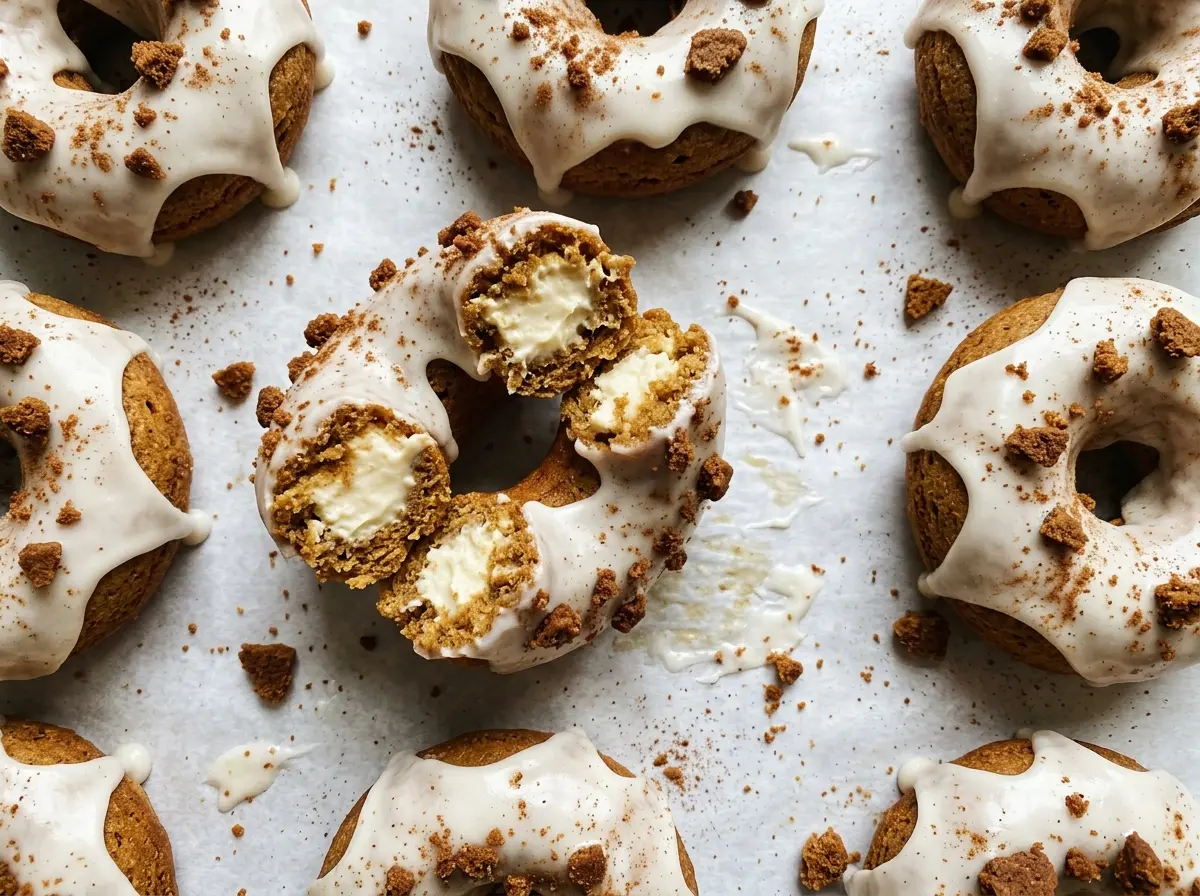
Start checking at 10 minutes, then press one donut lightly with a fingertip. When it springs back, take the pans out; waiting for a deep brown top can dry out these tender donuts.
Save these gingerbread cheesecake donuts for a spiced bake with tender centers and a smooth cream cheese glaze.
Why These Donuts Need a Gentle Hand After the Molasses Goes In
Molasses brings the familiar deep, slightly bittersweet gingerbread taste, but it also makes this batter heavier than a plain cake-donut batter. The baking powder and baking soda both have a job here: they help lift that rich mixture as it bakes. Whisking them evenly through the flour and spices before adding the wet ingredients gives them a chance to do that job throughout each donut, instead of leaving pockets that bake up unevenly.
After the flour mixture goes into the bowl, switch from whisking to stirring. Stop as soon as there are no dry streaks. A few small lumps are less of a problem than an overworked batter; continued mixing develops the flour’s gluten and can make the baked crumb firm or chewy. The batter should look thick, not silky smooth. Portion it gently into the wells rather than trying to beat out every bump, and you’ll keep the donuts light enough to balance the glaze.
What Molasses and Cream Cheese Bring to These Gingerbread Donuts
- Unsulphured molasses — This supplies the deep gingerbread character and moisture. Choose the unsulphured kind called for here; a strongly flavored blackstrap molasses isn’t a close flavor match. There’s no need for a specialty brand.
- Ground ginger, cinnamon, nutmeg, and cloves — The blend gives the donuts their layered warmth rather than a one-note ginger taste. Fresh, fragrant spices matter more than an expensive label; if a jar smells faint, the finished donuts will too.
- Light brown sugar — Its gentle molasses note supports the gingerbread flavor while sweetening the crumb. Break up any hard clumps before mixing so they don’t linger in the batter.
- All-purpose flour and the leaveners — Flour gives the donuts structure, while baking powder and baking soda keep the crumb from feeling heavy. Measure the flour without packing it down, and whisk the dry ingredients thoroughly so the leaveners and spices are distributed.
- Whole milk, egg, and unsalted butter — These bring moisture, richness, and structure to the batter. Let the melted butter cool before whisking it with the egg so it doesn’t warm the mixture; ordinary grocery-store butter and milk work well.
- Cream cheese and powdered sugar — Cream cheese gives the glaze its tangy cheesecake taste, while powdered sugar makes it sweet and smooth. Softened cream cheese is essential for a lump-free glaze; a standard grocery-store package is fine.
- Vanilla extract — A little rounds out both the spiced batter and the glaze. Use the extract you already keep for baking; no special variety is needed.
From Thick Batter to Smoothly Glazed Donuts
Whisk the Spices Through the Dry Ingredients
Heat the oven to 350°F and grease two standard 6-cavity donut pans. In a medium bowl, whisk the flour, brown sugar, baking powder, baking soda, ginger, cinnamon, nutmeg, cloves, and salt until the spices look evenly dispersed. Break up any visible brown sugar clumps as you whisk. An even mixture now means you won’t have to overwork the batter later.
Bring the Wet and Dry Mixtures Together
In a large bowl, whisk the egg, whole milk, molasses, cooled melted butter, and vanilla until combined. Add the flour mixture and stir just until no dry streaks remain. The mixture will be thick, which is expected for these donuts. Don’t keep stirring to make it perfectly smooth.
Fill the Wells and Bake for Spring-Back Centers
Divide the batter among the 12 prepared wells, filling each about two-thirds full. Keeping the fill level consistent helps the donuts bake at the same pace and leaves room for them to rise. Bake for 10 to 12 minutes, checking for donuts that spring back when lightly pressed. If the surface stays indented, give them another minute and check again.
Cool the Donuts Before Glazing
Leave the donuts in their pans for 5 minutes, then transfer them to a wire rack. Let them cool completely before adding the glaze. Warm donuts can soften the cream cheese mixture and make it slide rather than cling to the tops. The rack lets air circulate around the rings as they cool.
Beat a Smooth Glaze and Dip the Tops
Beat the softened cream cheese in a medium bowl until smooth. Beat in the powdered sugar, vanilla, and whole milk until the glaze is smooth and cohesive, scraping the bowl if needed. Dip the tops of the cooled donuts into the glaze, then return them to the rack. Let the glaze stand until set, about 15 minutes.
Two Ways to Change the Finish Without Losing the Gingerbread
A less-sweet batch with plain tops
Bake the donuts with the same batter and leave off the cheesecake glaze. The ginger, cinnamon, and molasses come through more directly, and the crumb stays tender without the creamy finish. This is the simplest option when you want a less-sweet donut.
A fine drizzle instead of a dipped top
Make the glaze as written, then spoon it over the cooled donuts in narrow lines rather than dipping them. The cheesecake flavor stays, but more of the spiced surface shows through and each bite gets a lighter coating. Let the lines set on the rack before stacking the donuts.
Storage and Reheating
- Refrigerator: Keep glazed donuts in an airtight container for up to 3 days. The chilled crumb will feel firmer, and the glaze may soften or become tacky.
- Freezer: Freeze the donuts without glaze. Wrap them individually, place them in an airtight freezer container, and use within 2 months for the best texture; thaw before glazing.
- Reheating: Warm an unglazed donut briefly in the microwave if you like it warm, then glaze it after it cools. Don’t microwave a glazed donut, since the cream cheese glaze will soften and run.
Questions That Come Up While Making Gingerbread Cheesecake Donuts
Gingerbread Cheesecake Donuts
Ingredients
Equipment
Method
- Heat the oven to 350°F.
- Grease two 6-cavity standard donut pans.
- In a medium bowl, whisk together the flour, brown sugar, baking powder, baking soda, ginger, cinnamon, nutmeg, cloves, and salt.
- In a large bowl, whisk the egg, milk, molasses, melted butter, and vanilla until combined.
- Stir in the flour mixture just until no dry streaks remain.
- Divide the batter among the 12 donut wells, filling each about 2/3 full.
- Bake for 10 to 12 minutes, until the donuts spring back when lightly pressed.
- Cool the donuts in the pans for 5 minutes.
- Transfer them to a wire rack and cool completely.
- Beat the cream cheese in a medium bowl until smooth.
- Beat in the powdered sugar, vanilla, and milk until smooth.
- Dip the tops of the cooled donuts into the glaze.
- Let them stand on the rack until the glaze sets, about 15 minutes.