
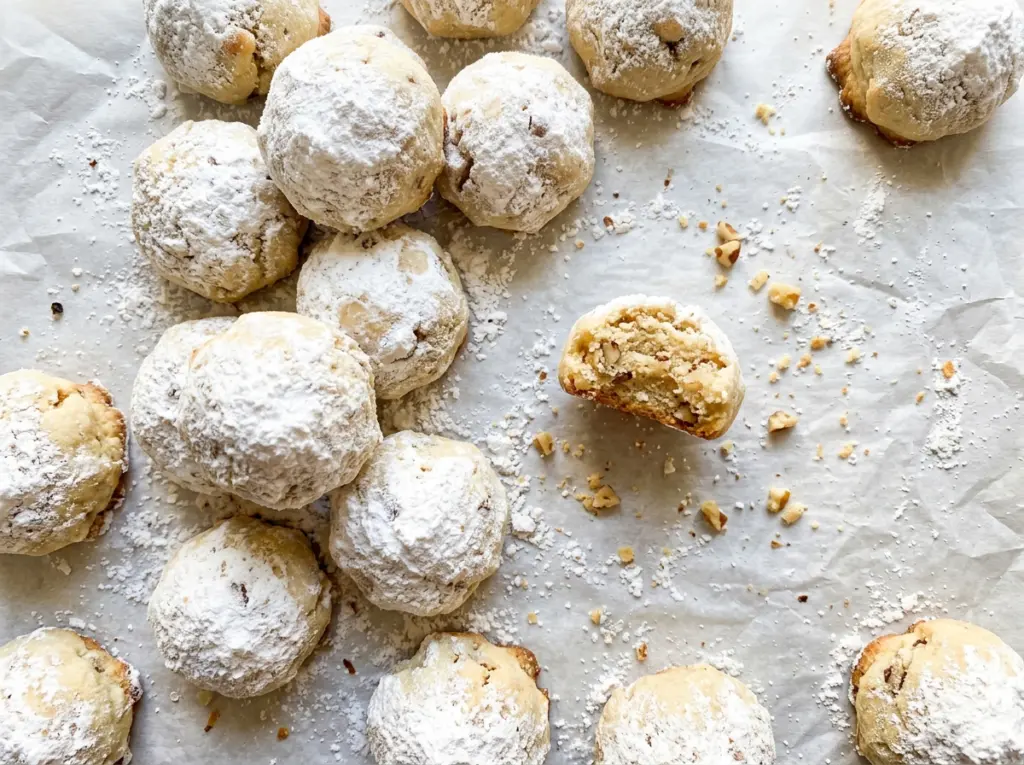
When the cookies come out of the oven, they’re set and lightly golden underneath, but the tops still look pale. That’s exactly what I want for these gluten free snowball cookies: a delicate, tender bite instead of a dry, browned cookie. The pecans add a little crunch, and the powdered sugar gives each round its familiar snowy finish.
Gluten-free dough can feel softer before it’s chilled, so I give it the full 30 minutes in the refrigerator before scooping. That makes it easier to roll neat balls without adding extra flour, which can leave the finished cookies dry. With the dough firm and the pecans finely chopped, each bite stays buttery and tender beneath its sugar coating.
Kitchen Note
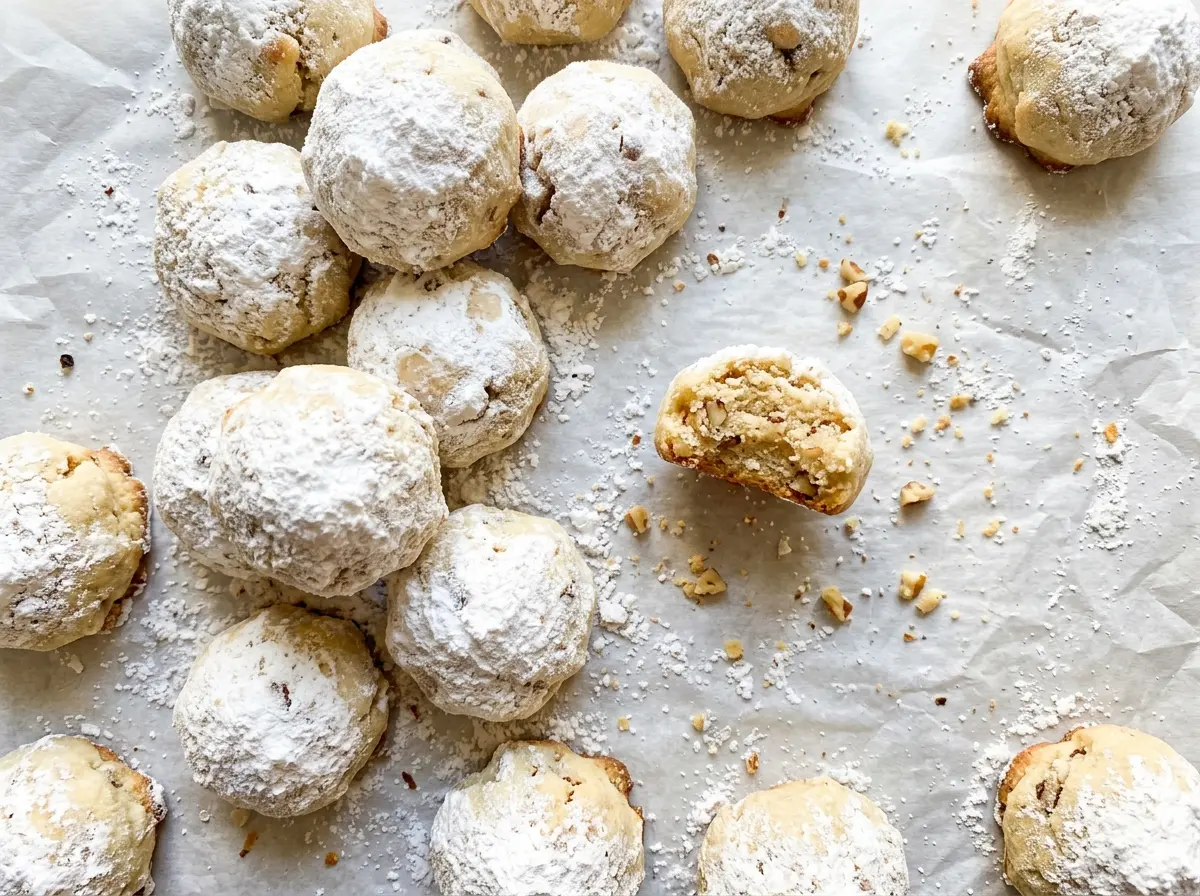
Roll the cookies in powdered sugar while they’re warm, then give them a second coating only after they’ve cooled completely. That second pass leaves a snowy finish instead of a thin layer that disappears into the cookie.
Save these gluten free snowball cookies for a buttery, pecan-filled bite under two layers of powdered sugar.
Why Finely Chopped Pecans Make These Snowballs Easier to Shape
Snowball dough is tender, and big pieces of pecan can make that tenderness tricky to handle. Finely chopped nuts are spread through the dough instead of sticking out of the surface, so the portions roll into smoother balls and hold together more easily. A few oversized pieces can also make one cookie much crunchier than the next.
Keep the pecans small, but don’t grind them into a paste. You want distinct little pieces that give the cookies their nutty texture without turning the dough oily. If you’re chopping by hand, gather any larger bits on the cutting board and chop them again before adding the nuts. It’s a small detail, but it helps the cookies bake evenly and keeps each round intact when you move it from the baking sheet to the rack.
What Gives These Gluten-Free Snowballs Their Tender Crumb

- Gluten-free 1-to-1 baking flour with xanthan gum — Use a blend made to replace all-purpose flour measure for measure, and choose one that includes xanthan gum. The blend supplies the structure these cookies need; almond flour or a single gluten-free flour won’t behave the same way. Spoon the flour into your measuring cup and level it rather than scooping directly from the bag, which can pack in too much.
- Unsalted butter — Softened butter creams smoothly with the powdered sugar and gives the cookies their rich, tender texture. It should yield when pressed but still feel cool, not shiny or melted. Unsalted butter also lets the fine salt in the dough do its job without making the seasoning unpredictable.
- Powdered sugar — Some goes into the dough, while the rest coats the cookies after baking. Its fine texture blends into the butter without the graininess that granulated sugar would bring to this dough. Keep the coating sugar in a shallow bowl so the warm cookies can be rolled gently without breaking.
- Pecans — Their buttery, mellow flavor suits the soft cookie, and finely chopping them helps them distribute through each portion. Fresh pecans taste best here; if yours smell stale or bitter, they’ll be noticeable in a cookie with so few ingredients. Walnuts are the closest swap and keep a similar nutty crunch.
- Pure vanilla extract — Vanilla rounds out the butter and pecans without taking over. Pure extract gives a clean, warm flavor; use it rather than leaving it out if you want the dough to taste balanced.
From Soft Dough to Snowy Cookies Without Crumbling Them
Cream the Butter Until Smooth
Heat the oven to 350°F and line an 18×13-inch rimmed baking sheet with parchment paper. Beat the softened butter with 1/2 cup powdered sugar until creamy, about 2 minutes, then beat in the vanilla. Stop when the mixture looks smooth and evenly blended; butter that’s too cold will stay lumpy, while melted butter won’t cream properly.
Mix in the Flour and Pecans Gently
Whisk the gluten-free flour and fine salt together in a separate bowl before adding them to the butter mixture. Mix just until the flour disappears, then stir in the finely chopped pecans. Don’t keep beating once the dough comes together; overworking it can make the cookies less tender, and extra flour isn’t needed if the dough feels soft at this point.
Chill, Then Roll Even Portions
Cover the dough and refrigerate it for 30 minutes, until it’s firm enough to scoop. Portion it by the tablespoon and roll each piece into a ball with your hands. Arrange about 18 balls on the prepared baking sheet, and keep the remaining dough chilled while the first batch bakes.
Bake Each Batch and Cool the Sheet
Bake at 350°F for 12–15 minutes, until the cookies are set and the bottoms are very lightly golden. The tops don’t need to brown. Let the cookies rest on the baking sheet for 5 minutes before moving them to a wire rack, then let the baking sheet cool completely before loading the next batch; a warm sheet can soften the dough before it reaches the oven.
Coat the Cookies in Two Passes
Put the reserved powdered sugar in a shallow bowl and gently roll the cookies in it while they’re warm. Return any excess sugar to the bowl rather than pressing it into the cookies. Once the cookies are completely cool, roll them in the remaining powdered sugar for a second coating.
Two Simple Ways to Adapt These Snowballs
Swap the Pecans for Walnuts
Use finely chopped walnuts in place of the pecans. They keep the same pleasant crunch, with a slightly more pronounced, earthy flavor; chop them finely so the dough still rolls into smooth balls.
Make a Dairy-Free Batch
Replace the butter with a firm, stick-style dairy-free baking butter in an equal amount. Avoid soft tub spreads, which can make the dough too loose; expect a slight change in buttery flavor depending on the product you use.
Storage and Reheating
- Room temperature: Keep the cookies in an airtight container for up to 5 days. The powdered sugar coating may absorb a little moisture over time.
- Freezer: Freeze completely cooled cookies in an airtight container for up to 2 months, with parchment between layers. Thaw them at room temperature; the coating may need a fresh dusting of powdered sugar afterward.
- Reheating: These cookies are best served at room temperature, so no reheating is needed. Avoid microwaving them, which can soften the cookies and make the sugar coating damp.
Questions That Come Up When Baking Gluten-Free Snowballs
Gluten Free Snowball Cookies
Ingredients
Equipment
Method
- Preheat the oven to 350°F and line an 18x13-inch rimmed baking sheet with parchment paper.
- In a large bowl, beat the butter and 1/2 cup powdered sugar until creamy, about 2 minutes; beat in the vanilla.
- In a medium bowl, whisk together the gluten-free flour and salt, then add to the butter mixture and mix just until combined; stir in the pecans.
- Cover and refrigerate the dough for 30 minutes, until firm enough to scoop.
- Scoop the dough into 1-tablespoon portions and roll into balls; arrange about 18 balls on the prepared baking sheet, keeping the remaining dough chilled.
- Bake each batch at 350°F for 12–15 minutes, until the cookies are set and their bottoms are very lightly golden.
- Cool the cookies on the sheet for 5 minutes, then transfer to a wire rack and let the sheet cool completely before baking the next batch.
- Put the 1 cup reserved powdered sugar in a shallow bowl and gently roll the warm cookies in it to coat, returning excess sugar to the bowl.
- Once the cookies are completely cool, roll them in the remaining powdered sugar for a second coating.




