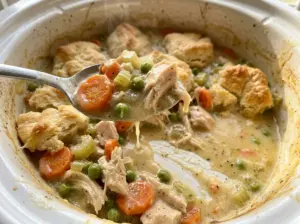
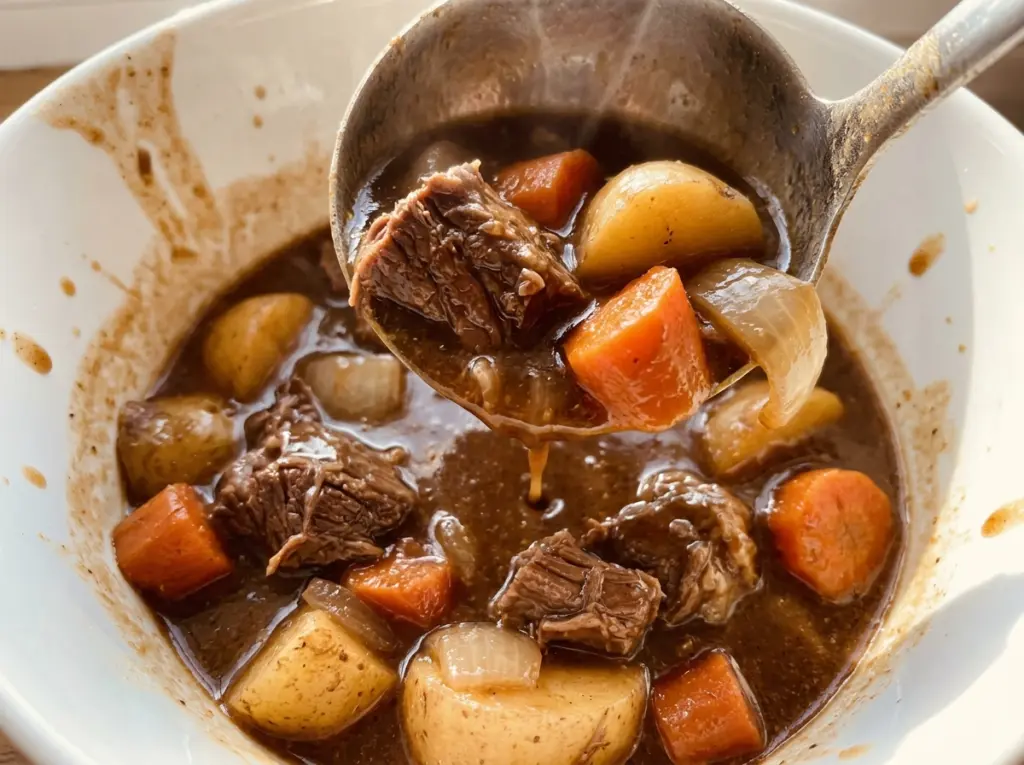
The first thing you notice is the smell when the Guinness hits the hot pot: dark, malty, and mixed with the browned bits left by the beef. I learned not to rush that moment. Scraping the bottom well builds a deeper-tasting broth, and it gives this Guinness Beef Stew its savory, roasty character without needing a long list of extra seasonings.
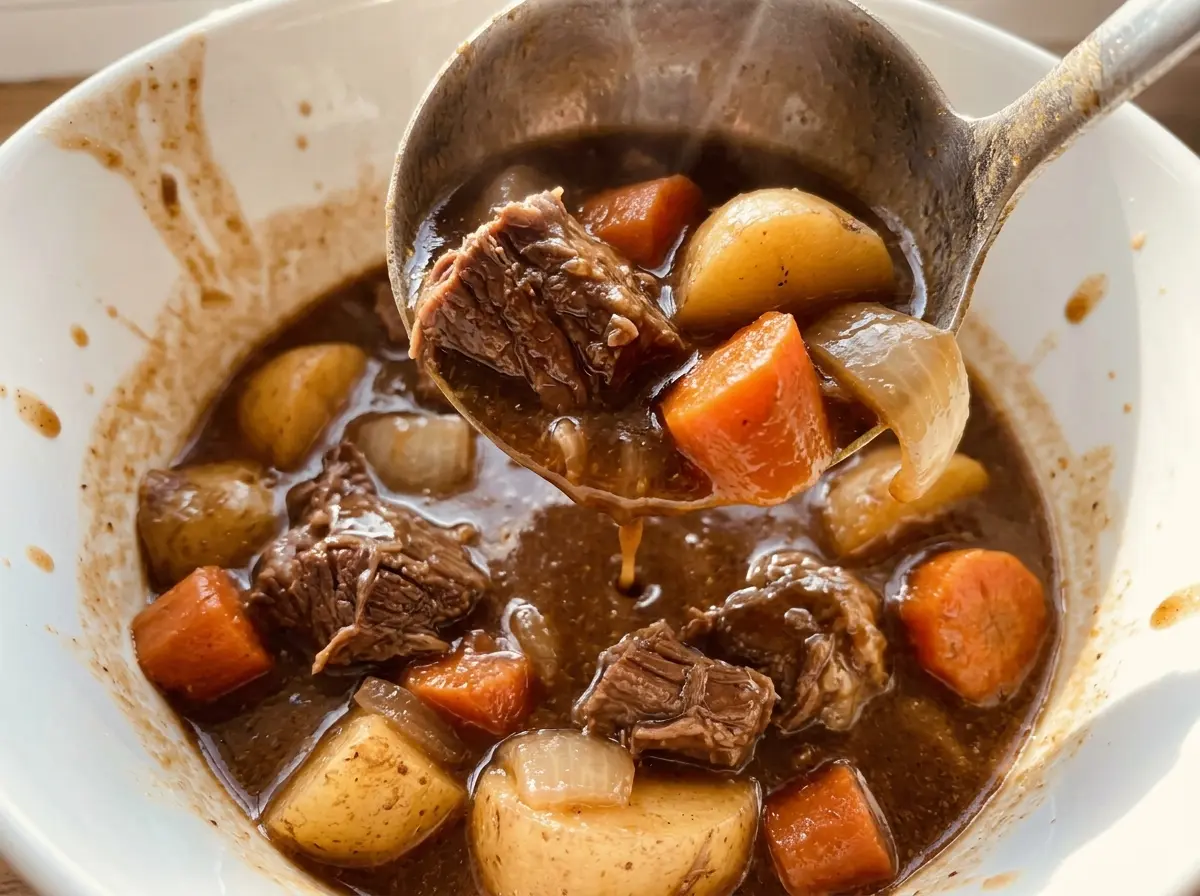
Chuck needs time to soften, but carrots and potatoes don’t need the whole braise. I give the beef a head start, then add the vegetables for the final stretch so they turn tender without disappearing into the broth. The result is a hearty stew with fork-tender beef, intact Yukon Gold potatoes, and a rich gravy that’s just right for a bowl and a spoon.
Kitchen Note
Pat the beef dry before it goes into the flour. A dry surface browns more readily, while damp beef tends to steam; give the pot space and brown the cubes in batches.
Save this Guinness Beef Stew for a slow supper—the beef turns fork-tender in a dark, savory broth with carrots and Yukon Golds.
Why the Potatoes and Carrots Go In After the Beef Gets a Head Start
Beef chuck needs a longer stretch in the pot than the vegetables do. If everything goes in together, the carrots can turn very soft and the potatoes may break apart while the beef is still working toward fork-tender. Braising the beef first gives its connective tissue time to soften before the vegetables begin cooking.
That timing also helps the vegetables keep their own shape and texture. Once the beef has simmered for an hour and a half, stir in the carrots and Yukon Gold potatoes and give them 45 to 60 minutes. Keep the pot covered at a gentle simmer; a hard boil won’t speed up tenderizing, and it can knock the potatoes around.
Use the fork test rather than relying on the clock alone. The beef should yield easily, and the carrots and potatoes should be tender all the way through without crumbling when you lift them from the broth.
Why Chuck, Stout, and Yukon Golds Belong in This Pot
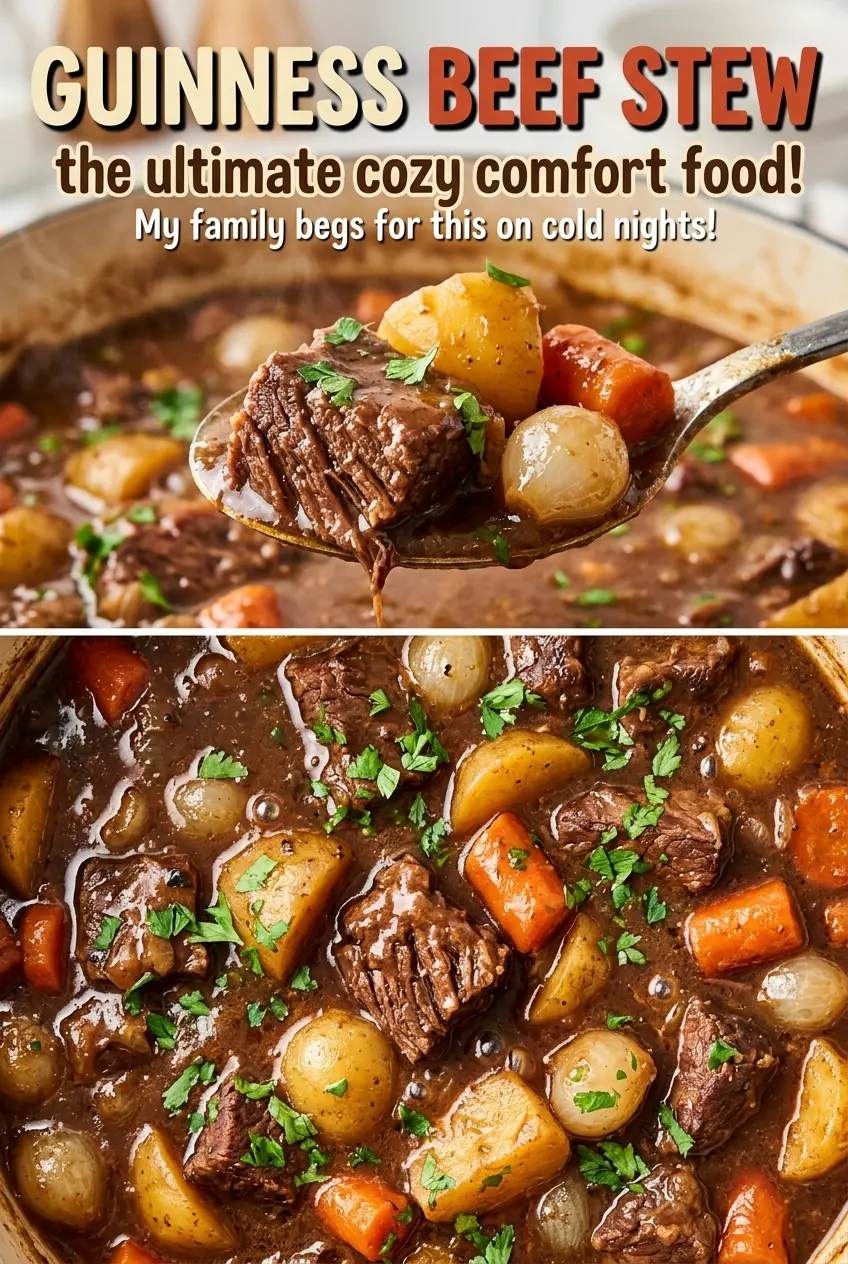
- Beef chuck — This well-worked cut has connective tissue that softens during a long, gentle braise and gives the broth body. If chuck isn’t available, boneless beef shoulder is the closest match; cut it into the same-size cubes so the pieces cook evenly.
- Guinness stout — The stout brings roasted, malty depth that plain broth can’t quite mimic. Guinness is easy to find and works well here; another stout can stand in, though its bitterness and roastiness will shift the finished stew.
- All-purpose flour — The light coating helps the beef brown and contributes a little body to the broth as the stew cooks. Standard grocery-store flour is fine; there’s no need for a specialty brand. For a gluten-free pot, use the specific flour and beer swaps in the variation below.
- Yukon Gold potatoes — Their creamy centers and waxier texture help them hold their shape through the long simmer. Red potatoes are a useful swap if that’s what you have; cut them into the same-size pieces so they cook at a similar pace.
- Carrots, onion, celery, and garlic — These build the familiar savory-sweet base, with carrots bringing sweetness as they soften. Choose firm carrots, but ordinary onions and celery work beautifully; their job is to round out the stout and beef rather than stand out on their own.
- Tomato paste, thyme, bay leaves, and Worcestershire sauce — Tomato paste adds a concentrated savory note, while thyme and bay leaves give the braising liquid an herbal backbone. Dried thyme and everyday Worcestershire are right for this slow-cooked stew; the long simmer carries their flavor through the broth.
The Long Braise Is Only Half the Timing
Coat and Brown the Beef
Pat the beef dry, then toss it with the flour, kosher salt, and black pepper until the cubes are coated. Heat the olive oil in a 6-quart Dutch oven over medium-high heat and brown the beef in batches for 2 to 3 minutes per side. Look for deep brown patches rather than a gray surface. Transfer each batch to a plate as it finishes.
Soften the Onion and Celery
Add the chopped onion and celery to the same pot and cook over medium heat for 5 to 7 minutes, stirring occasionally. They should soften and start to look glossy, with no need to brown them deeply. Stir in the minced garlic and tomato paste and cook for 1 minute. Keep stirring here so the garlic doesn’t catch on the bottom.
Deglaze and Start the Beef Braise
Pour in the Guinness and scrape across the bottom of the pot to lift the browned bits into the liquid. Stir in the beef broth, Worcestershire sauce, dried thyme, bay leaves, and browned beef along with any juices on the plate. Bring everything to a gentle simmer, then cover and cook over low heat for 1 1/2 hours. If the liquid is bubbling hard, lower the heat; a gentle simmer is what you want.
Add the Vegetables for Their Shorter Cook
Stir in the carrots and Yukon Gold potatoes, then cover the pot again. Keep the stew at a simmer for 45 to 60 minutes, until both the beef and vegetables are fork-tender. Check near the end of that window rather than waiting for the longest time automatically. The vegetables should feel soft when pierced but still hold together.
Rest Before Ladling
Remove and discard the bay leaves, then take the pot off the heat and let the stew rest for 10 minutes. That pause gives the broth a moment to settle before serving. Watch for the whole bay leaves as you remove them, since they’re not meant to be eaten.
Two Swaps That Change the Pot Without Losing Its Braised Texture
A Gluten-Free Stout Stew
Replace the all-purpose flour with an equal amount of gluten-free 1-to-1 flour, and use an equal volume of gluten-free dark beer in place of the Guinness. Use gluten-free beef broth and Worcestershire sauce as well. The stew keeps its deep, savory character, though the beer’s roasted notes may taste a little different.
Swap Parsnips for the Carrots
Use the same amount of peeled, 1-inch parsnip pieces instead of carrots. They bring a more earthy sweetness and suit the stout broth; keep the same timing, then cook until the parsnips are fork-tender.
Storage and Reheating
- Refrigerator: Store in a covered container for 3 to 4 days. The broth may thicken as it chills, and the potatoes will soften a little.
- Freezer: Freeze portions in airtight, freezer-safe containers for up to 2 to 3 months. The stew freezes well, though the potatoes may be softer or slightly grainier after thawing.
- Reheating: Warm it gently on the stovetop, stirring now and then, until it reaches 165°F. Avoid a hard boil, which can break up the potatoes before the center is hot.
Questions That Come Up While the Guinness Stew Simmeres
Guinness Beef Stew
Ingredients
Equipment
Method
- Pat the beef dry, then toss it with the flour, salt, and pepper until evenly coated.
- Heat the olive oil in a 6-quart Dutch oven over medium-high heat. Brown the beef in batches for 2 to 3 minutes per side, then transfer it to a plate.
- Add the onion and celery to the pot and cook over medium heat for 5 to 7 minutes, stirring occasionally, until softened.
- Stir in the garlic and tomato paste and cook for 1 minute.
- Pour in the Guinness, scraping up the browned bits from the bottom of the pot.
- Stir in the broth, Worcestershire sauce, thyme, bay leaves, and browned beef with any accumulated juices.
- Bring the stew to a gentle simmer, cover, and cook over low heat for 1 1/2 hours.
- Stir in the carrots and potatoes, cover, and simmer for 45 to 60 minutes, until the beef and vegetables are fork-tender.
- Remove the bay leaves and let the stew rest off the heat for 10 minutes before serving.