
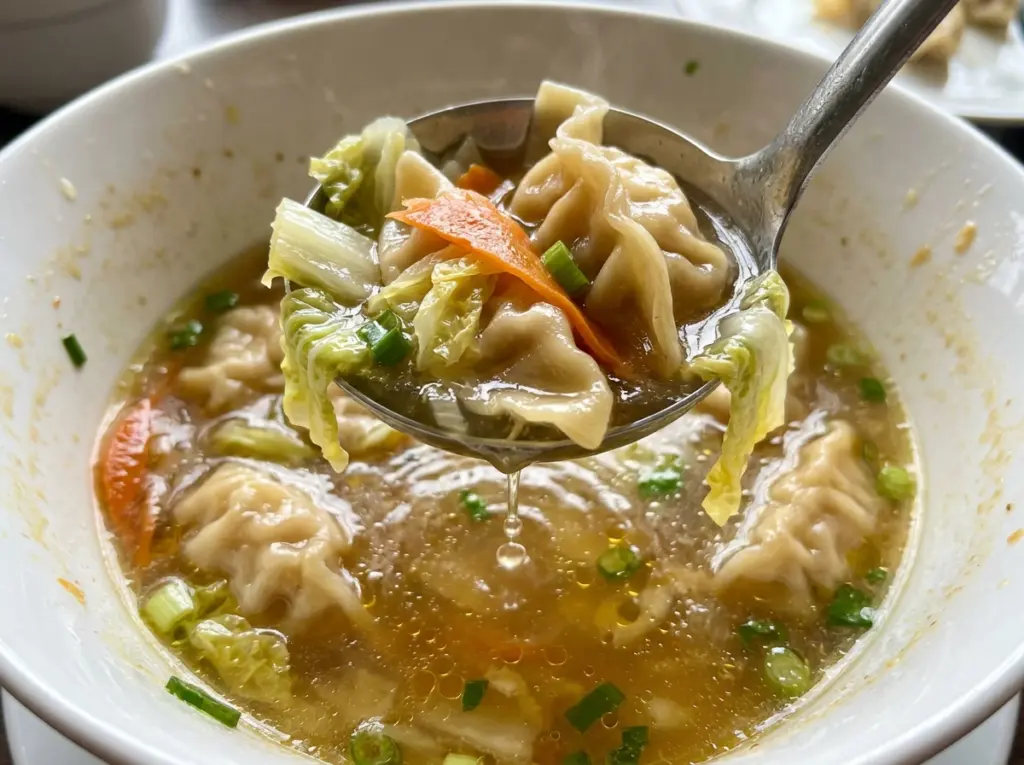
When the ginger hits the warm sesame oil, the whole pot smells inviting before the broth even goes in. The shiitake caps start to soften, and their earthy flavor gives this gyoza soup more depth than you’d expect from such a short simmer. I like that the dumplings go straight from the freezer into the pot; there’s no separate pan to wash and no need to thaw them first.
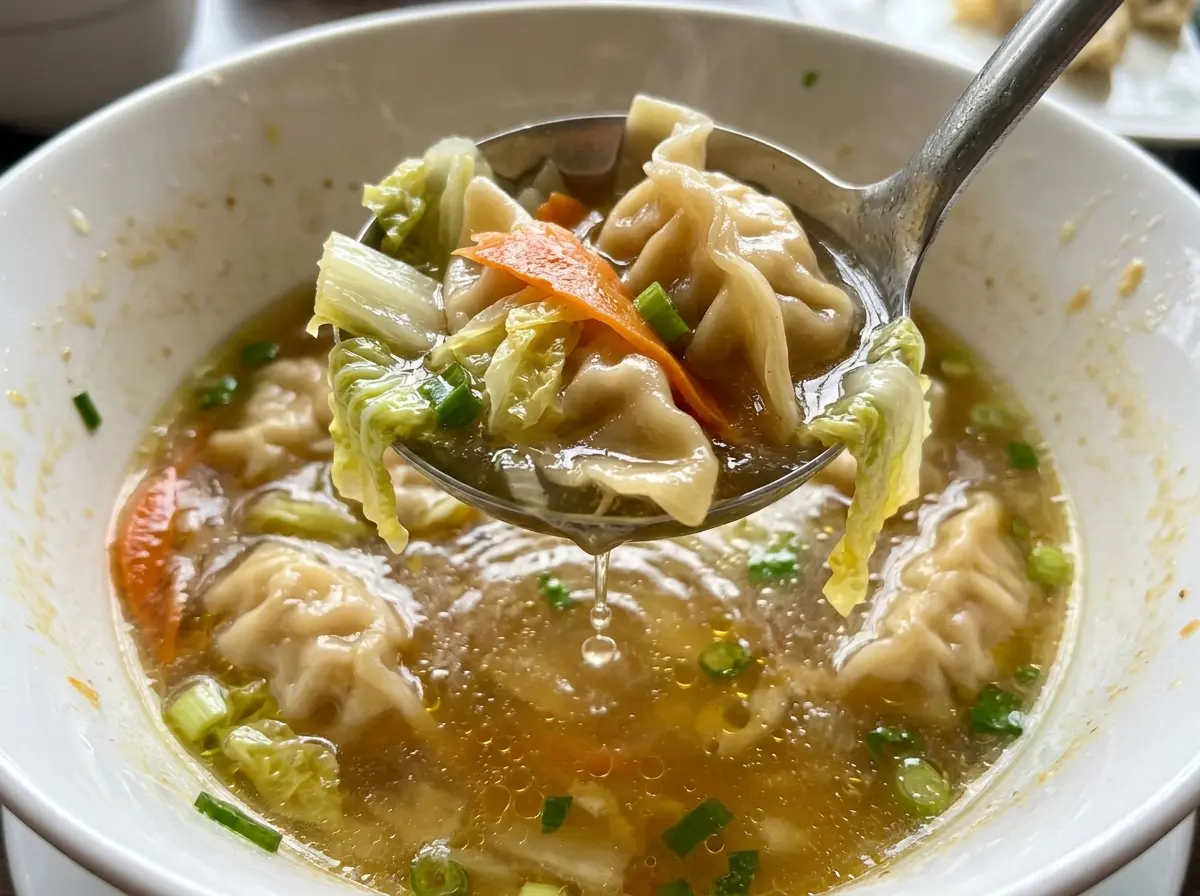
The order matters here. The napa cabbage gets a few minutes in the broth before the gyoza arrive, so it can wilt without asking the dumpling wrappers to simmer longer than they need to. I keep the heat gentle once the frozen gyoza are in, then finish the pot with scallions off the burner. Each spoonful has tender cabbage, savory broth, and a dumpling that’s soft without falling apart.
Kitchen Note
I add the scallions only after the pot comes off the heat. They stay bright and fresh instead of cooking down into the broth.
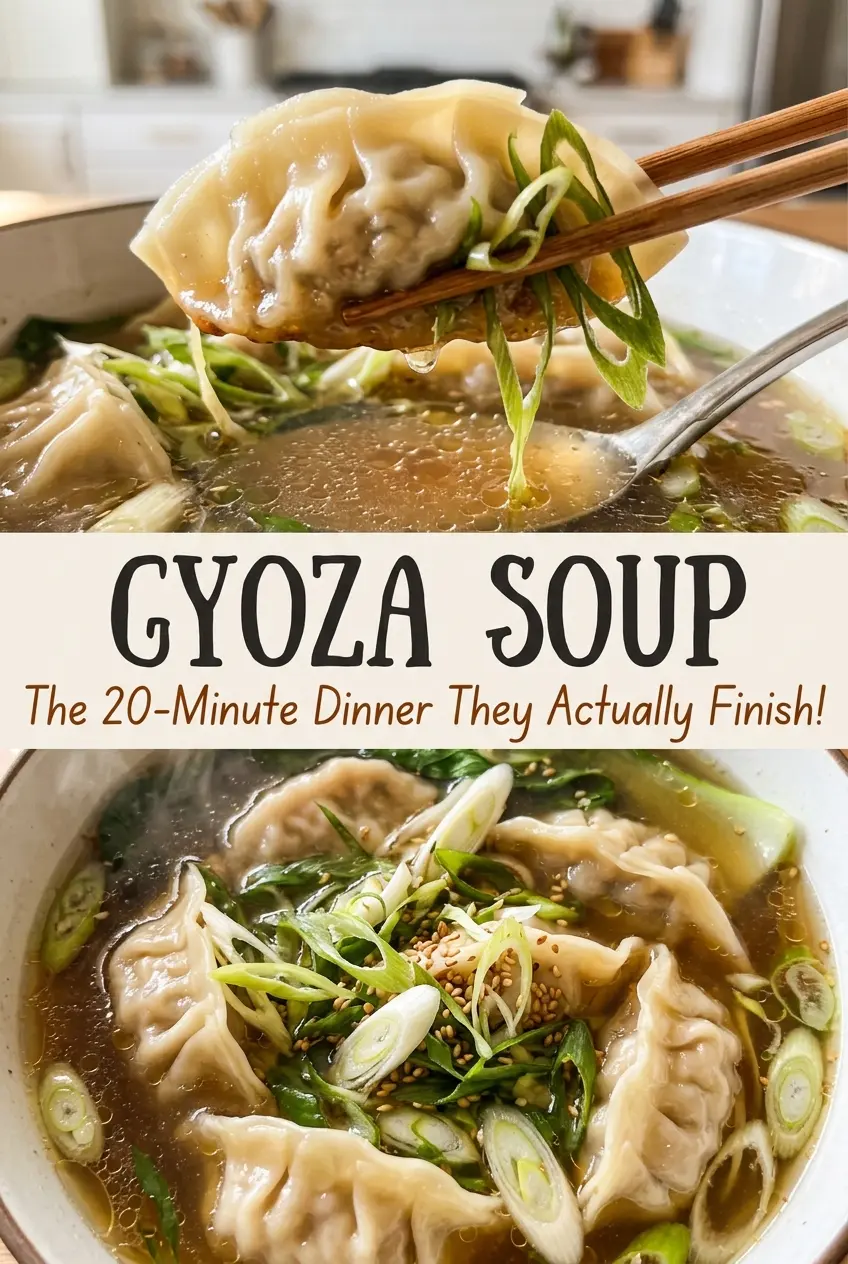
Save this gyoza soup for a cozy bowl of tender dumplings, napa cabbage, and ginger-scented broth.
Why the Cabbage Goes In Before the Frozen Gyoza
Napa cabbage and frozen dumplings don’t need the same amount of time in the pot. The cabbage needs a few minutes in the simmering broth to relax and wilt, while the gyoza need only enough time for their wrappers to turn tender and their centers to cook through. Add everything together, and you’re stuck choosing between cabbage that’s still firm or wrappers that have spent too long bubbling away.
Giving the cabbage its own short turn in the broth solves that timing mismatch. It softens while the mushrooms, ginger, and soy-seasoned broth are already in place, and the frozen gyoza go in only when the liquid is ready for them. Keep the simmer gentle, not rolling; a hard boil tosses the dumplings around and can rough up their wrappers. It’s a small bit of sequencing, but it’s what gives the bowl distinct pieces instead of a pot where everything has cooked at the same pace.
What Builds Flavor in This Quick Gyoza Soup
- Toasted sesame oil — It gives the broth a nutty aroma from the first step, so use toasted rather than plain sesame oil when you can. A neutral cooking oil will work in a pinch, but the soup will lose that toasty note.
- Fresh ginger — Grated ginger disperses through the broth and brings a clean, warming bite. Refrigerated ginger paste can stand in, though freshly grated ginger tastes brighter; ground ginger won’t give the same fresh flavor.
- Shiitake mushrooms — Their caps add an earthy, savory quality that mild mushrooms won’t quite match. Choose firm caps without slimy spots, remove the stems, and slice the caps; cremini mushrooms are a practical substitute if shiitakes aren’t available.
- Low-sodium chicken broth — A store-brand carton is fine because the ginger, mushrooms, and soy sauce bring plenty of character. Regular chicken broth also works, but it makes the finished soup saltier, so adjust the soy sauce to taste.
- Soy sauce — It seasons the broth and deepens its savory flavor. Standard soy sauce is all you need here; tamari is a useful swap when you need a gluten-free option, provided the other packaged ingredients suit that diet too.
- Napa cabbage — Its thin leaves wilt quickly and become tender without taking over the bowl. Savoy cabbage is the closest easy substitute; slice it thinly so it softens on a similar schedule.
- Frozen pork gyoza — Use them straight from the freezer, and choose a package with wrappers intact so they’re less likely to split as they cook. Chicken gyoza can replace pork gyoza if that’s the filling you prefer; follow the package timing for the dumplings you buy.
- Scallions — The fresh green onion bite cuts through the rich broth. Look for crisp green tops; finely sliced chives can replace them, though their flavor is milder.
Building the Broth Before the Dumplings Go In
Soften the Ginger and Shiitakes
Heat the toasted sesame oil in a 5-quart pot over medium heat. Add the grated ginger and sliced mushroom caps, then cook, stirring, for 3 to 4 minutes. The mushrooms should begin to soften, and the ginger will smell fragrant. Keep the mixture moving so the ginger doesn’t catch on the bottom of the pot.
Wilt the Napa in the Seasoned Broth
Pour in the low-sodium chicken broth and soy sauce, then bring the liquid to a gentle boil. Stir in the thinly sliced napa cabbage and simmer for 3 to 4 minutes, until it has wilted. The leaves should look relaxed and sit down into the broth rather than staying piled on top. If the broth boils hard, lower the heat before the dumplings go in.
Simmer the Frozen Gyoza Gently
Add the pork gyoza straight from the freezer. Keep the soup at a gentle simmer for 6 to 8 minutes, or use the package directions if they call for a different cooking time. The wrappers should be tender, and the centers need to reach 165°F. Avoid stirring forcefully; move the dumplings carefully through the broth if they need space.
Finish with Scallions
Once the gyoza are cooked, remove the pot from the heat. Stir in the thinly sliced scallions and serve the soup while the dumplings are tender. The broth should still be hot, but the scallions don’t need any time over the burner. Ladle gently so the gyoza keep their shape.
Three Ways to Adapt the Gyoza in Your Bowl
Make It Vegetarian
Replace the chicken broth with vegetable broth and use frozen vegetable gyoza instead of pork. The result keeps the ginger, mushrooms, and cabbage at the center of the soup, with a lighter dumpling filling; cook the vegetable gyoza according to its package directions.
Make a Gluten-Free Bowl
Use tamari in place of soy sauce, plus chicken broth and frozen gyoza that are specifically labeled gluten-free. Gyoza wrappers are often made with wheat, so changing the seasoning alone won’t make the soup gluten-free. Follow the dumpling package directions for cooking.
Swap in Chicken Gyoza
Frozen chicken gyoza are an easy way to change the filling without changing the broth. Their flavor is a little milder than pork, while the cabbage, mushrooms, and ginger still make the soup taste full. Use the package cooking time for the filling you choose.
Storage and Reheating
- Refrigerator: Refrigerate leftovers in a covered container within 2 hours and use them within 3 to 4 days. The gyoza wrappers soften as they sit in the broth.
- Freezer: The soup freezes best before the gyoza are added. Freeze the broth and vegetables in freezer-safe containers for up to 2 months; the cabbage will be softer after thawing. Add fresh frozen gyoza when you reheat the soup.
- Reheating: Warm leftovers gently on the stovetop until steaming throughout. Avoid a hard boil, which can make the already-soft dumpling wrappers fall apart.
Questions That Come Up When Making Gyoza Soup
Gyoza Soup
Ingredients
Equipment
Method
- Heat the sesame oil in a 5-quart pot over medium heat. Add the ginger and mushrooms and cook, stirring, for 3 to 4 minutes, until the mushrooms begin to soften.
- Add the chicken broth and soy sauce and bring to a gentle boil. Stir in the cabbage and simmer for 3 to 4 minutes, until wilted.
- Add the frozen gyoza and simmer gently for 6 to 8 minutes, or according to the package directions, until the wrappers are tender and the centers reach 165°F.
- Remove the pot from the heat, stir in the scallions, and serve.




