
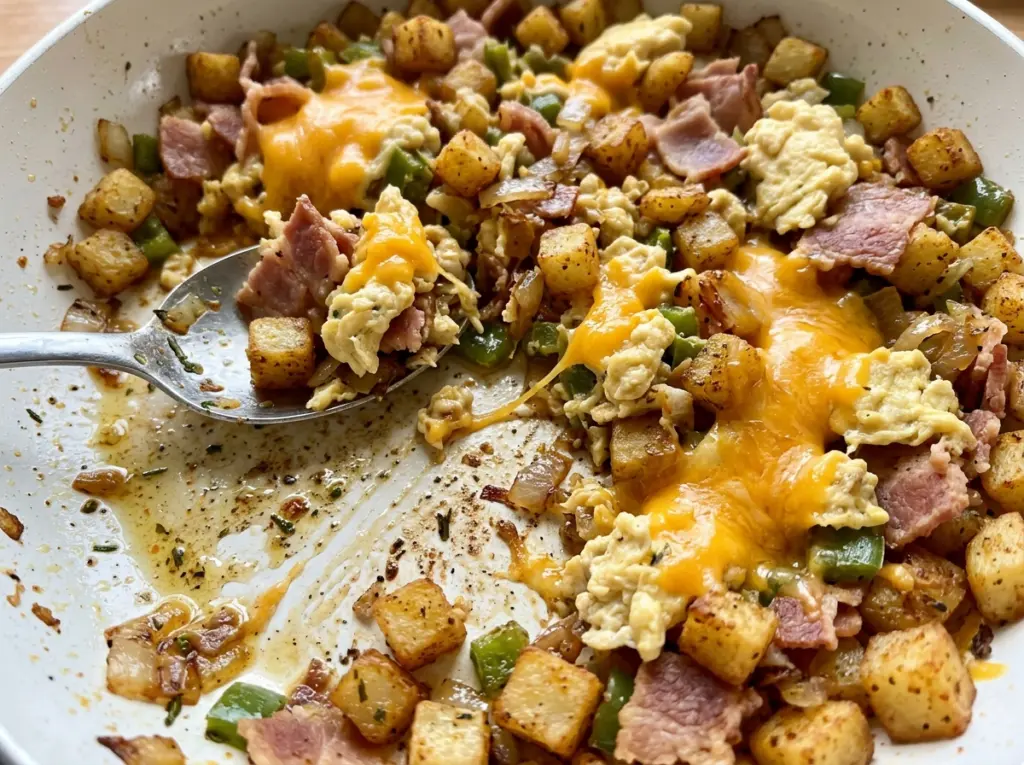
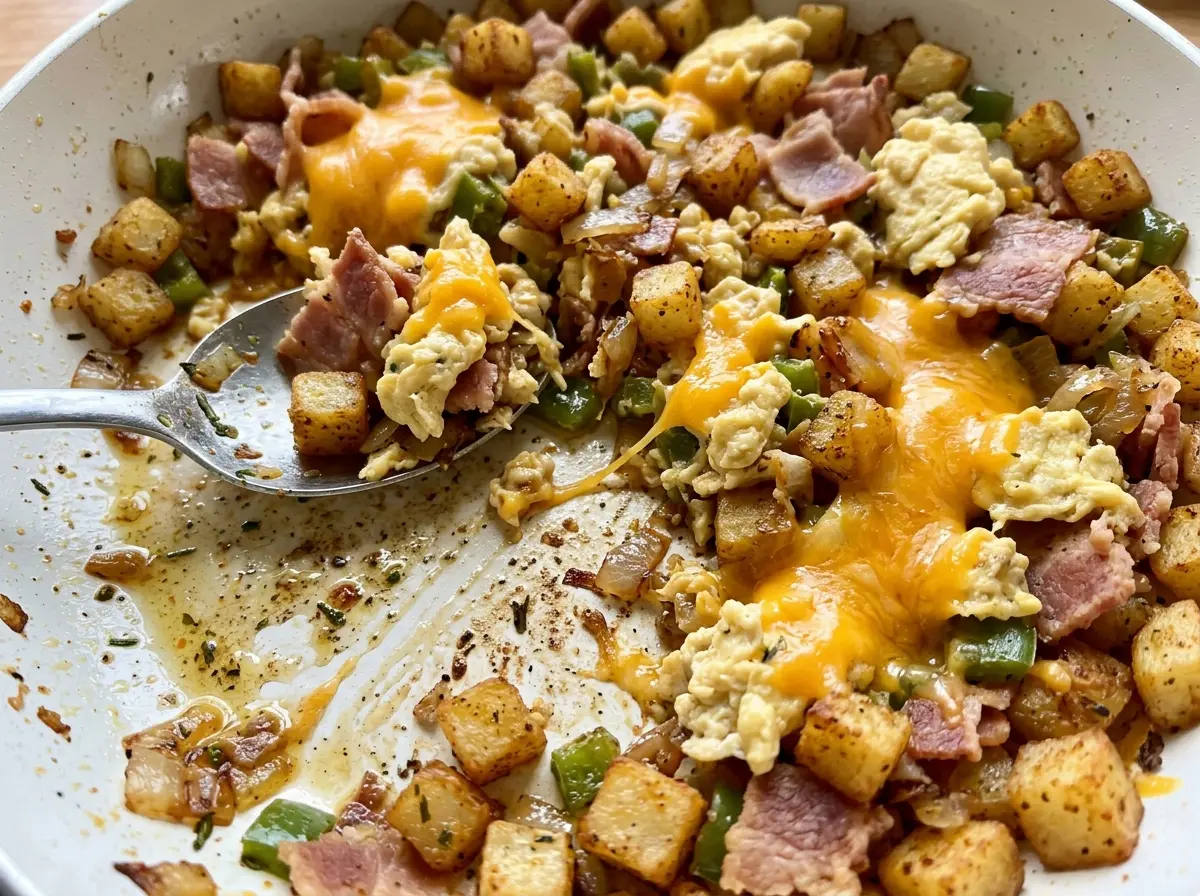
The bacon starts out loud and spattery in the skillet, then the onion and bell pepper soften in that savory fat. Once the potatoes go in, the pan gets quieter for a bit; that’s when the edges start taking on color. These Hangover Brunch Potatoes bring crisp russet cubes together with tender vegetables, sharp cheddar, and cool sour cream. That contrast is what makes a skillet of potatoes feel like a full brunch plate.
Russets get a brief boil before they meet the skillet, so their centers are already on their way to tender before the outside browns. I cook the potatoes in two batches, then return everything to the pan for a quick, covered melt. The green onions go on at the end, where their fresh bite cuts through the bacon and cheese.
Kitchen Note
After draining, give the potato cubes their full five minutes to air-dry. They should look less steamy before they go into the skillet; rushing them straight from the colander makes it harder to get those browned edges.
Save these Hangover Brunch Potatoes for a crisp-edged skillet with bacon, melted cheddar, and a cool sour-cream finish.
Why the Potatoes Need the Skillet to Themselves
A pan full of potatoes doesn’t brown like a pan with room between the pieces. When too many cubes crowd the surface, the skillet loses heat and the potatoes release steam into the gaps. That steamy environment softens them, but it works against the crisp, golden patches you want. Cooking in two batches gives each cube better contact with the hot skillet.
The short boil and the skillet cook do different jobs. Boiling starts the centers cooking without taking them all the way to soft; the skillet finishes them while building color on the outside. If you keep turning the cubes constantly, they have less time against the pan to brown. Turn them occasionally instead, and let the skillet do some of the work. The goal isn’t an identical crust on every face—look for browned edges and crisp spots around tender centers.
Russets, Bacon Fat, and Cheddar Each Have a Job

- Russet potatoes — Their starchy texture gives you a tender, fluffy center under the browned exterior. Keep the cubes even so they cook at the same pace; a waxier potato can stay firmer and won’t give quite the same contrast.
- Bacon — Chopped bacon renders the fat used to soften the onion and pepper, adding savory depth to the vegetables. Regular bacon is fine here; the useful cue is crispness, not a specialty cut. If you’re making a vegetarian version, the canola-oil adjustment below replaces the bacon and its cooking fat.
- Yellow onion and bell pepper — They soften before the potatoes brown, so they bring sweetness and tenderness without taking up space during the crisping batches. Dice them fairly evenly, and transfer them out of the skillet while the potatoes cook.
- Canola oil — Its neutral taste lets the bacon, paprika, and cheddar lead. Use the oil for the potato batches as divided rather than adding it all at once; the cubes need a lightly coated skillet, not a pool of oil.
- Paprika and black pepper — These season the finished mixture without covering up the bacon or sharp cheddar. Add them with the remaining salt after the vegetables and bacon return to the skillet so the seasoning reaches the whole batch.
- Sharp cheddar — Sharpness matters because the cheese is rich and melted across the potatoes; a mild cheddar gives a quieter finish. Pre-shredded cheddar works, though freshly shredded cheese usually melts a little more smoothly.
- Green onions and sour cream — The green onions add a fresh, lightly sharp finish, while sour cream brings cool tang. If you don’t have green onions, leave off the garnish rather than adding more cooked onion; it won’t give the same fresh contrast.
Parboil, Dry, Brown, Then Melt the Cheddar
Give the Russets a Short Head Start
Bring the water and two teaspoons of the salt to a boil in a 4-quart pot, then add the half-inch potato cubes. Boil them for 4 to 5 minutes, until the edges are just tender but the centers are still firm. If a cube feels soft all the way through, it has gone too far for the skillet stage. Drain the potatoes in a colander and let them air-dry for five minutes.
Render the Bacon and Soften the Vegetables
Cook the chopped bacon in a 12-inch skillet over medium heat for 8 to 10 minutes, stirring occasionally, until crisp. Move it to a paper towel-lined plate, then pour off all but one tablespoon of bacon fat. Add the diced onion and bell pepper to the skillet and cook over medium heat for 4 to 5 minutes, until softened. Transfer the vegetables to a plate so the potato batches have room.
Brown the Potatoes in Two Batches
Add one tablespoon of the canola oil to the skillet and heat it over medium-high. Spread half the potatoes in a single layer and cook for 8 to 10 minutes, turning occasionally, until browned and crisp. Transfer them to the plate with the vegetables, then repeat with the remaining oil and potatoes. If the cubes are pale, give them more undisturbed contact with the hot pan rather than stirring continuously.
Bring the Skillet Together Under the Cheese
Return the vegetables and crisp bacon to the skillet with the potatoes. Season with the remaining teaspoon of salt, black pepper, and paprika, then sprinkle the cheddar over the top. Cover and cook over low heat for 1 to 2 minutes, just until the cheese melts; high heat can brown the bottom before the cheese has time to soften. Finish with the sliced green onions and sour cream, and serve.
Ways to Adapt the Skillet Without Losing Its Character
Make It Vegetarian With Canola Oil
Leave out the bacon and use one tablespoon of the recipe’s canola oil to soften the onion and bell pepper. Divide the remaining tablespoon between the two potato batches. You’ll lose the smoky bacon flavor, but the vegetables and potatoes still brown in the skillet.
Make the Skillet Dairy-Free
Leave off both the cheddar and sour cream. The potatoes will still have their crisp edges and savory bacon-and-pepper base, but you’ll miss the creamy, tangy finish. Serve the skillet right after the final seasoning so the browned potatoes stay at their best.
Use Yukon Gold Potatoes for a Creamier Center
Swap in Yukon Gold potatoes, keeping the cubes the same size. Their centers are creamier and less fluffy than russets, and they tend to hold their shape well. Use the visual cues of just-tender edges during boiling and browned, crisp patches in the skillet rather than relying only on the clock.
Storage and Reheating
- Refrigerator: Store leftovers in an airtight container for 3 to 4 days. The potatoes soften over time, especially where they sit under the cheese and sour cream.
- Freezer: Freezing the finished skillet isn’t recommended; the potatoes can turn grainy and the sour cream may separate.
- Reheating: Warm leftovers in a skillet over medium heat until hot throughout. A microwave works, but it softens the browned edges; avoid reheating longer than needed.
Questions That Come Up at the Skillet
Hangover Brunch Potatoes
Ingredients
Equipment
Method
- Bring the water and 2 teaspoons of the salt to a boil in a 4-quart pot. Add the potatoes and boil for 4 to 5 minutes, until the edges are just tender but the centers are still firm.
- Drain the potatoes in a colander and let them air-dry for 5 minutes.
- Cook the bacon in a 12-inch skillet over medium heat for 8 to 10 minutes, stirring occasionally, until crisp. Transfer it to a paper towel-lined plate and pour off all but 1 tablespoon of bacon fat.
- Add the onion and bell pepper to the skillet and cook over medium heat for 4 to 5 minutes, until softened. Transfer them to a plate.
- Add 1 tablespoon of the oil to the skillet and heat over medium-high heat. Cook half the potatoes in a single layer for 8 to 10 minutes, turning occasionally, until browned and crisp; transfer to the plate with the vegetables and repeat with the remaining oil and potatoes.
- Return the vegetables and bacon to the skillet and season with the remaining 1 teaspoon salt, the black pepper, and paprika. Sprinkle with the cheddar, cover, and cook over low heat for 1 to 2 minutes, until the cheese melts.
- Top with the green onions and sour cream and serve.




