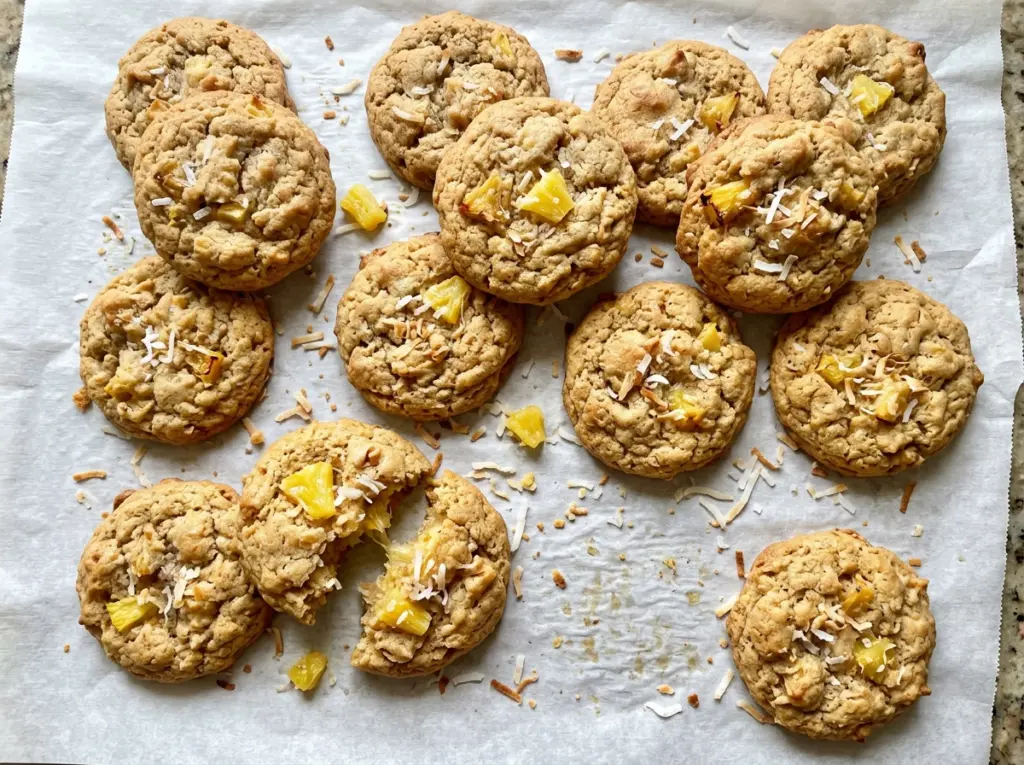
When butter and brown sugar go from grainy to creamy, the bowl takes on a warm, toasty smell that tells me the dough is off to a good start. These Hawaiian Pineapple Coconut Cookies bring crushed pineapple and sweetened coconut into a soft cookie dough, so each bite has a little chew and a bright fruit note.
The pineapple needs more attention than it might seem: draining alone leaves plenty of moisture behind. I squeeze it dry before mixing it in, which keeps the dough from turning loose and helps the cookies bake up with defined edges instead of spreading into thin, damp rounds.
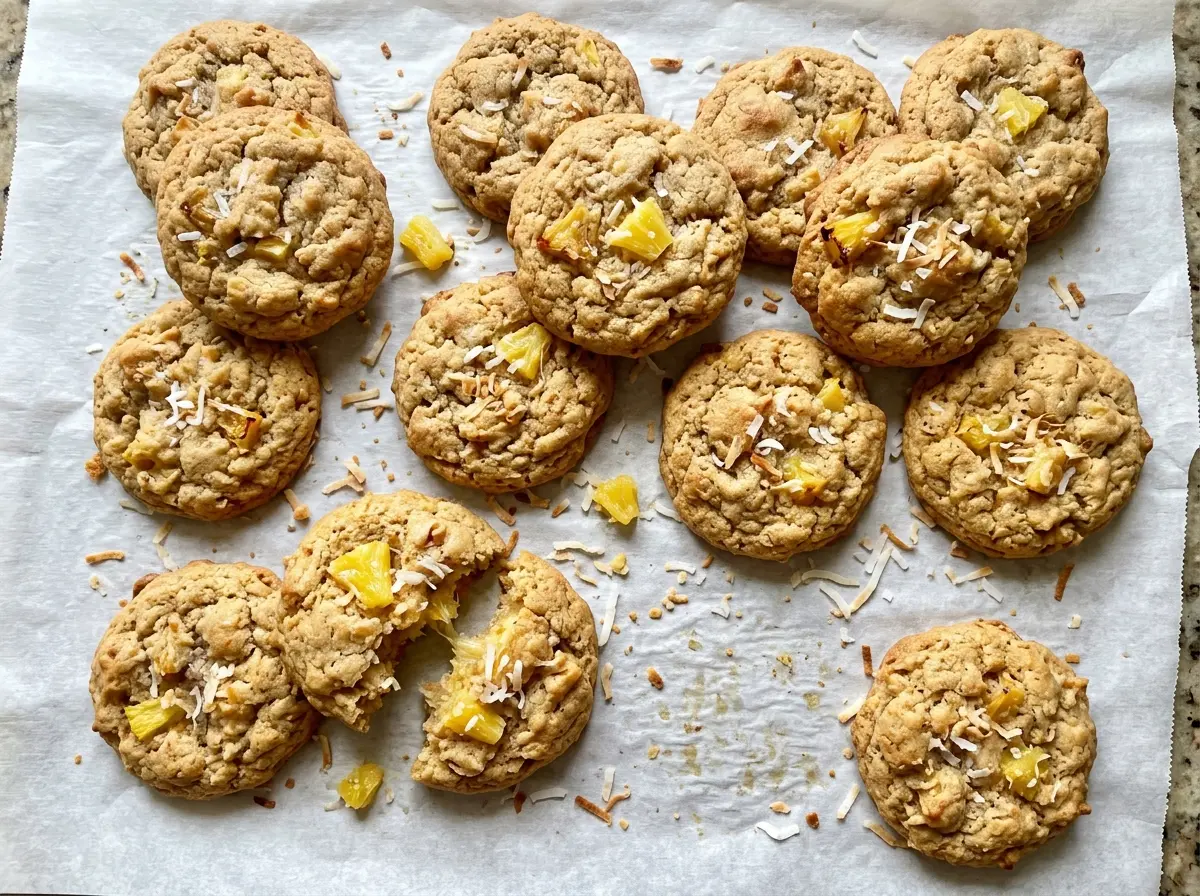
Chilling gives the dough time to firm up, and the cookies bake just until their edges are lightly golden and set. Let them cool on the sheets before moving them; they’re tender when hot, then settle into soft-centered cookies with coconut tucked through every bite.
Kitchen Note
Beat the softened butter and brown sugar until they look creamy, about 2 minutes. If the butter is melted or greasy, it won’t cream properly, so start with butter that yields when pressed but still holds its shape.
Save these Hawaiian Pineapple Coconut Cookies for a soft-centered bake with sweet coconut, bright pineapple, and lightly golden edges.
Why These Cookies Use Both Baking Powder and Baking Soda
It’s easy to assume one leavener can stand in for the other, but baking powder and baking soda don’t do identical jobs. Baking powder provides lift, while baking soda reacts with acidic ingredients in the dough and helps the cookies brown. This dough includes brown sugar and pineapple, so keeping both leaveners in the mix gives the cookies a more balanced rise and color.
That balance is also why I don’t recommend leaving one out or replacing one with an equal spoonful of the other. Too much baking soda can leave an unpleasant taste, and baking powder alone won’t behave the same way. Measure both carefully, then whisk them thoroughly with the flour so they’re distributed throughout the dough. That small bit of mixing prevents a pocket of leavener from giving one cookie a bitter spot while another bakes up flatter.
What the Pineapple and Coconut Each Bring to the Dough

- Crushed pineapple — Small pieces spread fruity flavor through the dough more evenly than big chunks. Choose pineapple that’s already crushed, then drain and squeeze it dry; the texture matters less than removing the extra liquid. Fresh pineapple can work if it’s finely crushed and treated the same way, but large pieces make the cookies harder to portion evenly.
- Sweetened shredded coconut — This brings sweetness and a tender, chewy texture. Shredded coconut blends into the dough more evenly than large flakes. Unsweetened shredded coconut is a workable swap if you prefer a less-sweet cookie, though the finished batch will taste less rich and sweet.
- Light brown sugar — Its moisture helps keep the cookies tender, and its mild molasses flavor suits the pineapple and coconut. Pack it firmly when measuring; loose sugar changes the amount and can shift the dough’s texture. Dark brown sugar works in a pinch, but brings a stronger molasses note.
- Softened unsalted butter — Soft butter traps air when beaten with sugar, helping build the dough’s structure. It should be pliable rather than shiny or melted. If you only have salted butter, you can use it, but the finished cookies will taste a little saltier because the dough already includes kosher salt.
- All-purpose flour — It gives the dough enough structure to hold the moist fruit and coconut. Stir it into the wet mixture only until the dry streaks disappear; working the dough longer can make the cookies tougher.
From Creamed Butter to Set, Golden Edges
Whisk the dry ingredients evenly
Whisk the flour, baking powder, baking soda, and kosher salt together in a medium bowl before adding them to the wet ingredients. Break up any small flour or leavener clumps as you whisk. An even mixture helps the cookies bake consistently from one side of the sheet to the other. Set the bowl aside while you prepare the butter mixture.
Build the butter-and-sugar base
Beat the softened butter and packed brown sugar in a large bowl until creamy, about 2 minutes. Scrape down the sides if sugar collects there instead of mixing in. Beat in the egg and vanilla until combined, then mix in the well-drained pineapple. The mixture may look a little uneven once the fruit goes in; that’s fine as long as the egg and vanilla are incorporated.
Fold in the flour and coconut, then chill
Add the flour mixture and stir just until no dry streaks remain. Stop before the dough looks smooth and overworked, then fold in the shredded coconut until it’s distributed throughout. Cover the bowl and chill the dough for 30 minutes. The dough should feel firmer and easier to scoop after its time in the refrigerator.
Scoop, bake, and let the cookies settle
Heat the oven to 350°F and line two large baking sheets with parchment paper. Scoop rounded 1 1/2-tablespoon portions onto the sheets, leaving about 2 inches between them so the cookies have room to spread. Bake for 13–16 minutes, switching the sheets between racks halfway through; look for lightly golden, set edges. Leave the cookies on the baking sheets for 5 minutes before transferring them to a wire rack, since moving them while hot can break their soft centers.
Easy Ways to Change the Pineapple-Coconut Balance
Add a little lime
Mix finely grated lime zest into the dough with the vanilla. The citrus sharpens the pineapple flavor without adding liquid, so the dough keeps its usual consistency.
Make them gluten-free
Replace the all-purpose flour with a cup-for-cup gluten-free baking blend that includes xanthan gum, using the same amount. The cookies may be a little more delicate, so give them the full 5 minutes on the baking sheet before moving them.
Add macadamia crunch
Replace part of the shredded coconut with chopped macadamia nuts, folding them in at the same time as the coconut. You’ll get a firmer, buttery crunch in place of some of the coconut’s soft chew.
Storage and Reheating
- Refrigerator: Keep cooled cookies in an airtight container for up to 5 days. They’ll firm up in the refrigerator, so bring them to room temperature before serving if you prefer a softer bite.
- Freezer: Freeze completely cooled cookies in an airtight freezer container, separating layers with parchment, for up to 2 months. Thaw at room temperature while still covered to limit condensation.
- Reheating: Warm a cookie in the microwave for about 5 seconds if you’d like it slightly warm. Longer heating can make it hot and overly soft, so use short bursts rather than reheating a whole batch at once.
Questions I Get About Hawaiian Pineapple Coconut Cookies
Hawaiian Pineapple Coconut Cookies
Ingredients
Equipment
Method
- Heat the oven to 350°F.
- Line two large baking sheets with parchment paper.
- Whisk the flour, baking powder, baking soda, and salt together in a medium bowl.
- Beat the butter and brown sugar in a large bowl until creamy, about 2 minutes.
- Beat in the egg and vanilla until combined.
- Mix in the pineapple.
- Stir in the flour mixture just until no dry streaks remain.
- Fold in the coconut.
- Cover and chill the dough for 30 minutes.
- Scoop rounded 1 1/2-tablespoon portions onto the prepared baking sheets, spacing them about 2 inches apart.
- Bake for 13–16 minutes, switching the sheets between racks halfway through, until the edges are lightly golden and set.
- Cool the cookies on the baking sheets for 5 minutes.
- Transfer them to a wire rack to cool completely.