
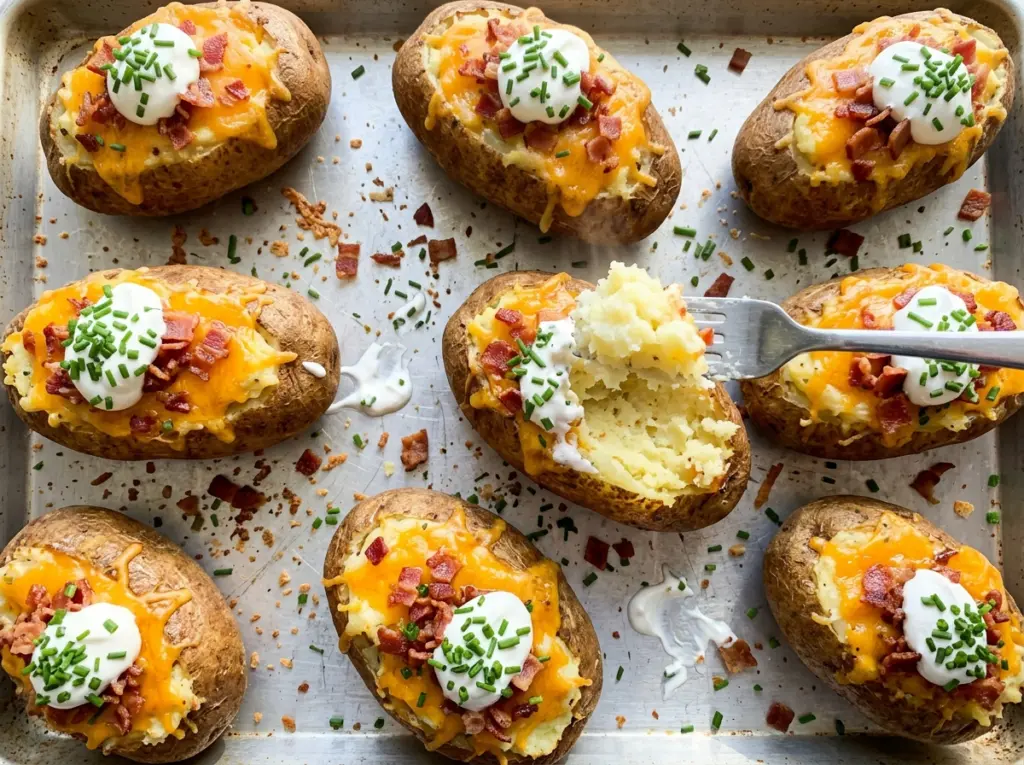
The knife slips into a properly baked russet with almost no resistance, but the skin still holds its shape when you cut it in half. That contrast is what makes loaded twice baked potatoes worth the extra trip back to the oven: crisp-edged shells, a buttery potato center, and bacon tucked into the filling as well as scattered over the top.
I like that the filling is made from the potato you’ve already baked, so none of the good, fluffy center goes to waste. Sour cream and warm milk keep it creamy, while sharp cheddar and green onions bring just enough bite to balance the rich filling. The cheese melts over the top as the potatoes bake a second time, leaving the edges golden and the centers hot and soft.
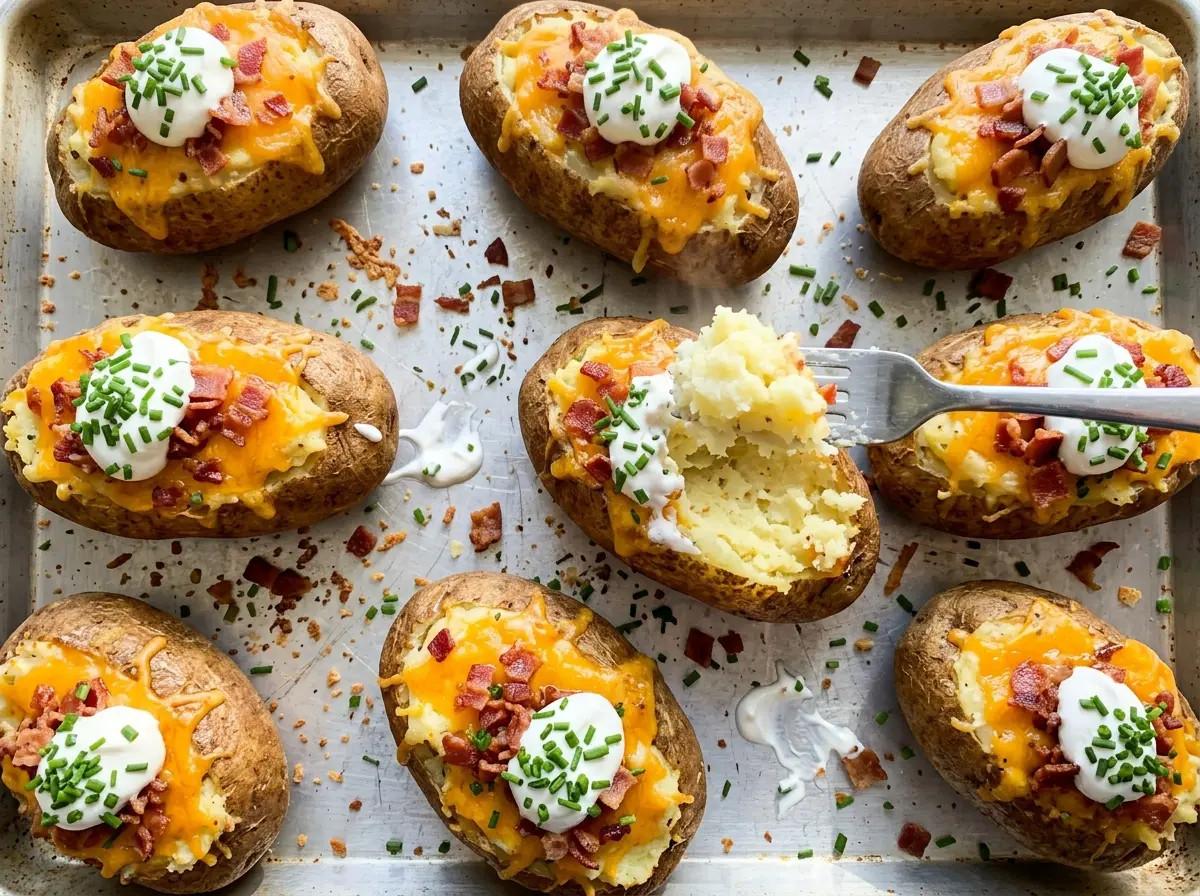
Kitchen Note
Let the baked potatoes cool for about 10 minutes before you handle them. They’re much easier to halve and scoop while warm than when they’re piping hot, and you’ll be less likely to tear the skins.
Save these loaded twice baked potatoes for a cozy dinner side: crisp bacon, sharp cheddar, and a fluffy sour cream filling tucked into russet shells.
Why a Quarter-Inch of Potato Belongs in Every Shell
The easiest way to end up with a broken potato boat is to scoop too close to the skin. Leave a quarter-inch layer of potato inside each half, and the shell has enough structure to hold the filling through the second bake. That small cushion also keeps the filling from drying against the skin.
Russets are a good fit here because they’re large enough to make generous halves and their skins hold up when you scoop them. As you work, use a spoon and take out the center in manageable scoops rather than scraping hard against the sides. A few small patches of potato left behind are better than a hole in the shell. The filling still tastes rich and creamy, and the shells stay intact on the baking sheet.
Don’t worry about making the potato edges perfectly even. The goal is a sturdy shell with room for the filling, not a paper-thin skin. If one half gets a small tear, nestle it against the other halves on the rimmed baking sheet and fill it gently; the cheese on top helps keep the filling in place as it bakes.
What the Russets, Warm Milk, and Sharp Cheddar Each Bring

- Russet potatoes — Their size gives you useful shells and plenty of fluffy flesh for the filling. Choose potatoes that feel firm and have no soft spots; keeping the skins intact matters more than finding unusually large ones. Yukon gold potatoes can work, but their thinner skins are more delicate and their centers make a denser filling.
- Sharp cheddar — Its tang keeps the buttery filling from tasting flat, and dividing it gives you cheese inside and a melted layer on top. Monterey Jack works in the same amount if you want a milder, softer-tasting result. Shred the cheese yourself when you want the smoothest melt; packaged shreds are convenient, though their coating can make the topping less silky.
- Sour cream — This adds tang and a creamy texture that plain milk alone won’t give the potatoes. Full-fat plain Greek yogurt is a workable swap in the same amount, though it tastes a little sharper and less rich.
- Whole milk — Warming it before mashing helps it blend into the potato without cooling the filling. Whole milk gives the creamiest result; lower-fat milk will work, but the filling won’t feel quite as lush.
- Bacon — Cook it until crisp before crumbling so its salty, smoky bite stands out against the soft potato. Regular bacon from the grocery store is fine; there’s no need for a specialty cut.
- Green onions — Their fresh, mild bite cuts through the cheddar and sour cream. Slice them thinly so they distribute across the filling and the finished tops.
Build the Filling Without Losing the Fluffy Texture
Bake the Russets Until a Knife Slides In Easily
Heat the oven to 400°F. Scrub and dry the potatoes, prick each several times with a fork, then rub them with olive oil and half the kosher salt. Set them on a rimmed baking sheet and bake for 55 to 70 minutes, until a knife pierces the centers easily. The potatoes need to be tender all the way through; a firm center will leave lumps in the filling.
Cook the Bacon While the Potatoes Bake
Set the bacon in a skillet over medium heat and cook for 8 to 10 minutes, turning as needed, until crisp. The slices should be browned and firm rather than floppy, since soft bacon won’t crumble cleanly. Drain them on a paper towel-lined plate, then crumble them once they’re cool enough to handle. This is a good time to slice the green onions, too.
Scoop the Centers and Mash While They’re Warm
Let the potatoes cool for about 10 minutes, until they’re easy to handle, then halve them lengthwise. Scoop the flesh into a bowl and leave a quarter-inch-thick layer inside each skin. Mash the potato with the butter, sour cream, warm milk, remaining salt, and black pepper until the mixture is creamy and no large dry pieces remain. Fold in one cup of cheddar, two-thirds of the crumbled bacon, and half the green onions.
Fill, Top, and Bake Until the Cheese Melts
Spoon the filling back into the shells and return them to the rimmed baking sheet. Scatter the remaining cheddar and bacon over the tops, then bake at 400°F for 15 to 20 minutes, until the potatoes are hot throughout and the cheese has melted. The filling should look puffed and the cheese should settle into the ridges rather than sit in a cold pile. Rest the potatoes for 5 minutes, then finish with the remaining green onions.
Two Simple Ways to Change the Bacon Balance
Make the potatoes vegetarian
Leave out the bacon and skip cooking it. Keep the cheddar and green onions in the filling, then top the filled shells with the remaining cheddar before baking. You’ll lose the smoky, salty contrast, but the sour cream and sharp cheddar still make a full, savory filling.
Keep all the bacon on top
For a more pronounced bacon bite, fold none into the filling and save all the crumbled bacon for the topping. The potato mixture stays smooth and cheesy, while the bacon flavor is concentrated at the surface. It won’t be quite as evenly distributed from bite to bite.
Storage and Reheating
- Refrigerator: Refrigerate leftovers in a covered container within 2 hours of baking and use within 3 to 4 days. The potato shells soften as they sit.
- Freezer: These freeze well, though the skins soften after thawing. Freeze cooled potatoes individually in airtight wrapping for up to 2 months, then thaw overnight in the refrigerator.
- Reheating: Warm thawed potatoes in a 350°F oven until the centers reach 165°F. A microwave also works for a quick single serving, but the skin will be softer; avoid reheating the same potato more than once.
Questions That Come Up When Making Twice Baked Potatoes
Loaded Twice Baked Potatoes
Ingredients
Equipment
Method
- Preheat the oven to 400°F.
- Scrub and dry the potatoes, then prick each several times with a fork.
- Rub the potatoes with olive oil and 1/2 teaspoon salt, then place them on a rimmed baking sheet.
- Bake for 55 to 70 minutes, until easily pierced with a knife.
- While the potatoes bake, cook the bacon in a skillet over medium heat for 8 to 10 minutes, turning as needed, until crisp.
- Drain the bacon on a paper towel-lined plate and crumble it.
- Let the potatoes cool for about 10 minutes, until easy to handle.
- Halve the potatoes lengthwise and scoop the flesh into a bowl, leaving a 1/4-inch-thick shell.
- Mash the potato flesh with the butter, sour cream, warm milk, remaining 1/2 teaspoon salt, and black pepper.
- Fold in 1 cup cheddar, two-thirds of the bacon, and half the green onions.
- Spoon the filling into the potato shells and return them to the baking sheet.
- Top with the remaining 1/2 cup cheddar and bacon.
- Bake at 400°F for 15 to 20 minutes, until hot throughout and the cheese is melted.
- Rest for 5 minutes.
- Scatter the remaining green onions over the potatoes before serving.




