
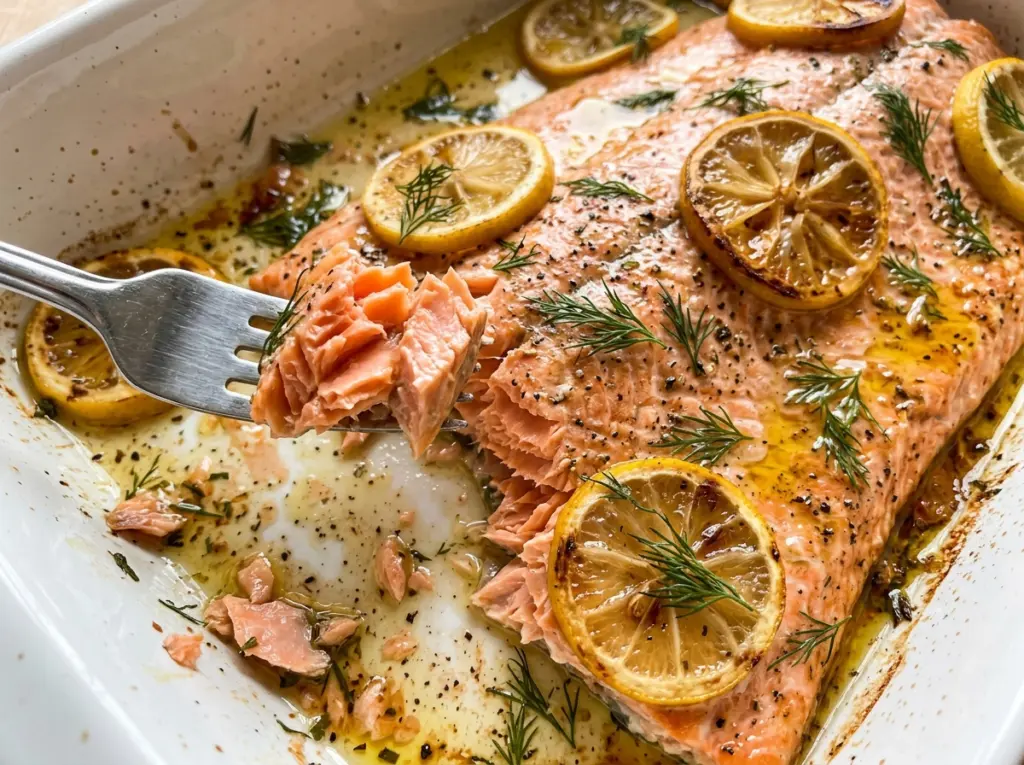
A salmon fillet can look ready around the edges while the thickest part is still undercooked, which is why I don’t judge it by color alone. For oven roasted salmon, a quick check with an instant-read thermometer takes the guesswork out of getting the center just right without drying out the thinner end.
I keep the preparation simple: pat the fish dry, brush it with olive oil, season it, and cover it with thin lemon slices. Roasting the fillet skin-side down on parchment means there’s no flipping or wrestling a large piece of fish off the pan. The lemon softens as it roasts, and the salmon flakes easily when it’s ready, with a clean, fresh flavor and very little fuss.
Kitchen Note
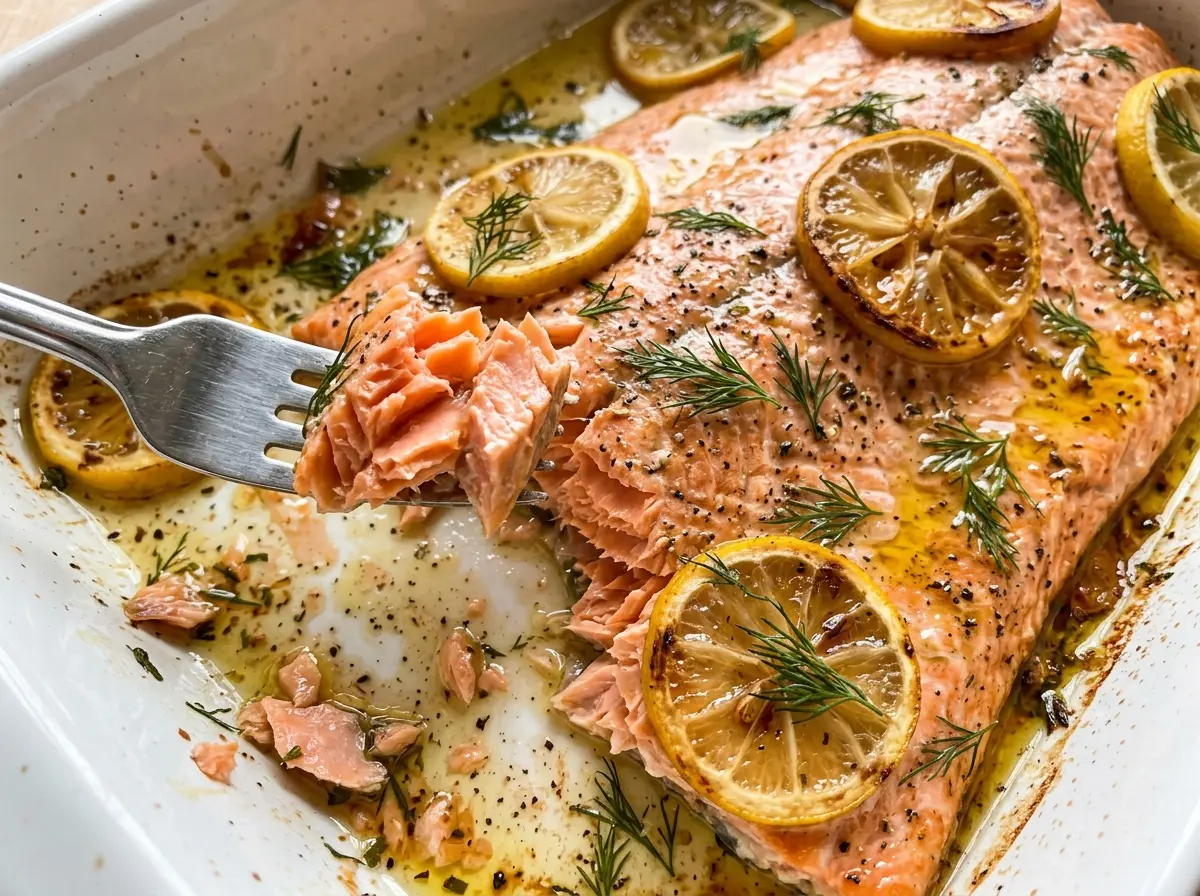
Start checking at the early end of the roasting window, especially if your fillet tapers at one end. The thickest section is the reliable place to take the temperature, not the thin tail, which cooks faster.
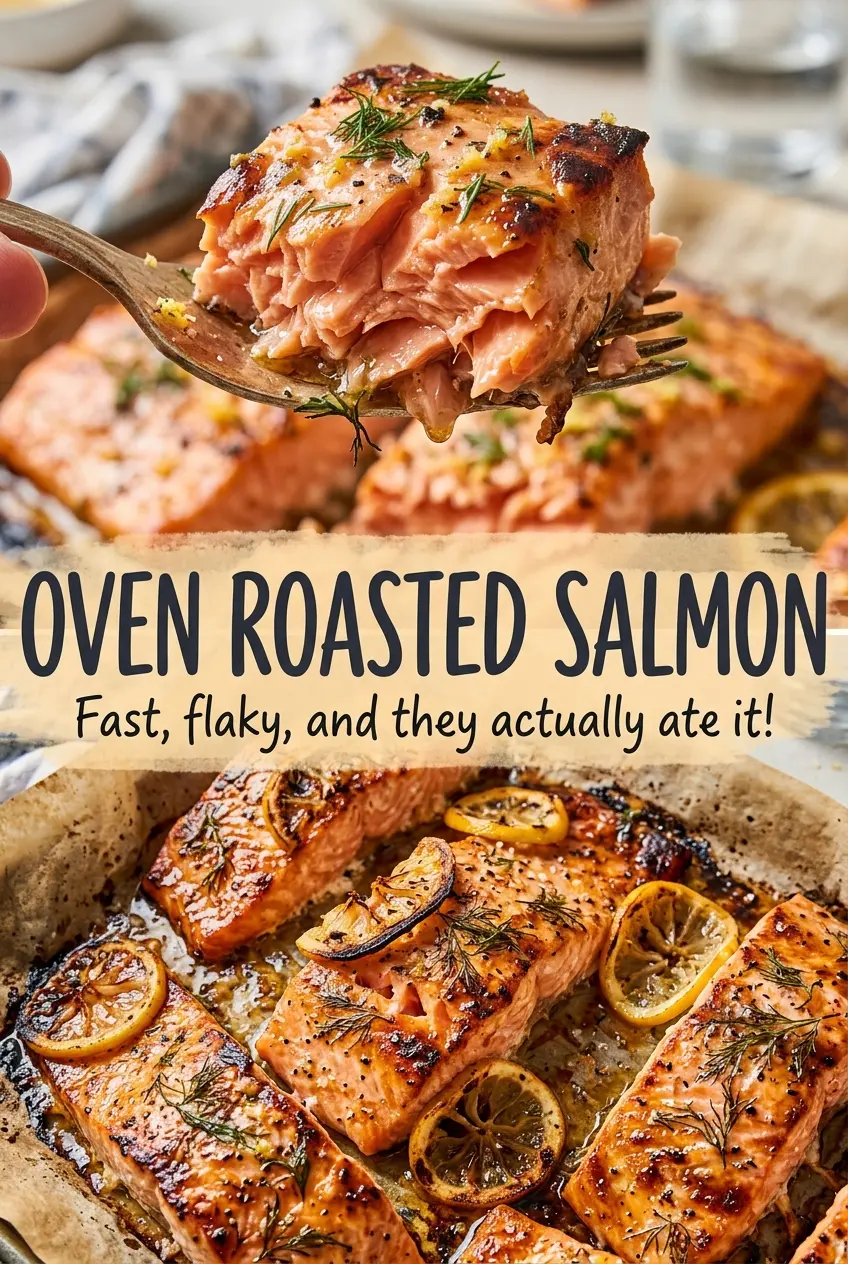
Save this oven roasted salmon for a no-flip dinner with a juicy center, tender lemon slices, and an easy parchment-lined cleanup.
Why This Salmon Goes Skin-Side Down, Not Flesh-Side Down
A large fillet is awkward to turn, and it doesn’t need to be flipped to cook through in the oven. Keeping it skin-side down gives the fish a stable base on the parchment and leaves the delicate flesh facing up, where the olive oil, seasoning, and lemon slices go. It’s a calmer way to handle a whole piece than trying to lift and turn it halfway through.
There’s one expectation worth setting: the parchment-lined pan and the skin-down position are designed for gentle roasting, not crisp skin. If crisp skin is your priority, this preparation won’t deliver that particular texture. Here, the payoff is a tender top, a fillet that stays in one piece for serving, and no need to fuss with it while it cooks. The skin also helps hold the fish together as you lift portions from the pan.
The salmon itself is the main event, so a fresh, evenly thick fillet gives you the most predictable result. A tapered piece still works; just use the thickest section as your doneness reference and expect the narrow end to finish first. That small difference is normal, not a sign that the whole pan needs more time.
What the Skin, Olive Oil, and Lemon Each Bring to the Pan
- Skin-on salmon — The skin helps the fillet hold together on the baking sheet and makes the fish easier to lift after roasting. Freshness matters more than choosing a premium label; look for fish that smells clean and has moist-looking flesh. If you have skinless salmon instead, it can still roast on the parchment, but the flesh has less protection from direct contact with the pan and may be more delicate to serve.
- Olive oil — A thin coating helps the salt and pepper cling to the fish and keeps the surface from looking dry as it roasts. A standard everyday olive oil is plenty; there’s no need to use an expensive finishing oil because the lemon and fish are the focus. For an oil-free version, leave it out rather than adding a different fat; the seasoning may not coat quite as evenly.
- Fresh lemon — Thin slices sit over the fish and soften as they roast, lending a gentle citrus aroma without covering up the salmon. Choose a firm lemon that slices cleanly; there’s no benefit to buying an especially fancy variety here. If you don’t have a lemon, you can leave it off, but the finished fish will lack that fresh citrus note. Bottled juice won’t give you the same roasted-slice effect.
Three Simple Stages for a Hands-Off Roast
Set Up the Hot Pan
Heat the oven to 400°F and line a rimmed baking sheet with parchment paper. The rim catches the oil and any juices released by the fish, while the parchment gives the fillet a nonstick surface. Lay the paper flat so it doesn’t fold up over the salmon. Have the pan ready before seasoning, since the fish can go straight into the oven once prepared.
Dry and Season the Fillet
Pat the salmon dry, then place it skin-side down on the prepared sheet. Brush the top with olive oil and sprinkle it with kosher salt and black pepper. Drying the surface first helps the oil spread instead of beading up on moisture. Arrange the thin lemon slices over the fish so they’re distributed across the fillet rather than bunched in one spot.
Roast Until the Center Is Ready
Roast for 12 to 16 minutes, checking the thickest part with an instant-read thermometer. The target is 145°F, and the fish should also flake easily with a fork. Don’t rely on the thin end to tell you whether the middle is done; it will cook sooner. If the center hasn’t reached the target yet, keep roasting and check again rather than pulling the whole fillet early.
Easy Changes for Different Fillets and Preferences
Roast Skinless Salmon Instead
Use a skinless fillet of the same size and set it directly on the parchment before brushing and seasoning it. Keep the lemon slices on top and use the thermometer to judge doneness, since a skinless piece may cook differently and is more fragile to lift. You’ll still get tender roasted salmon, but it won’t have the skin’s support when serving.
Make It Lower in Sodium
Use less kosher salt or omit it, keeping the black pepper and lemon as written. The salmon will taste less seasoned, but the citrus still gives the surface a bright lift. Since salt is sprinkled directly over the fish, reducing it is straightforward and doesn’t require changing the roasting method.
Storage and Reheating
- Refrigerator: Store leftover salmon covered in the refrigerator and eat it within 3 to 4 days. The chilled fish firms up, but it’s still good flaked into a cold meal.
- Freezer: Freeze cooked portions tightly wrapped or in an airtight container for up to 2 to 3 months for best quality. Thaw them in the refrigerator before using.
- Reheating: Warm portions gently in the microwave or in a covered oven-safe dish until they reach 165°F. High heat for too long dries salmon out, so stop as soon as it’s hot throughout.
Questions That Come Up When Roasting Salmon
Oven Roasted Salmon
Ingredients
Equipment
Method
- Heat the oven to 400°F.
- Line a rimmed baking sheet with parchment paper.
- Pat the salmon dry.
- Place the salmon skin-side down on the baking sheet.
- Brush the salmon with olive oil.
- Sprinkle the salmon with salt and pepper.
- Arrange the lemon slices over the salmon.
- Roast for 12 to 16 minutes, until the thickest part reaches 145°F on an instant-read thermometer and flakes easily with a fork.




