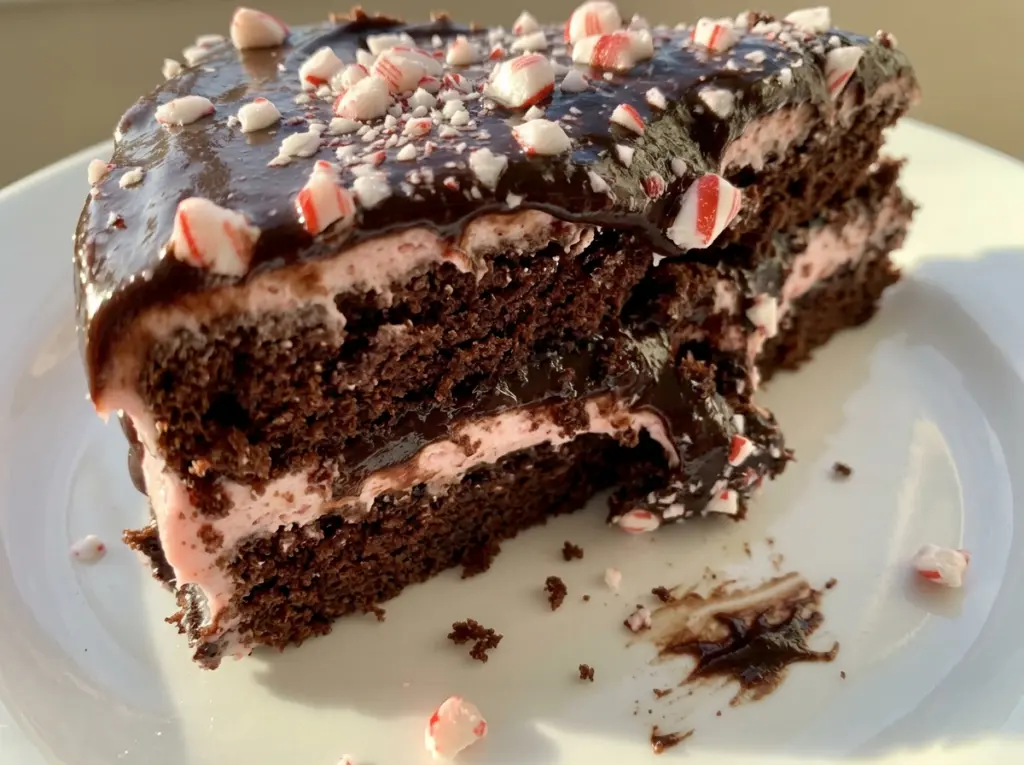
The batter loosens dramatically when the boiling water goes in, and the first time I made this cake, I stopped to check that I hadn’t missed a step. I hadn’t. That thin, pourable mixture is exactly what goes into the pan for this peppermint fudge cake, and it bakes into a tender chocolate crumb beneath a thick layer of minty frosting.
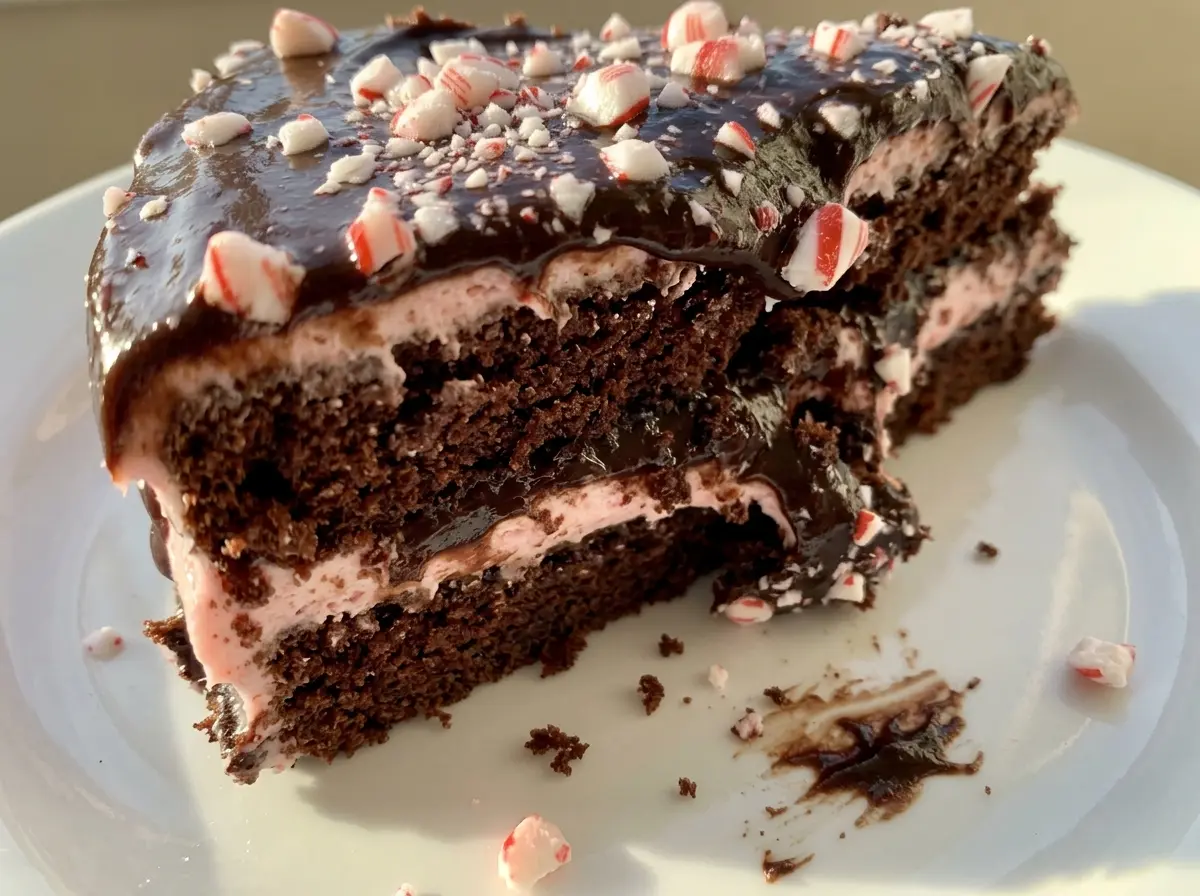
I like this cake because the chocolate comes through in both the cake and the frosting, while peppermint keeps each bite from feeling too rich. The frosting is made on the stovetop, then beaten until it’s smooth enough to spread. Let the cake cool all the way in its dish before frosting; warm cake will soften the topping before it has a chance to set. Once the frosting has rested, the slices show off a soft chocolate center and a fudgy peppermint top.
Kitchen Note
Give the frosted cake the full 15 minutes to set before slicing. That short wait keeps the fudge topping from dragging across the cut and makes each piece easier to lift from the dish.
Save this Peppermint Fudge Cake for its tender chocolate crumb and smooth peppermint fudge frosting.
Why Boiling Water Makes This Chocolate Cake Batter Look Wrong
Most cake batters are thick enough to mound on a spoon. This one isn’t. The boiling water loosens the cocoa mixture, so the batter pours easily into the 9×13-inch dish. Don’t try to correct that texture with extra flour; it’s part of the formula, and adding flour changes the balance that gives the baked cake its tender crumb.
After the water goes in, stir until the batter looks smooth, then get it into the oven. You’re not trying to whip air into it at this point. The eggs and the two leaveners have already been mixed with the other ingredients, and the batter needs an even bake in the prepared dish. A thin batter can look underwhelming in the bowl, but it spreads level without extra coaxing and gives the frosting a broad, even surface to cover.
That contrast matters when you’re making a sheet-style cake: the cake stays soft, while the frosting supplies the dense, fudge-like finish. Trust the consistency in the bowl instead of using a familiar thick batter as your guide.
The Cocoa and Peppermint Choices That Shape Every Bite
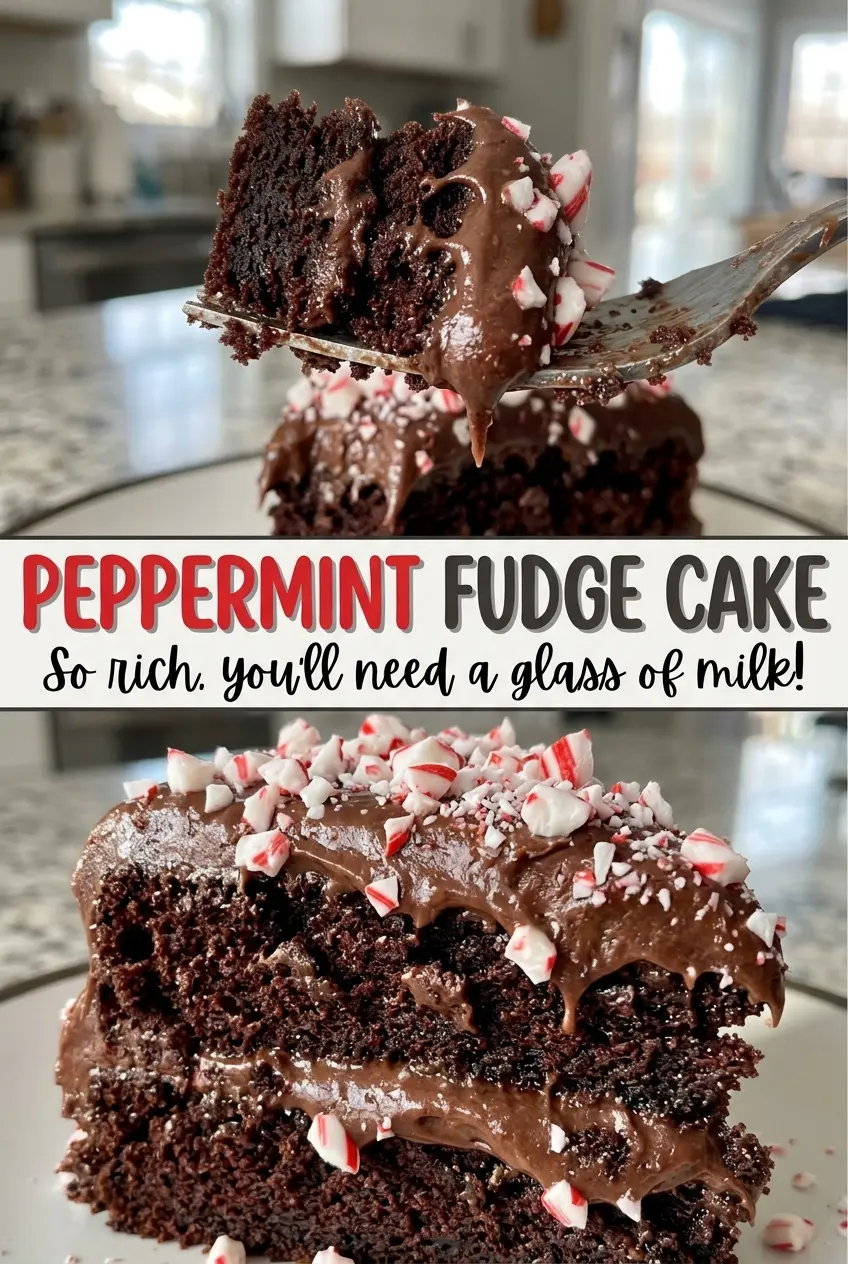
- Unsweetened cocoa powder — It gives the cake and frosting their chocolate flavor without adding extra sugar. Use plain unsweetened cocoa, not sweetened hot cocoa mix; a standard grocery-store cocoa works well here. Dutch-process cocoa isn’t a direct swap because its acidity differs, which can affect the cake’s baking soda.
- Peppermint extract — This is concentrated, so measure carefully rather than pouring by eye. Use peppermint extract, not peppermint oil; oil is not a one-for-one replacement and can make the frosting harsh. For a mint-free version, leave it out and keep the vanilla.
- Neutral oil — Oil keeps the cake moist without bringing a strong flavor of its own. Canola oil or vegetable oil fits the neutral-oil role; strongly flavored oils would distract from the cocoa and peppermint.
- Whole milk — It adds moisture to the cake and helps the frosting become spreadable. You can use 2% milk in the same quantity in either part; the result will be a little less rich. I’d avoid replacing it with a strongly flavored or sweetened milk.
- All-purpose flour — It gives the cake enough structure to hold the soft crumb and frosting. A direct cup-for-cup gluten-free replacement isn’t dependable in this formula, so stick with all-purpose flour for the texture described here.
- Powdered sugar and unsalted butter — These build the frosting’s smooth, thick body. Powdered sugar dissolves into the cocoa mixture more readily than granulated sugar, so don’t swap in regular sugar; unsalted butter also lets the cake’s measured salt stay in balance.
Mixing a Thin Batter and a Frosting That Spreads Smoothly
Whisk the dry ingredients, then beat the batter
Heat the oven to 350°F and coat a 9×13-inch baking dish with nonstick cooking spray. Whisk the flour, granulated sugar, cocoa powder, baking powder, baking soda, and salt in a large bowl so the leaveners are distributed throughout. Add the eggs, whole milk, neutral oil, and vanilla, then beat with an electric mixer on medium speed for 2 minutes. Scrape the bowl if dry pockets remain along the sides.
Stir in the boiling water
Add the boiling water and stir until the batter is smooth. It will be thin enough to pour, which is the right texture; don’t add flour to thicken it. Pour it into the prepared dish so it can bake in an even layer. If cocoa clings to the bowl, fold it in before pouring rather than leaving dry streaks behind.
Bake until the center has a few moist crumbs
Bake for 30 to 35 minutes. Test the center with a toothpick: it should come out with a few moist crumbs, not wet batter. A completely clean toothpick can mean the cake has baked longer than needed. Let the cake cool completely in the dish before you begin the frosting.
Beat the cocoa frosting until spreadable
Melt the butter in a medium saucepan over low heat, stir in the cocoa powder until smooth, and remove the pan from the heat. Beat in the powdered sugar in batches, alternating with the milk; adding them this way helps the frosting come together without a dry cloud of sugar. Beat in the peppermint and vanilla extracts until the frosting is smooth and spreadable, then spread it over the cooled cake.
Two Ways to Change the Peppermint Fudge Cake
Make it a vanilla fudge cake
Leave the peppermint extract out of the frosting and keep the vanilla. The cocoa frosting still spreads over the same chocolate cake, but the finish is mellow and vanilla-scented instead of minty.
Make a marbled peppermint-and-vanilla top
Beat the vanilla into the finished frosting, then divide it between two bowls. Beat the peppermint extract into one portion only, alternate spoonfuls of both frostings over the cooled cake, and gently swirl them together. You’ll get pockets of clear mint and vanilla rather than one uniform flavor.
Storage and Reheating
- Refrigerator: Cover the cake and refrigerate it for up to 4 days. The crumb and frosting will feel firmer when cold.
- Freezer: Freeze slices once the frosting has set, then wrap them tightly and store them in an airtight container for up to 2 months. Thaw in the refrigerator.
- Reheating: This cake is best served at room temperature, so let a slice lose its chill before eating. Skip the microwave; it can soften the butter in the frosting too quickly and make the topping slump.
Questions That Come Up While Making Peppermint Fudge Cake
Peppermint Fudge Cake
Ingredients
Equipment
Method
- Heat the oven to 350°F.
- Grease a 9x13-inch baking dish with nonstick cooking spray.
- Whisk the flour, granulated sugar, cocoa powder, baking powder, baking soda, and salt together in a large bowl.
- Add the eggs, milk, oil, and vanilla.
- Beat with an electric mixer on medium speed for 2 minutes.
- Stir in the boiling water until the batter is smooth.
- Pour the thin batter into the prepared dish.
- Bake for 30 to 35 minutes, until a toothpick inserted in the center comes out with a few moist crumbs.
- Cool completely in the dish.
- Melt the butter in a medium saucepan over low heat.
- Stir in the cocoa powder until smooth.
- Remove the pan from the heat.
- Beat the powdered sugar into the cocoa mixture in batches, alternating with the milk.
- Beat in the peppermint and vanilla extracts until smooth and spreadable.
- Spread the frosting over the cooled cake.
- Let it set for 15 minutes before slicing.