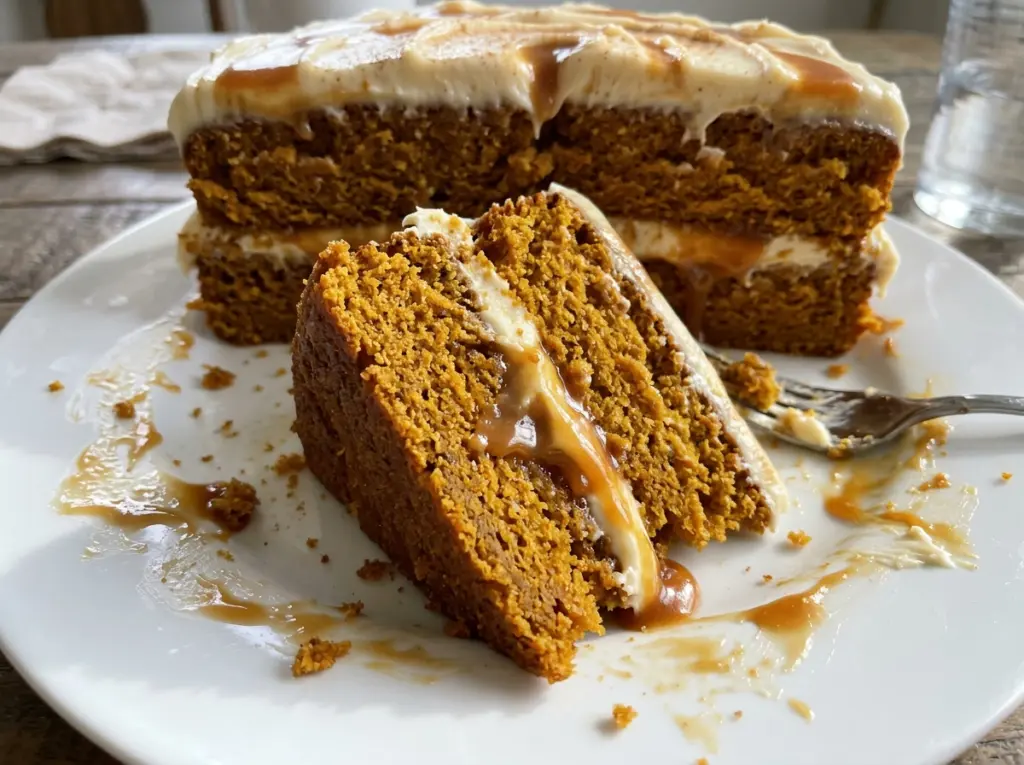
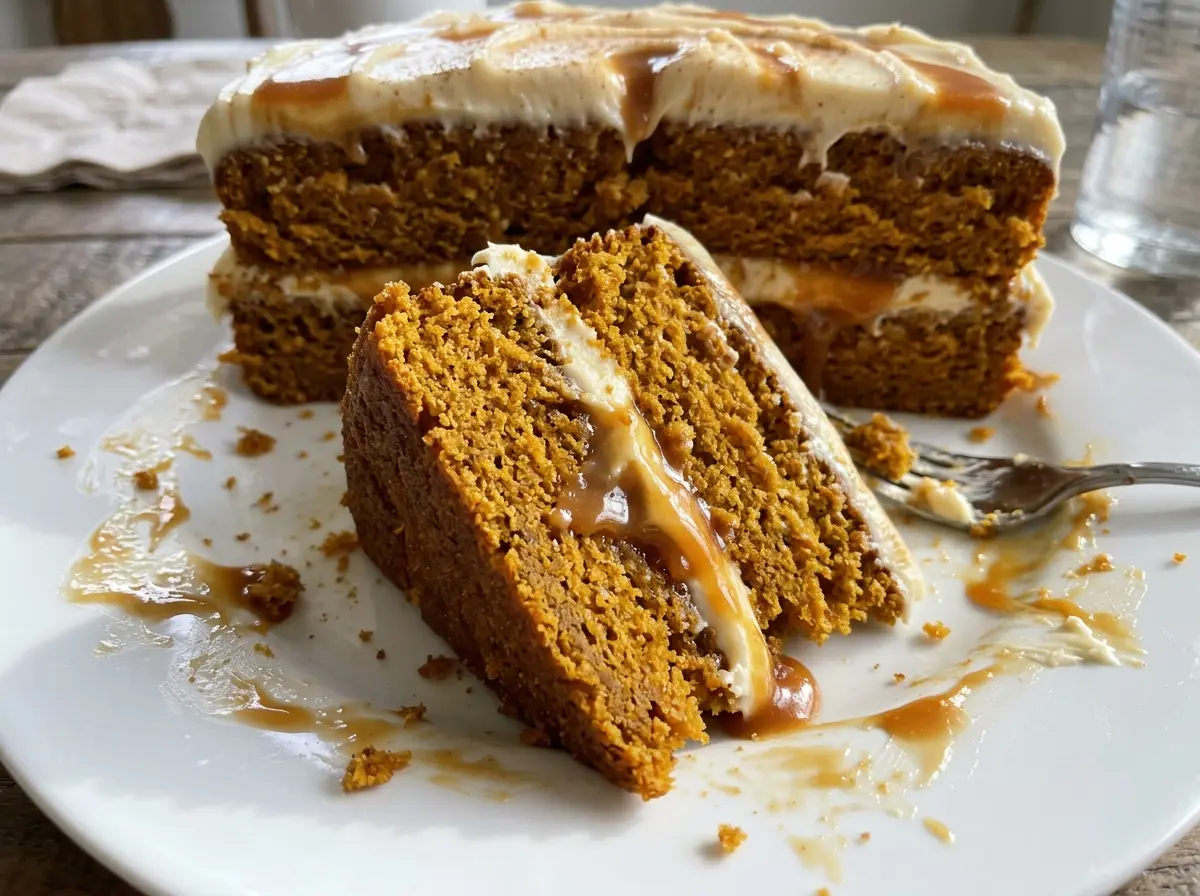
When the edges of this cake turn golden and the center springs back under a light touch, the whole kitchen smells like cinnamon and ginger. I wanted a pumpkin cake that stayed tender without needing a complicated mixing method, and this one comes together with a bowl, a whisk, and a 9×13-inch dish. The caramel cream cheese frosting gives each square a creamy finish with a little buttery sweetness.
Pumpkin puree, oil, and eggs make a moist batter, so there’s no need to cream butter and sugar or chase a fluffy, aerated mixture. I whisk the wet ingredients until smooth, then stir in the dry ingredients only until the last flour streaks disappear. That light touch keeps the crumb soft instead of heavy.
The cake needs to cool completely before the frosting goes on; otherwise, the cream cheese mixture softens and slides. Once it’s cool, the thick caramel blends into the frosting for a smooth, spreadable topping over the warmly spiced cake.
Kitchen Note
Let the cake cool completely right in the baking dish before you start frosting. I used to rush this part, but even a slightly warm center can soften the cream cheese topping and make it harder to spread neatly.
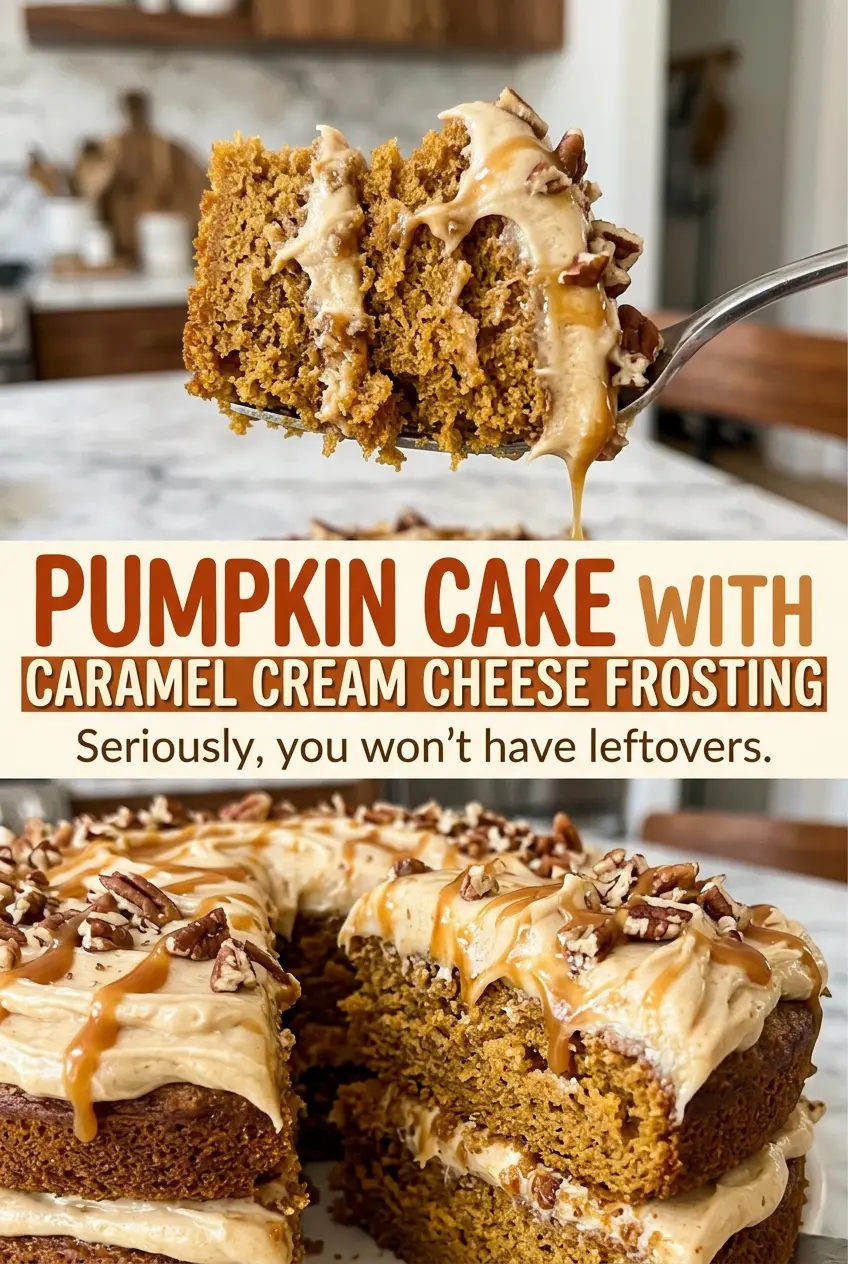
Save this pumpkin cake with caramel cream cheese frosting for a tender spiced crumb and a thick, buttery caramel finish.
Why This Pumpkin Cake Batter Shouldn’t Be Beaten Like a Butter Cake
A pumpkin cake can seem sturdy while it’s still in the bowl, but its moisture comes from pumpkin puree, oil, and eggs rather than a creamed butter base. That changes what the mixing needs to accomplish. The wet mixture should be smooth before the flour goes in; once flour is added, extra beating doesn’t make the cake lighter. It develops the flour instead, which can leave the finished crumb tighter and heavier.
Here, baking soda and baking powder provide lift while the batter stays moist and easy to spread. The goal isn’t to whip air into it. It’s to combine the ingredients evenly and stop as soon as the dry pockets are gone. You’ll get a soft, close crumb that holds together when you cut the cake, with enough structure for a generous layer of frosting.
The same idea is why I use a broad baking dish rather than trying to make a tall, dramatic cake. The batter has room to bake in an even layer, and the cake is easy to frost and portion once it has cooled. Treat the batter gently, and let the leaveners do their work in the oven.
What the Pumpkin, Oil, and Thick Caramel Each Bring
- Pumpkin puree — It supplies the cake’s pumpkin character and moisture. Use plain puree, not pumpkin pie filling, which is already sweetened and seasoned and would change the balance of the batter.
- Neutral oil — Oil keeps the crumb moist without adding a strong flavor that competes with the spices. Canola is a good choice; another mild neutral oil works in the same role.
- Granulated and light brown sugars — The two sugars sweeten the cake while the brown sugar brings a deeper, molasses-like note. Packed light brown sugar gives the batter a fuller flavor than using only granulated sugar.
- Cinnamon, ginger, and nutmeg — Together, these ground spices give the pumpkin a warm, rounded taste. Freshly opened spices tend to smell more vivid, but use what you have rather than adding extra spice to compensate for an older jar.
- Block cream cheese and unsalted butter — These make the frosting creamy and rich. Softening them before beating helps them blend smoothly; a spreadable tub-style cream cheese has a different consistency and isn’t the right choice here.
- Thick caramel sauce — Thick sauce adds caramel flavor without making the frosting loose. A thin drizzle-style topping can make the finished mixture harder to spread, so choose a caramel sauce with body.
Mixing, Baking, and Frosting Without Losing the Soft Crumb
Whisk the Dry Ingredients Evenly
Heat the oven to 350°F and coat a 9×13-inch baking dish with nonstick cooking spray. In a medium bowl, whisk the flour, baking soda, baking powder, cinnamon, ginger, nutmeg, and salt until the spices look evenly distributed. Break up any visible clumps as you whisk, especially in the leaveners. An even dry mixture helps the cake rise consistently from edge to center.
Make a Smooth Pumpkin Base
In a large bowl, whisk the pumpkin puree with both sugars, the oil, eggs, and vanilla until the mixture looks smooth. Add the flour mixture and stir just until no dry streaks remain. Scrape along the bottom and sides of the bowl so you don’t leave pockets of flour behind. Stop as soon as everything is combined rather than beating the batter until it looks fluffy.
Bake Until the Center Springs Back
Spread the batter evenly in the prepared dish, taking it into the corners so the layer is level. Bake for 30 to 35 minutes. The center should spring back when you press it lightly, and a toothpick inserted there should come out with a few moist crumbs. If the toothpick is coated in wet batter, give the cake more time and check again.
Beat and Spread the Caramel Frosting
Set the baked cake on a wire rack and let it cool completely in the dish. In a large bowl, beat the softened cream cheese and butter with an electric mixer on medium speed until smooth. Add the powdered sugar in batches, beating on low until combined, then beat in the thick caramel sauce, vanilla, and salt until the frosting is smooth and spreadable. Spread it over the cooled cake in an even layer.
Two Ways to Change the Finish Without Changing the Cake
Leave It Unfrosted for a Less-Sweet Snack Cake
Bake the pumpkin cake as written and leave off the frosting. You’ll get a simpler, less-sweet cake where the cinnamon, ginger, and nutmeg come through more clearly, without the creamy caramel layer.
Keep the Frosting Separate Until Serving
Instead of frosting the whole cake, hold the caramel cream cheese frosting separately and spread it onto individual pieces as you cut them. This gives you control over how much frosting goes on each square, though it’s less convenient than having the whole cake ready to slice.
Storage and Reheating
- Refrigerator: Cover the frosted cake and refrigerate it for up to 4 days. The crumb and frosting will feel firmer when cold.
- Freezer: Freeze individual pieces in an airtight container, with parchment between layers, for up to 2 months for best quality. Thaw them in the refrigerator; the frosting may be a little softer after thawing.
- Reheating: This cake is best served chilled or briefly brought toward room temperature; don’t microwave a frosted piece, since the frosting can melt. Keep cream cheese-frosted cake at room temperature for no more than 2 hours.
Questions About Pumpkin Cake and Caramel Frosting
Pumpkin Cake with Caramel Cream Cheese Frosting
Ingredients
Equipment
Method
- Heat the oven to 350°F.
- Coat a 9x13-inch baking dish with nonstick cooking spray.
- In a medium bowl, whisk together the flour, baking soda, baking powder, cinnamon, ginger, nutmeg, and salt.
- In a large bowl, whisk together the pumpkin, granulated sugar, brown sugar, oil, eggs, and vanilla until smooth.
- Add the flour mixture to the pumpkin mixture and stir just until no dry streaks remain.
- Spread the batter evenly in the prepared dish.
- Bake for 30 to 35 minutes, until the center springs back when lightly pressed and a toothpick comes out with a few moist crumbs.
- Set the cake on a wire rack and cool completely in the dish.
- In a large bowl, beat the cream cheese and butter with an electric mixer on medium speed until smooth.
- Add the powdered sugar in batches, beating on low until combined.
- Beat in the caramel sauce, vanilla, and salt until smooth and spreadable.
- Spread the frosting over the completely cooled cake.