
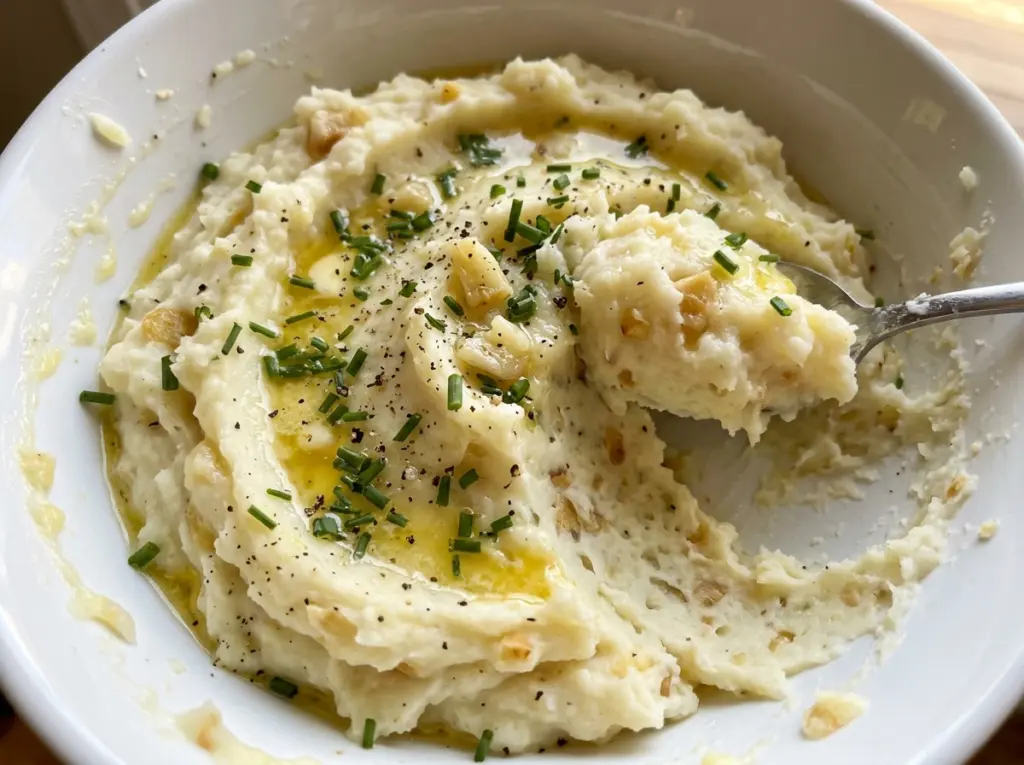
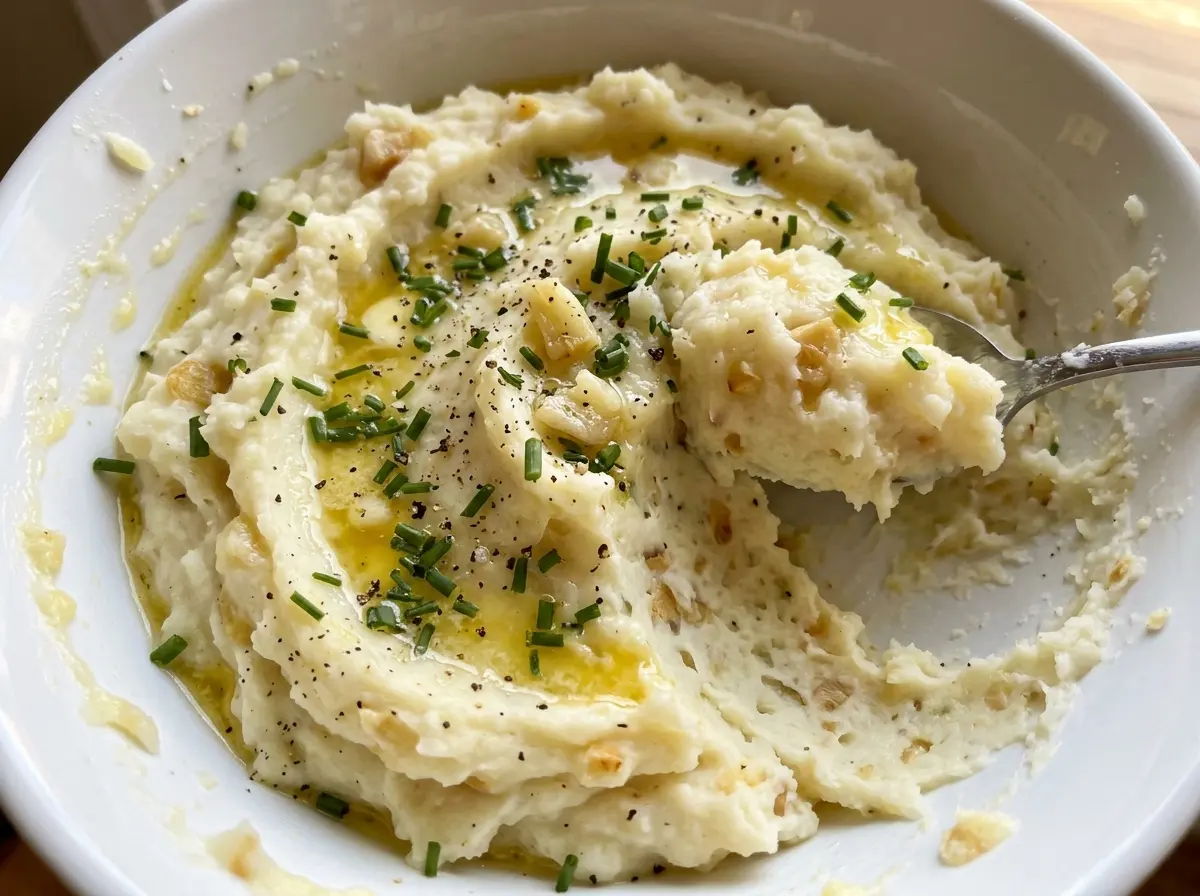
When the foil comes off the roasted garlic, the cloves should be soft enough to press from their skins with almost no effort. They turn mellow and sweet in the oven, which is exactly what I want folded into a pot of mashed potatoes—not the sharp bite of raw garlic. These roasted garlic mashed potatoes have a rich, buttery base, with the garlic woven through instead of sitting in one strong pocket.
Yukon Golds give the mash a naturally creamy texture, and warming the milk before it goes in helps keep the potatoes soft rather than cooling them down mid-mash. I stir it in gradually, stopping when the potatoes look mostly smooth and still hold their shape. The result is a spoonful that’s plush and savory, with just enough black pepper at the finish.
Kitchen Note
Slice far enough across the garlic head to expose the tips of the cloves. If you only cut through the papery top, the oil won’t reach the garlic, and the cloves won’t roast as evenly.
Save these roasted garlic mashed potatoes for a meal that deserves a creamy, mellow-garlic side with no harsh raw-garlic bite.
Cold Water Gives Yukon Golds a More Even Cook
Starting the potatoes in cold water gives the pieces time to heat through gradually. If they go straight into boiling water, the outsides can soften before the centers are tender. That’s especially frustrating when you’re aiming for a smooth mash: some pieces break down while others still feel firm under the masher.
Cutting the potatoes into similar 1 1/2-inch pieces helps them finish at about the same time. Keep the simmer steady after the water boils instead of letting it thrash; a hard boil can knock the edges off the pieces before the centers are ready. The fork test is more useful than the timer alone. When a fork slips into a piece easily, the potatoes are ready to drain and mash. Yukon Golds bring a creamy, buttery quality of their own, so there’s no need to chase tenderness by cooking them until they fall apart in the pot.
Why Yukon Golds, Roasted Garlic, and Warm Milk Belong Together

- Yukon Gold potatoes — Their creamy texture suits a mash that’s meant to be smooth without becoming fluffy or dry. Peeling and cutting them into even pieces makes the cooking more consistent; the potatoes don’t need to be especially large or pristine since they’ll be mashed.
- Garlic and olive oil — A whole head becomes soft and mellow when roasted, a different result from stirring raw garlic into the potatoes. Use a fresh, firm head so the cloves roast evenly. The olive oil coats the exposed cloves; a basic olive oil works well here.
- Unsalted butter and whole milk — Butter brings richness, while whole milk loosens the mash without making it thin when added gradually. Unsalted butter lets the kosher salt stay in your control. Whole milk is a good fit for this texture; a lower-fat milk won’t give the mash the same rounded feel.
- Kosher salt and black pepper — Salt in the cooking water seasons the potatoes as they cook, and the remaining salt goes in with the milk at the end. Black pepper adds a gentle savory edge. Keep the salt divided between those two points rather than putting it all in the pot at the start.
From Foil-Roasted Garlic to Creamy Potatoes
Roast the Garlic Until the Cloves Turn Soft and Golden
Heat the oven to 400°F. Slice off the top of the garlic head to expose the cloves, drizzle them with olive oil, wrap the head in foil, and set it on a baking sheet. Roast for 40 to 50 minutes, until the cloves are soft and golden. If the centers still feel firm, give them more time rather than trying to mash them into the potatoes as they are.
Simmer the Potato Pieces Until a Fork Slides In Easily
Put the peeled, cut potatoes in a 5-quart pot with the cold water and 2 teaspoons of the kosher salt. Bring the pot to a boil over high heat, then lower the heat and simmer for 15 to 20 minutes. The pieces should be tender enough for a fork to pass through without resistance. Drain them when they reach that point; waiting until they’re breaking apart makes it harder to get an even mash.
Let the Drained Potatoes Shed Excess Moisture
Warm the milk in a microwave-safe measuring cup until hot but not boiling, about 1 minute. Drain the potatoes, return them to the pot over low heat, and stir gently for 1 minute. This brief time in the warm pot lets excess moisture evaporate before the butter and milk go in. Don’t skip the gentle stirring, since it helps dry the potatoes without roughing them up.
Mash First, Then Add the Warm Milk Gradually
Squeeze the roasted garlic cloves from their skins into the pot and add the butter. Mash until the potatoes are mostly smooth, then stir in the warm milk a little at a time. Adding it gradually makes it easier to stop at a creamy consistency instead of overshooting into loose mash. Mix in the remaining kosher salt and black pepper at the end, when you can see how the seasoning is distributed.
How to Adjust the Garlic and Texture to Suit Your Table
Make the Garlic Milder
Roast the garlic head as usual, then squeeze in only some of the cloves before mashing. The potatoes keep their buttery garlic character, but the garlic won’t be as prominent. Keep the remaining roasted cloves refrigerated in a covered container and use them within a few days.
Offer Two Levels of Garlic in One Batch
For a table with different garlic preferences, mash the potatoes with the butter first and divide them between two bowls. Stir the roasted garlic into one portion, then leave the other plain. Both portions keep the same creamy potato base, while each person can choose the amount of garlic they like.
Leave a More Rustic Texture
Stop mashing while a few small potato pieces remain instead of working the mixture until it’s nearly smooth. The result feels more rustic and substantial, with little bites of potato alongside the roasted garlic. Keep the milk gradual so the looser texture doesn’t turn soupy.
Storage and Reheating
- Refrigerator: Store leftovers in a covered container for 3 to 4 days. The potatoes will firm up as they chill.
- Freezer: Freeze in an airtight container for up to 1 month. Thaw overnight in the refrigerator; the texture may be a little less smooth after thawing.
- Reheating: Warm gently on the stovetop over low heat or in the microwave, stirring between intervals, until hot throughout and 165°F. High heat can dry the potatoes or scorch them at the bottom of the pot.
Questions That Come Up Before the Potatoes Hit the Table
Roasted Garlic Mashed Potatoes
Ingredients
Equipment
Method
- Heat the oven to 400°F.
- Slice off the top of the garlic head to expose the cloves.
- Drizzle the garlic with olive oil.
- Wrap the garlic in foil and set it on a baking sheet.
- Roast for 40 to 50 minutes, until the cloves are soft and golden.
- Put the potatoes, cold water, and 2 teaspoons of the kosher salt in a 5-quart pot.
- Bring to a boil over high heat.
- Reduce the heat and simmer for 15 to 20 minutes, until the potatoes are easily pierced with a fork.
- Warm the milk in a microwave-safe measuring cup until hot but not boiling, about 1 minute.
- Drain the potatoes.
- Return the potatoes to the pot over low heat for 1 minute, stirring gently to let excess moisture evaporate.
- Squeeze the roasted garlic cloves out of their skins into the pot.
- Add the butter and mash until mostly smooth.
- Gradually stir in the warm milk.
- Mix in the remaining 1 teaspoon kosher salt and the black pepper.




