
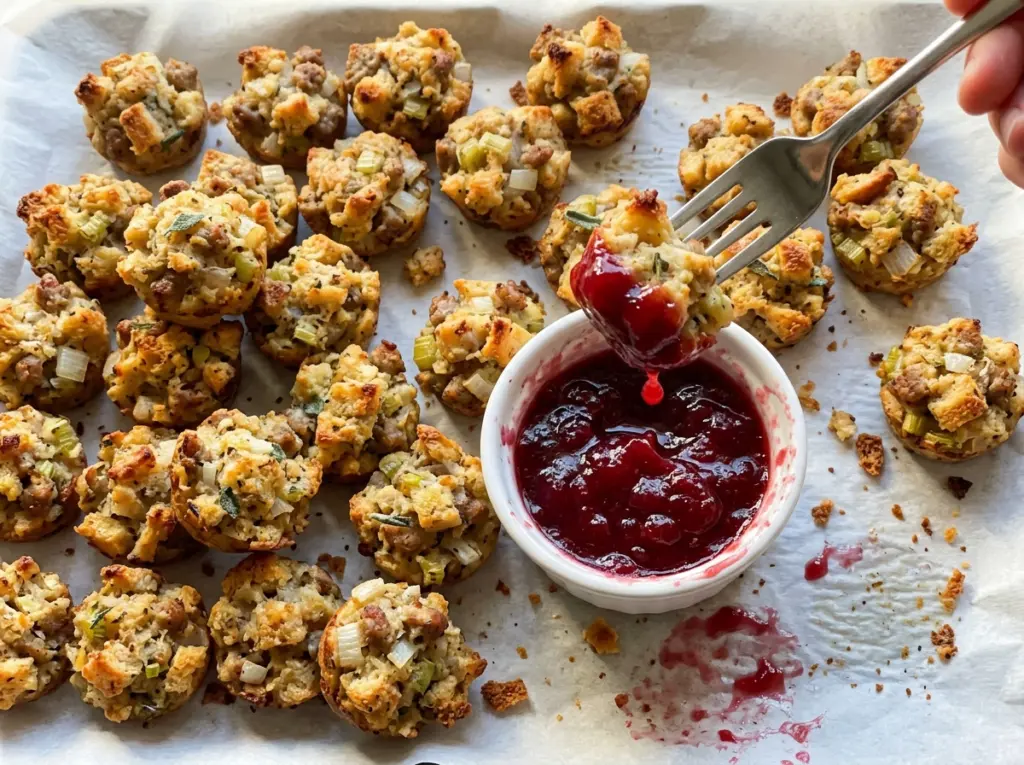
The sausage browns in the skillet while the onion and celery soften in the drippings, and that’s when this starts to smell like stuffing instead of a pile of bread cubes. I make these sausage stuffing bites when I want the familiar savory flavor of holiday stuffing in a form that’s easy to pass around, with cranberry sauce ready for dipping.
One small pause makes the mixture easier to handle: after the hot sausage and vegetables meet the bread, let everything cool for 10 minutes before adding the broth and eggs. The bread gets a chance to take on the savory skillet flavor, and the eggs go into a warm—not piping-hot—mixture. Once baked, the bites have golden edges and tender centers, with a bright cranberry dip alongside.
Kitchen Note
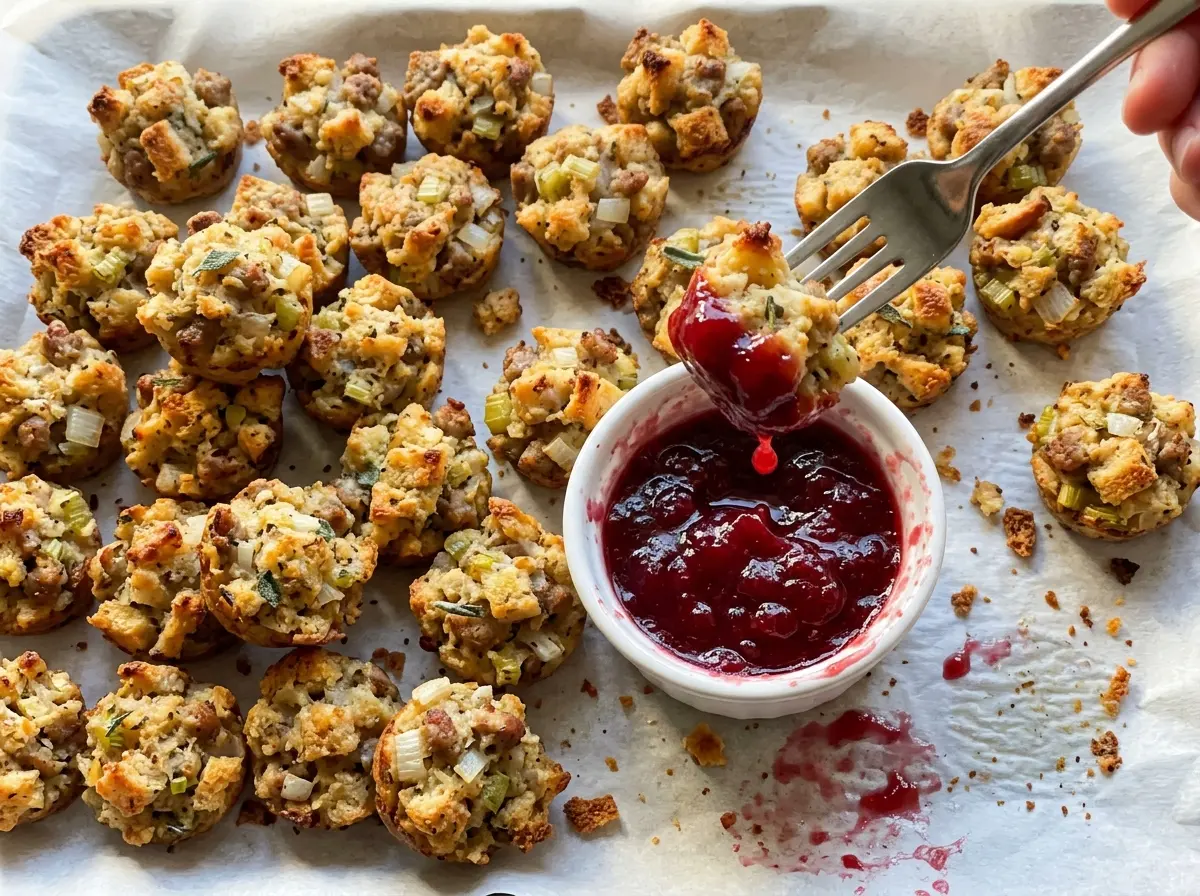
Shape all 24 bites to about the same size, so they brown and finish baking at roughly the same pace. If some are noticeably larger, their centers may need longer while the smaller ones are already golden.
Save these sausage stuffing bites for a party spread: golden, savory bites with a tangy cranberry dipping sauce.
Why the Bread Needs a Few Minutes With the Sausage Before the Eggs Go In
These bites aren’t made by pouring broth over dry bread and hoping it all comes together. First, the hot sausage, onion, celery, and poultry seasoning are tossed with the cubes on their own. That brief rest gives the bread a chance to pick up the flavor from the skillet before the liquid and binder are added.
Let the mixture cool for 10 minutes, then add the warmed broth and beaten eggs. That order matters: eggs mixed into a very hot sausage mixture can begin to set in little bits instead of coating the bread evenly. After the broth is tossed through, the cubes should look evenly moistened rather than soaked. Then the eggs help hold the mixture together as you shape it. Keeping those additions in sequence gives you bites that hold their shape without turning into dense, wet stuffing.
What Gives These Bites Their Stuffing Flavor—and Their Structure

- Unseasoned dried bread cubes — Dried cubes absorb broth without bringing extra salt or herbs that compete with the sausage and poultry seasoning. Similar-sized cubes moisten more evenly; seasoned cubes can make the finished bites taste saltier and harder to balance.
- Bulk pork sausage — The browned sausage supplies both savory flavor and the drippings used to soften the vegetables. Bulk sausage is easiest to break into small pieces in the skillet; links with casings don’t give you the same texture without extra prep. Choose a familiar mild sausage for a classic stuffing taste, or use hot bulk pork sausage for a spicier variation.
- Yellow onion, celery, and poultry seasoning — Finely diced vegetables soften quickly and tuck into the bites instead of leaving large crunchy pieces. Poultry seasoning gives the mixture its familiar herb-and-spice character, so it’s worth using a fresh, aromatic jar if yours has been sitting open for a long time.
- Warm low-sodium chicken broth and eggs — Warm broth soaks into the dried bread more readily than cold broth, while the beaten eggs help bind the mixture. Low-sodium broth leaves more room for the seasoning in the sausage to come through. Add the eggs after the mixture has cooled, so they coat the bread rather than setting against the hot skillet mixture.
- Whole-berry cranberry sauce, orange juice, and Dijon mustard — Whole berries give the dip a little texture, while orange juice loosens the sauce and Dijon brings a gentle savory tang. The canned sauce is convenient here; a jellied cranberry sauce also works if you prefer a smoother dip.
From Skillet to Sheet Pan: Building Bites That Hold Together
Brown the sausage and save the skillet drippings
Heat the oven to 375°F and line an 18×13-inch rimmed baking sheet with parchment. Brown the sausage in a 12-inch skillet over medium heat, breaking it into small pieces as it cooks; it should reach 160°F, which takes 8 to 10 minutes. Transfer it to a plate, leaving about 1 tablespoon of drippings in the skillet. Those browned bits and drippings carry the sausage flavor into the vegetables.
Soften the vegetables in the same pan
Melt the butter in the skillet, then add the finely diced onion and celery. Cook them for 5 to 7 minutes, stirring, until softened; they should be tender rather than browned and crisp. Stir in the poultry seasoning so it’s distributed through the vegetables. Return the sausage to the skillet and mix everything well before moving on.
Moisten the bread and bind the mixture
Put the dried bread cubes in a large heatproof bowl, spoon the sausage mixture over them, and toss to combine. Leave the mixture to cool for 10 minutes, then pour in the warmed broth and toss until the cubes are evenly moistened. Mix in the beaten eggs until combined; avoid leaving a pocket of egg at the bottom of the bowl. Shape the mixture into 24 bites and arrange them on the parchment-lined sheet.
Bake until golden, then let the centers settle
Bake for 25 to 30 minutes, until the bites are golden and the centers reach 160°F. The edges should look browned, while the middle stays tender rather than dried out. If the tops are golden before the centers are ready, rely on the center temperature rather than appearance alone. Rest the bites on the baking sheet for 5 minutes before serving; they’re easier to lift once they’ve had that short pause.
Simmer the cranberry dip just until loose
Combine the whole-berry cranberry sauce, orange juice, and Dijon mustard in a small saucepan. Bring it to a simmer over medium-low heat, stirring, and cook for 4 to 5 minutes until warmed through and loosened. Keep the heat moderate and stir as it warms so the sauce heats evenly without sticking. Serve the bites warm with the cranberry sauce for dipping.
Easy Ways to Change the Sausage or Cranberry Bite
Use hot bulk pork sausage for a spicier batch
Swap the mild bulk pork sausage for hot bulk pork sausage, keeping the rest of the ingredients and method the same. The bites will have more heat and a bolder sausage flavor, so the tart-sweet cranberry dip makes a particularly nice contrast.
Make the bites gluten-free with dried bread cubes
Replace the unseasoned dried bread cubes with the same volume of unseasoned gluten-free dried bread cubes. Keep the cubes dry and similar in size so they can take up the broth; different breads may give the bites a slightly softer or firmer texture.
Choose a smooth cranberry dip
Use a 14-ounce can of jellied cranberry sauce instead of whole-berry sauce, then simmer it with the orange juice and Dijon as usual. The dip will be smoother and less textured, but it still brings the same sweet-tart contrast to the savory bites.
Storage and Reheating
- Refrigerator: Refrigerate leftover bites and sauce within 2 hours, in separate airtight containers, for 3 to 4 days. The bites soften as they sit, while the sauce thickens when chilled.
- Freezer: The baked bites freeze well. Cool them, freeze in a single layer until firm, then transfer to a freezer-safe container for up to 3 months; freeze the sauce separately if you want to keep it with the batch.
- Reheating: Warm refrigerated or frozen bites in a 350°F oven until heated through to 165°F; thaw frozen bites in the refrigerator first for more even warming. Reheat the sauce gently in a small saucepan, stirring. Microwaving the bites too long can dry their edges before the centers warm.
Questions That Come Up When Making Stuffing Bites
Sausage Stuffing Bites with Cranberry Dipping Sauce
Ingredients
Equipment
Method
- Heat the oven to 375°F.
- Line an 18x13-inch rimmed baking sheet with parchment paper.
- Put the bread cubes in a large heatproof bowl.
- Cook the sausage in a 12-inch skillet over medium heat, breaking it into small pieces, until browned and cooked to 160°F, 8 to 10 minutes.
- Transfer the sausage to a plate.
- Leave about 1 tablespoon of drippings in the skillet.
- Melt the butter in the skillet.
- Add the onion and celery and cook until softened, 5 to 7 minutes.
- Stir in the poultry seasoning.
- Return the sausage to the skillet and mix well.
- Spoon the sausage mixture over the bread cubes and toss to combine.
- Let the mixture cool for 10 minutes.
- Pour in the broth and toss until evenly moistened.
- Mix in the beaten eggs until combined.
- Shape the mixture into 24 bites.
- Arrange the bites on the prepared baking sheet.
- Bake for 25 to 30 minutes, until golden and the centers reach 160°F.
- Let the bites rest on the baking sheet for 5 minutes.
- Combine the cranberry sauce, orange juice, and Dijon mustard in a small saucepan.
- Bring to a simmer over medium-low heat.
- Cook, stirring, for 4 to 5 minutes, until warmed through and loosened.
- Serve the bites warm with the cranberry sauce for dipping.




