
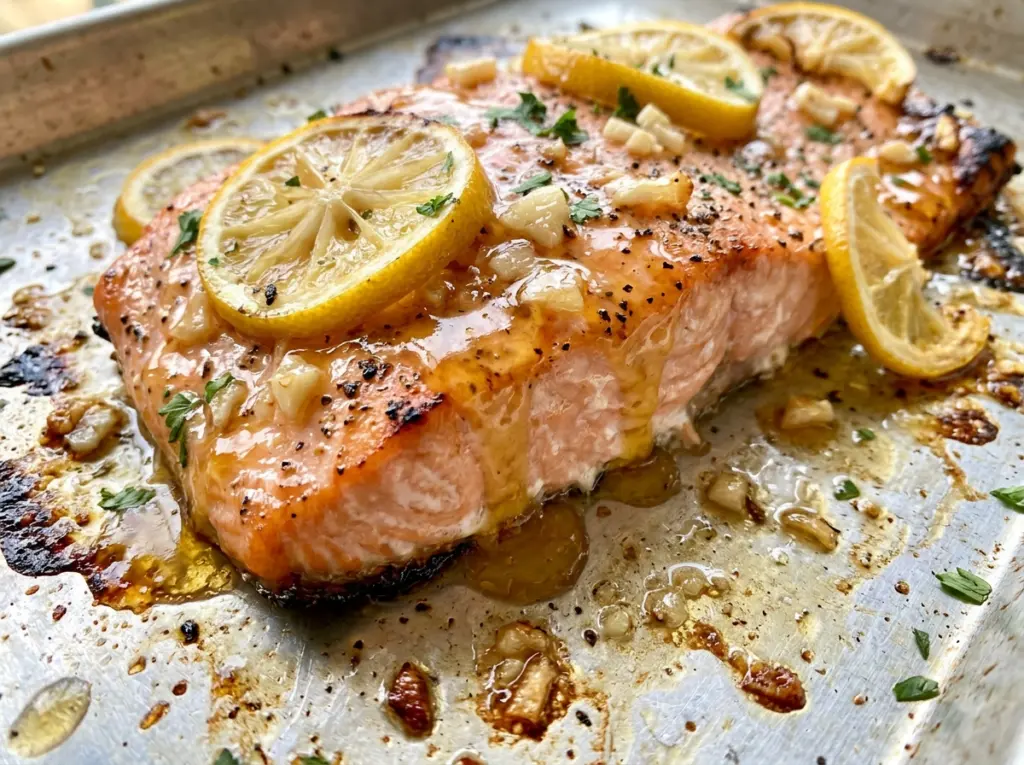
When the pan comes out of a 425°F oven, the lemon-honey glaze is still glossy around the salmon, and the edges of the fillets have started to flake. That’s the point where I stop watching the clock and check the thickest piece. These sheet pan honey lemon salmon fillets bake quickly, but even pieces on the same pan can finish at different times.
The glaze takes a minute to whisk together, and it uses the lemon in two ways: zest for fragrant citrus oils and juice for a bright, tart note. Dijon and olive oil round it out, while honey clings to the salmon as it bakes. I brush it over the tops and sides so every bite gets some of that sweet-tart coating. The fish stays simple; the glaze does the talking.
Kitchen Note
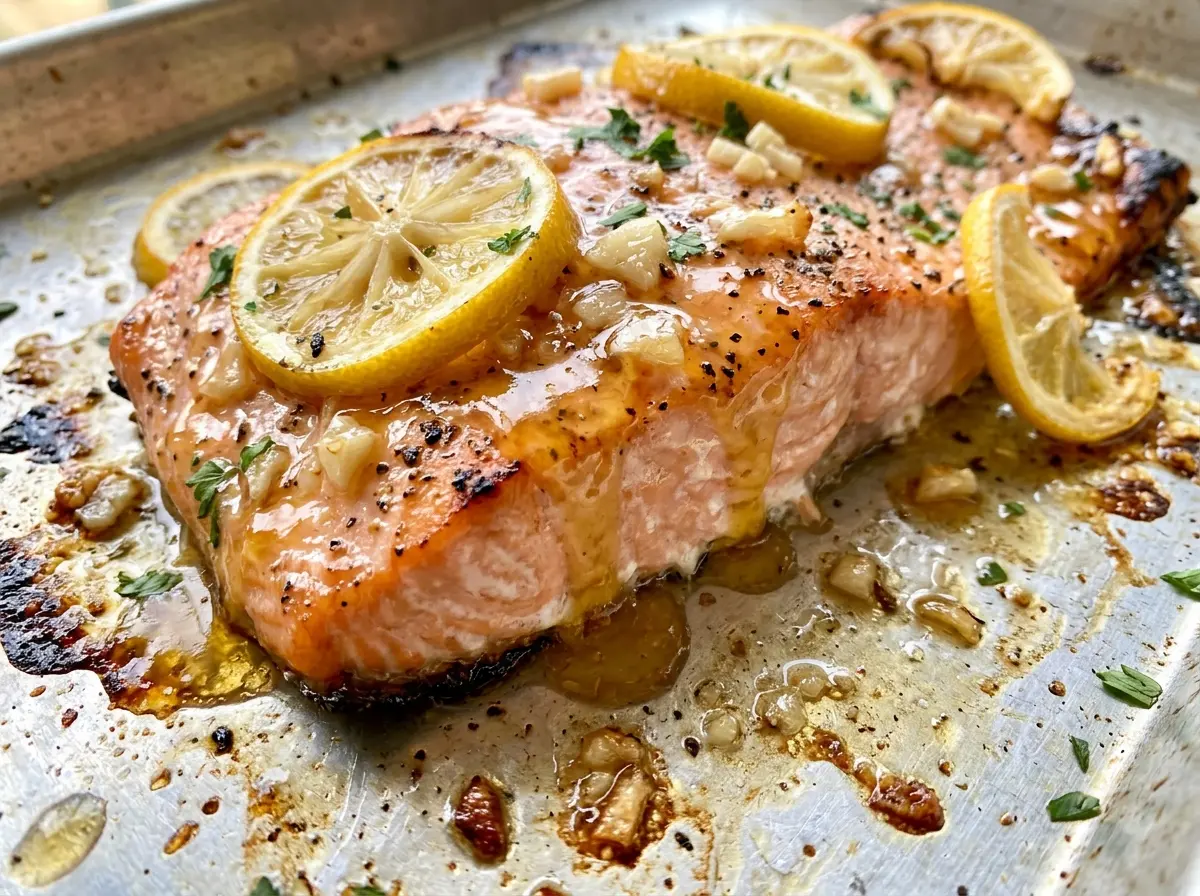
Use all of the glaze, brushing it across the tops and sides rather than leaving a puddle in the bowl. A quick, even coat gives each fillet the same balance of honey, lemon, and garlic.
Save this sheet pan honey lemon salmon for a bright citrus glaze and tender, flaky fillets with barely any cleanup.
Why the Skin Belongs Between the Salmon and the Pan
With skin-on fillets, placing the salmon skin-side down gives the delicate flesh a little protection as the oven heat works from below. The parchment-lined pan helps keep the fish from sticking, while the skin stays underneath instead of getting coated in glaze. The honey-lemon mixture belongs on the exposed tops and sides, where it can cling to the flesh and turn glossy.
That orientation also gives you a clear view of the part that matters while the fish cooks: the thickest section of each fillet. Salmon isn’t always cut to identical thickness, even when the portions weigh the same, so one fillet may be ready before another. Treat the stated baking time as a range rather than a promise that every piece will finish together. Check the thickest area of each portion individually, and take a finished fillet off the pan while a thicker one gets more time. That small adjustment is more useful than trying to force every piece to match the same minute on the clock.
Fresh Lemon and Skin-On Fillets Shape the Whole Dish

- Lemon — Using both zest and juice gives the glaze a fuller citrus character than juice alone. Zest the lemon before juicing it; once cut, it’s awkward to hold steady for grating, and you want the fragrant outer peel rather than the bitter white pith.
- Honey — Honey brings sweetness and helps the glaze coat the fish. A familiar, mild honey lets the lemon come through; strongly flavored honey will be more noticeable against the salmon.
- Dijon mustard — Dijon adds a little sharpness and helps the oil, lemon juice, and honey whisk into a cohesive glaze. Its flavor stays in the background, so it won’t make the salmon taste like a mustard dish.
- Skin-on salmon — Choose evenly thick fillets when you can; thickness affects how closely their cooking times line up. The skin stays underneath during baking, so the glazed flesh remains exposed.
- Olive oil and garlic — Olive oil softens the sharp edge of the lemon, and minced garlic gives the glaze a savory note. Mince the garlic finely so larger pieces don’t collect in one spot on a fillet.
Whisk the Glaze, Then Let Each Fillet Tell You When It’s Done
Heat the oven and line the pan
Heat the oven to 425°F and line an 18×13-inch rimmed sheet pan with parchment paper. The rim keeps the glaze and any juices contained, while parchment makes it easier to lift off the fish without scraping at the pan. Have the pan ready before brushing on the glaze so the coated salmon can go straight into the oven.
Whisk the honey-lemon mixture
In a small bowl, whisk together the honey, lemon zest and juice, olive oil, Dijon, minced garlic, kosher salt, and black pepper. Keep whisking until the mixture looks evenly combined, with no separate pool of oil sitting on top. The zest may remain visible; that’s expected and gives the glaze its citrus aroma.
Brush and bake the salmon
Arrange the four fillets skin-side down on the prepared pan, then brush the tops and sides evenly with all of the glaze. Bake for 10 to 15 minutes, checking the thickest part of each fillet rather than relying on color at the edges. The salmon is ready when each thickest section reaches 145°F and the fish flakes easily with a fork. If a thinner fillet reaches that point first, remove it and let the thicker piece finish.
Three Practical Ways to Adjust the Salmon and Glaze
Use skinless fillets
Skinless salmon works with the same honey-lemon glaze and parchment-lined pan. Keep the portions about the same size, and handle them gently when lifting from the pan because there’s no skin layer to help hold the cooked fish together.
Make a two-fillet batch
For two portions, halve each glaze ingredient and use two salmon fillets. Keep the same pan and baking temperature; the smaller batch still needs to be checked by doneness, since fillet thickness—not the number on the pan—determines when it’s ready.
Make the glaze less sweet
Use less honey while keeping the lemon, Dijon, garlic, and oil in balance. The result will taste sharper and the glaze will coat less thickly, but the salmon still gets the same bright citrus-and-garlic direction.
Storage and Reheating
- Refrigerator: Store leftover salmon in a covered container for 3 to 4 days. The fish will be firmer and less moist after chilling.
- Freezer: It freezes, though the texture is best within 2 to 3 months. Wrap portions airtight and thaw them in the refrigerator before reheating.
- Reheating: Warm gently in a low oven or microwave in short intervals, stopping as soon as it’s hot; prolonged heating dries salmon quickly. Reheat leftovers to 165°F.
Questions That Come Up When Baking Honey Lemon Salmon
Sheet Pan Honey Lemon Salmon
Ingredients
Equipment
Method
- Heat the oven to 425°F.
- Line an 18x13-inch rimmed sheet pan with parchment paper.
- Whisk the honey, lemon zest and juice, olive oil, Dijon mustard, garlic, salt, and pepper in a small bowl.
- Arrange the salmon skin-side down on the prepared pan.
- Brush the tops and sides evenly with all of the glaze.
- Bake for 10 to 15 minutes, until the thickest part of each fillet reaches 145°F and the fish flakes easily with a fork.




