
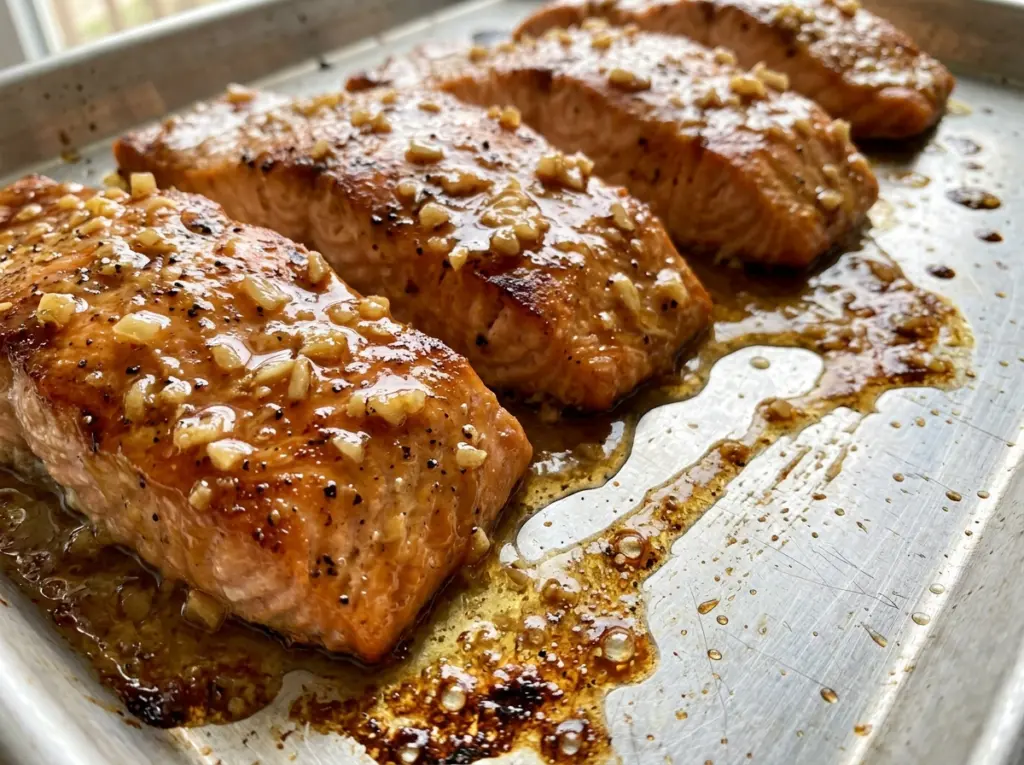
When the asparagus goes into the oven first, it gets a head start while the maple-Dijon glaze comes together. That small bit of timing matters: the salmon needs only 10 to 14 minutes to roast, and the vegetables get extra time on the pan without making dinner feel like two separate cooking projects.
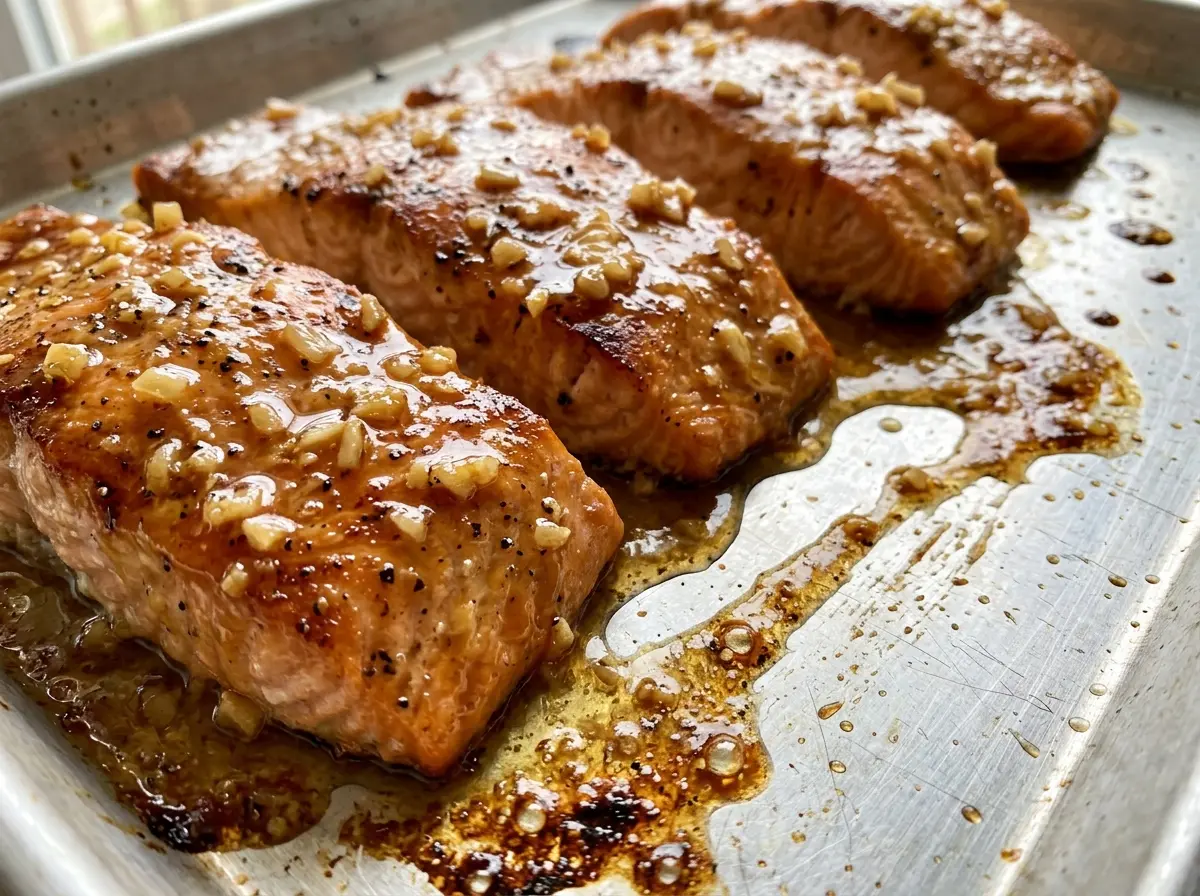
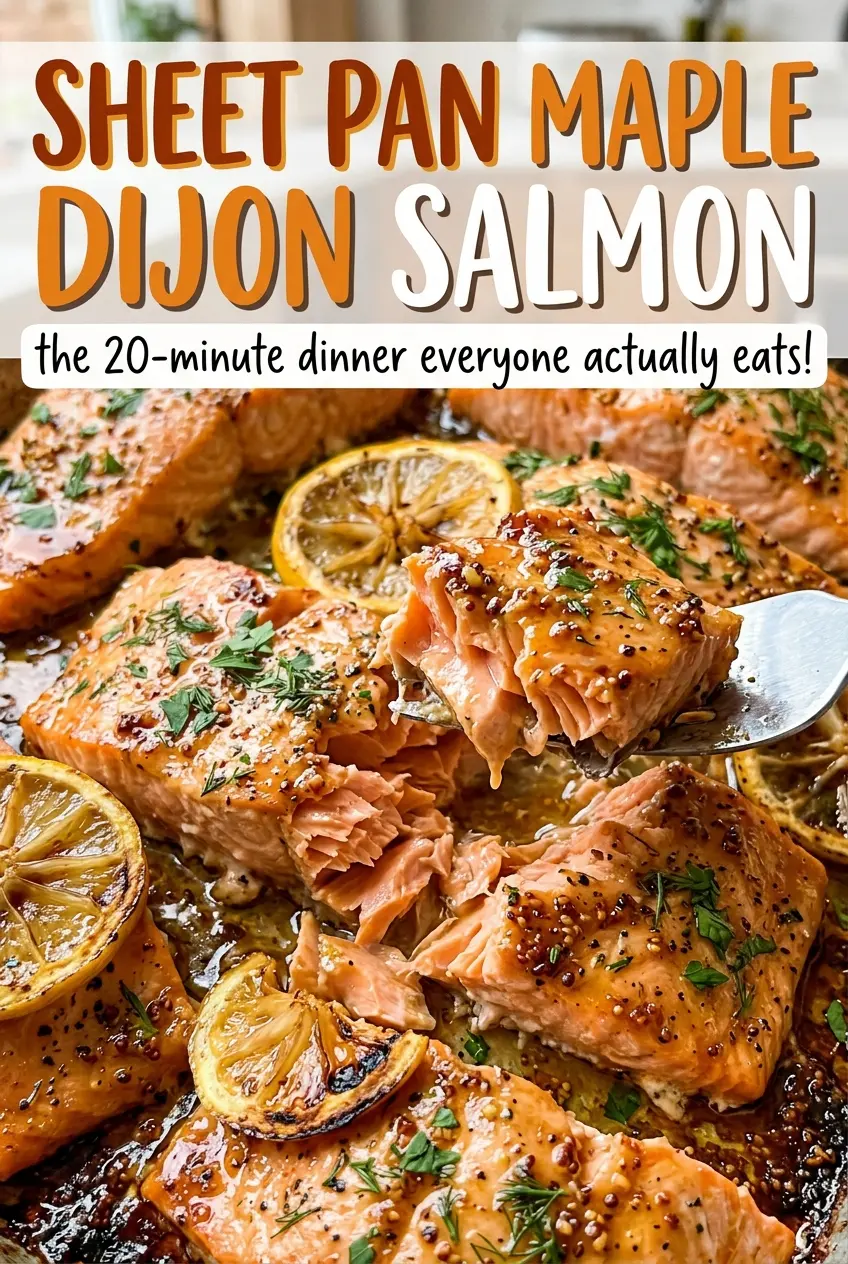
I make this Sheet Pan Maple Dijon Salmon on a parchment-lined, rimmed baking sheet, with the asparagus on one side and the skin-on fillets on the other. The glaze is sweet from pure maple syrup, tangy from Dijon and lemon, and brushed onto the salmon just before baking.
After a short rest, a fresh layer of reserved glaze goes over the fish. You get tender salmon with a glossy finish and asparagus that’s roasted right alongside it.
Kitchen Note
Divide the glaze before brushing any onto the salmon. Keep the portion for after baking in its own clean bowl, and don’t let a brush that touched raw fish go back into it.
Save this Sheet Pan Maple Dijon Salmon for a weeknight dinner with glossy maple-Dijon glaze and roasted asparagus.
Why the Asparagus Gets a Five-Minute Head Start
Salmon and asparagus don’t need the same amount of time in the oven. Putting both on the pan from the beginning would leave the fish roasting while the asparagus gets its full cook; instead, the asparagus goes in first, then the salmon joins it after five minutes. The vegetables have a useful head start, and everything finishes together on one pan.
That short first roast also gives you a moment to prepare the fish and glaze without rushing. Toss the trimmed asparagus with olive oil, some of the salt, and black pepper right on the lined baking sheet. When you add the fillets, push the asparagus to one side rather than piling it underneath the fish. The salmon sits skin-side down on the open side of the pan, with room for the glaze to coat the tops.
Thickness affects how quickly a fillet cooks, so the clock is a guide within the stated window, not a replacement for checking the thickest part. The result is a straightforward split-pan approach: vegetables start first, salmon joins them, and both come off the same baking sheet.
Maple, Dijon, and Skin-On Salmon: What Each One Brings
- Pure maple syrup — It brings the glaze’s sweetness and helps it cling to the salmon. Use pure maple syrup rather than pancake syrup; the latter has a different sweetness and doesn’t give the same clean maple flavor. A darker, more robust pure maple syrup makes that maple note more pronounced.
- Dijon mustard — Dijon gives the glaze tang and keeps the maple from tasting one-dimensionally sweet. Smooth Dijon blends easily with the syrup and lemon juice. Whole-grain Dijon is a workable swap if you want a more textured finish, though the glaze won’t be as smooth.
- Lemon juice — Its acidity brightens the glaze and balances the syrup. Freshly squeezed juice has a lively citrus edge; bottled lemon juice works when that’s what you have.
- Garlic — Minced garlic adds savory sharpness throughout the glaze. Mince it finely so the pieces spread through the mustard and syrup instead of landing in a few concentrated spots.
- Asparagus — Trim off the woody ends before roasting; those tough ends stay fibrous even after cooking. Choose spears that are similar in thickness so they roast at roughly the same pace.
- Skin-on salmon — The skin provides a sturdy side to place against the parchment and helps the fillets hold together as you move them. Fresh or frozen-and-thawed fillets work; choose portions of similar thickness for more even cooking.
Roasting the Asparagus Before the Salmon Goes on the Pan
Whisk and divide the maple-Dijon glaze
Heat the oven to 425°F and line an 18×13-inch rimmed baking sheet with parchment paper. Whisk the maple syrup, Dijon mustard, lemon juice, and minced garlic in a small bowl until the mixture looks even. Transfer half to a clean bowl before using the rest, so you have a separate portion ready for after baking. Keep the first bowl for brushing the salmon before it goes into the oven.
Give the asparagus its head start
Toss the asparagus on the prepared baking sheet with the olive oil, 1/4 teaspoon of the kosher salt, and the black pepper. Spread the spears out rather than leaving them in a heap, then roast for 5 minutes. This brief first stint gets the vegetables cooking before the fish is added. Use that time to arrange the salmon and have the glaze ready.
Arrange and glaze the salmon
Push the asparagus to one side of the pan and set the salmon on the other side, skin-side down. Season the fillets with the remaining 1/4 teaspoon of kosher salt. Brush the tops with the glaze left in the first bowl, covering the surface without letting the fish crowd the vegetables. Keeping the two components side by side leaves the asparagus exposed to the heat.
Roast to temperature, then finish
Bake for 10 to 14 minutes, checking the thickest part of each fillet with an instant-read thermometer. The salmon is ready when that spot reaches 145°F; thinner pieces may reach it before thicker ones, so check each fillet rather than assuming they’re identical. Let the fish rest for 3 minutes, then brush it with the reserved glaze. The last coat stays bright and glossy instead of baking onto the salmon.
Small Changes That Keep the Maple-Dijon Balance
Make the maple taste bolder
Choose a darker, more robust pure maple syrup while keeping the rest of the glaze unchanged. The salmon will have a deeper maple note, with the same tang from the Dijon and lemon.
Use whole-grain Dijon for texture
Swap smooth Dijon for whole-grain Dijon. The mustard seeds give the glaze a more rustic texture and a slightly less uniform coating, while the maple and lemon still balance the salmon.
Choose a gluten-free Dijon
For a gluten-free version, use Dijon mustard specifically labeled gluten-free in place of your usual Dijon. It keeps the glaze’s tangy mustard character; check the other packaged ingredients for gluten-free labeling as well.
Storage and Reheating
- Refrigerator: Store leftovers in an airtight container and use within 3 to 4 days. The asparagus softens, and the salmon loses some of its freshly roasted texture.
- Freezer: Freeze the cooked salmon and asparagus in airtight portions for up to 2 months for best quality. The salmon holds up better than the asparagus, which will be softer after thawing.
- Reheating: Warm leftovers in the microwave at reduced power in short intervals, checking as you go, until the center reaches 165°F. Long, high-power reheating dries salmon quickly.
Questions That Come Up With Maple Dijon Salmon
Sheet Pan Maple Dijon Salmon
Ingredients
Equipment
Method
- Heat the oven to 425°F.
- Line an 18x13-inch rimmed baking sheet with parchment paper.
- Whisk the maple syrup, Dijon mustard, lemon juice, and garlic in a small bowl.
- Transfer half the glaze to a clean bowl to use after baking.
- Toss the asparagus with the olive oil, 1/4 teaspoon of the salt, and the pepper on the prepared baking sheet.
- Roast for 5 minutes.
- Push the asparagus to one side of the pan and arrange the salmon skin-side down on the other side.
- Season the salmon with the remaining 1/4 teaspoon salt.
- Brush the salmon with the glaze left in the first bowl.
- Bake for 10 to 14 minutes, until the thickest part of each fillet reaches 145°F.
- Rest for 3 minutes.
- Brush the salmon with the reserved glaze.