
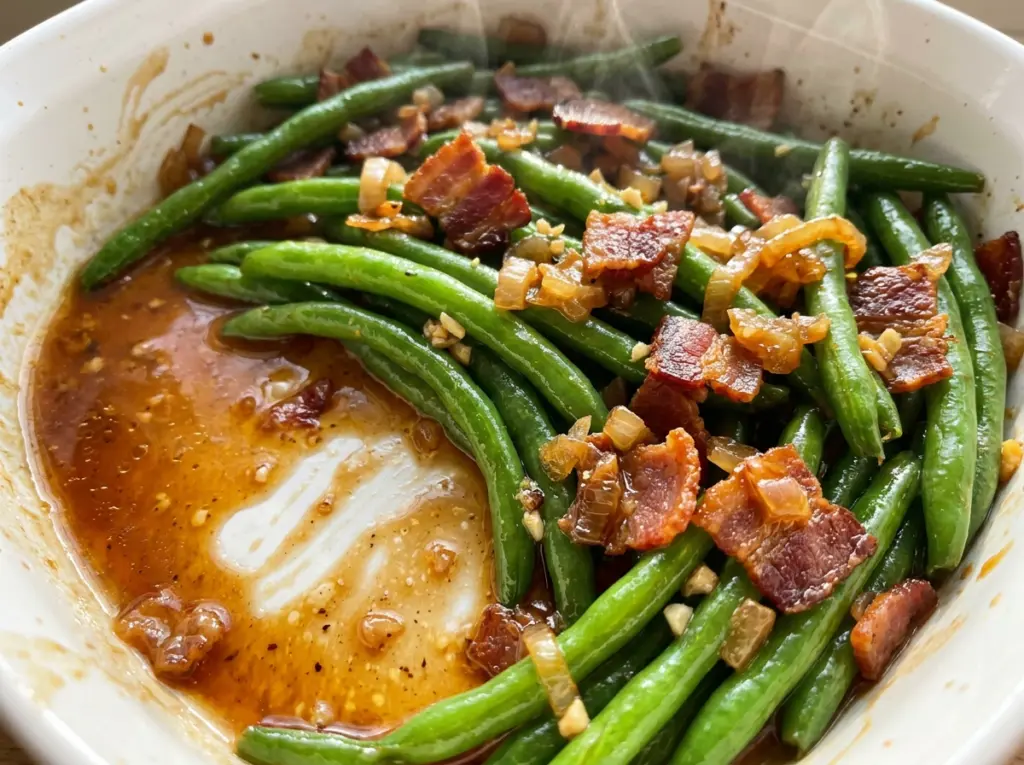
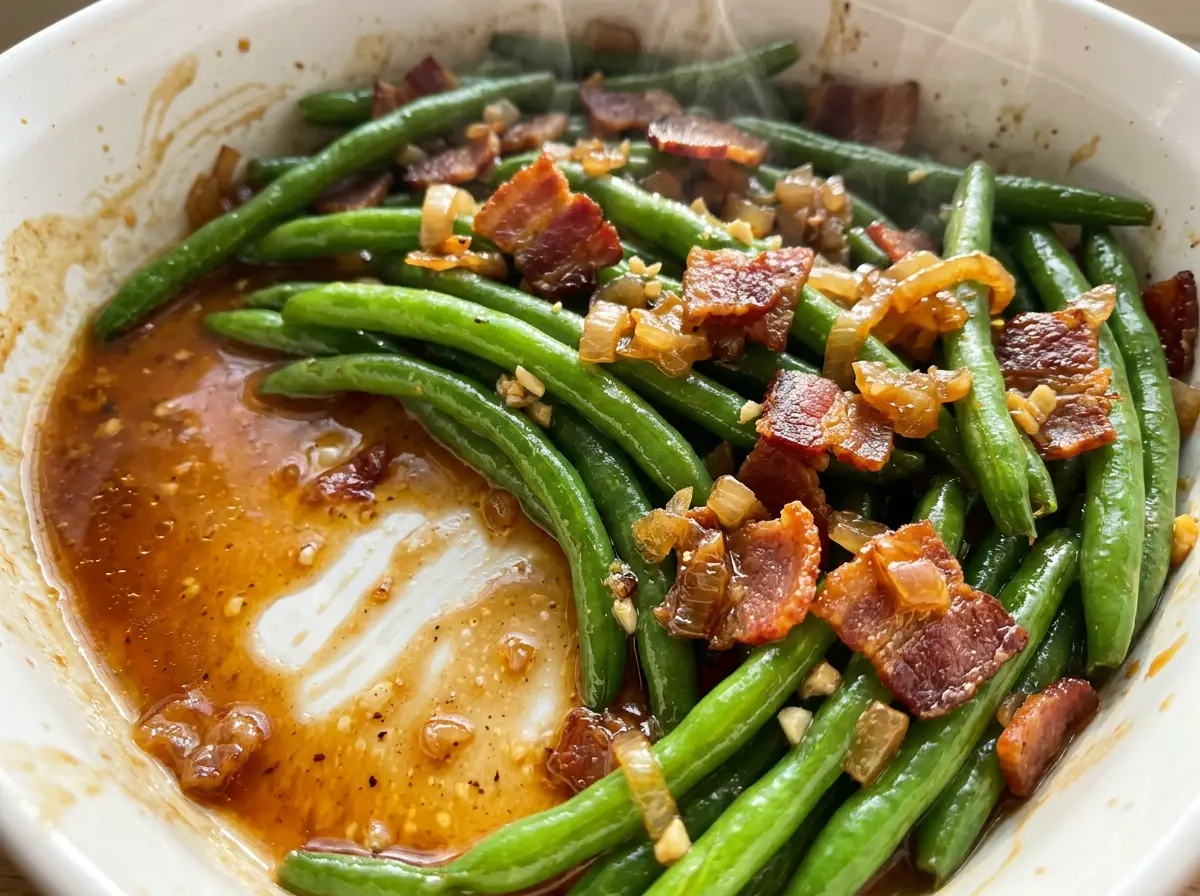
The bacon gets crisp first, while the skillet is still wide open and hot; later, the green beans soften slowly under a lid in the savory broth. That contrast is what makes Smothered Green Beans more than a quick side of vegetables. I like that the whole dish comes together in one skillet, and the onion and garlic pick up the bacon drippings before the beans go in.
Fresh green beans can stay stubbornly firm if they’re only sautéed, so this version gives them time to braise. A low, covered simmer lets the broth turn into a light, savory coating while the beans become tender all the way through. Keep the heat gentle and give them a stir once or twice; they should finish soft, with the bacon adding salty bites throughout.
Kitchen Note
After the bacon comes out, leave about a tablespoon of drippings in the skillet. More than that can make the finished beans feel greasy, and you only need enough to coat the onion as it softens.
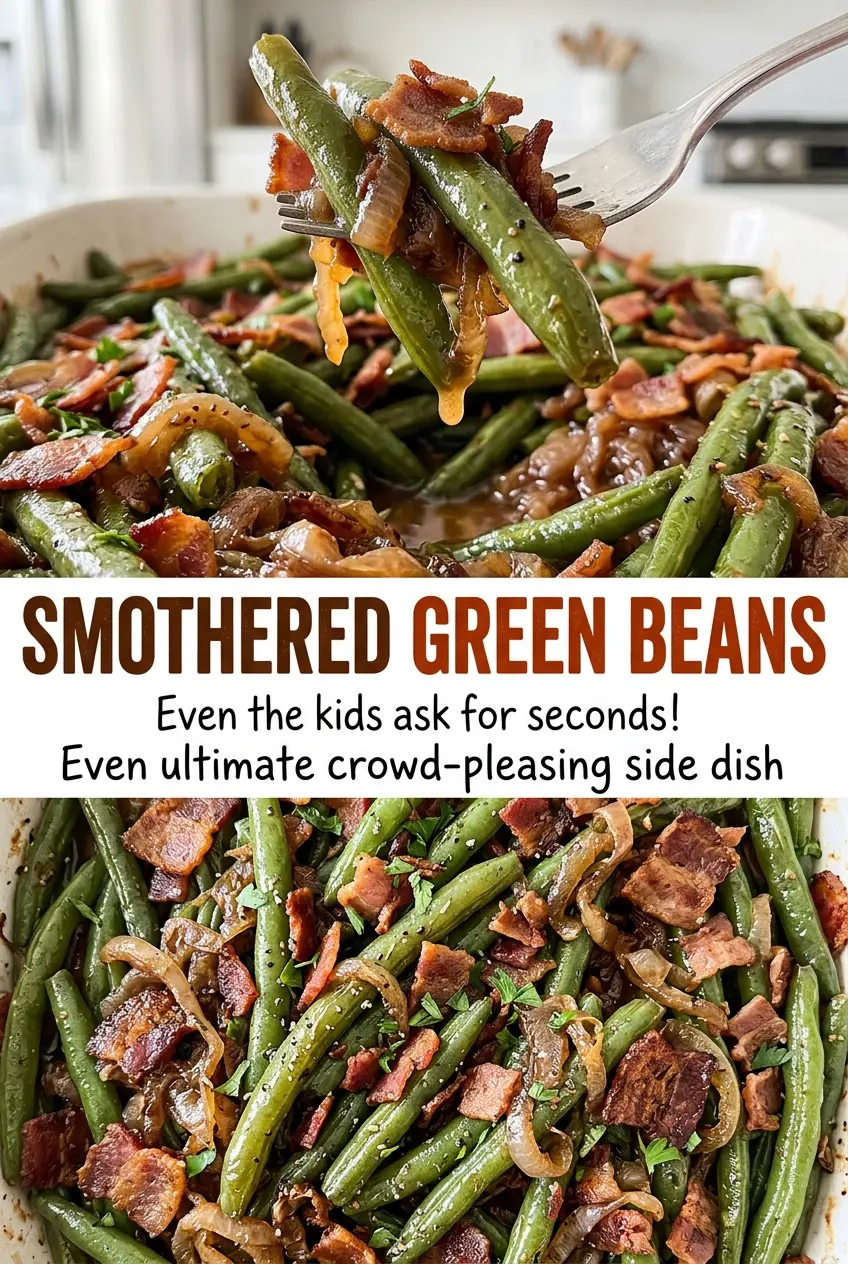
Save these Smothered Green Beans for a cozy side dish with tender beans, crisp bacon, and a slow-simmered savory broth.
Why These Green Beans Need a Covered, Low Simmer Instead of a Quick Sauté
Green beans sautéed over high heat keep a little snap, which is lovely in some dishes but not what I’m after here. Smothering means giving the beans enough covered time to soften deeply, with broth and bacon drippings surrounding them as they cook. The lid matters: it traps steam, so the beans cook evenly instead of drying out while the liquid reduces too fast.
Once the broth reaches a simmer, turn the heat down low and let the skillet do its work. Lifting the lid repeatedly lets steam escape and slows the softening, so I keep the checks to one or two stirs. The beans are ready when they’re very tender rather than crisp-tender. If you like a firmer bite, this particular slow-simmered style may not be the one to choose; the point is a soft, well-seasoned bean with a little broth left to cling to it.
What Fresh Beans, Bacon, and Broth Each Bring to the Skillet
- Fresh green beans — Trim the stem ends before cooking so the beans are ready to eat straight from the skillet. Fresh beans hold their shape through the long simmer better than canned beans, which are already soft. Pick beans that feel firm and look evenly green; very large, woody beans can take longer to become tender.
- Thick-cut bacon — Thick slices give you crisp pieces that remain noticeable after simmering. The bacon also renders the drippings that coat the onion and carry its savory flavor through the dish. A leaner bacon won’t leave the same amount of drippings, and no substitute gives quite the same smoky, salty finish.
- Yellow onion and garlic — Yellow onion softens into the broth without taking over the green beans. Dice it evenly so the pieces turn tender together, and mince the garlic so it can cook briefly without leaving large raw-tasting bits. White onion can stand in for yellow onion, though its flavor is a little sharper.
- Chicken broth — Broth gives the beans enough liquid to braise and brings more savory depth than water. A good-tasting broth matters because its flavor concentrates around the vegetables as they simmer. For a gluten-free version, use gluten-free chicken broth in the same quantity; vegetable broth also works, with a lighter, less meaty finish.
The Slow Skillet Sequence That Builds Flavor Without Burning the Garlic
Render the Bacon Until Crisp
Cook the chopped bacon in a covered 12-inch skillet over medium heat for 6 to 8 minutes, stirring occasionally. Look for crisp edges and rendered fat rather than pale, floppy pieces. Transfer the bacon to a plate and leave about a tablespoon of drippings in the skillet. If the bacon is still soft, give it another moment before taking it out; it won’t regain its crispness once it goes into the broth.
Soften the Onion Before Adding Garlic
Add the diced onion to the drippings and cook for 4 to 5 minutes, stirring occasionally, until it softens. The onion should look glossy and translucent around the edges, not browned or scorched. Stir in the minced garlic only after the onion has softened, then cook for 30 seconds. Garlic can turn bitter quickly, so keep it moving and don’t leave it in the hot skillet longer than that.
Bring the Broth to a Simmer
Add the trimmed green beans, chicken broth, kosher salt, black pepper, and cooked bacon to the skillet. Stir so the beans get coated and the bacon is distributed through the pan. Let the broth come to a simmer before covering; you should see small, steady bubbles rather than a hard boil. Starting the covered cook at a simmer gives the beans a gentle, even braise.
Cover and Cook Until the Beans Are Very Tender
Cover the skillet, reduce the heat to low, and simmer for 35 to 45 minutes. Stir once or twice so beans from the edges move through the broth, then cover the skillet again. Begin checking at the shorter end of the range; the beans should bend easily and feel tender when pierced, not squeak or snap. Keep the heat low enough that the broth simmers gently instead of boiling hard.
Small Changes for Different Tables and Textures
Use gluten-free chicken broth
Replace the regular chicken broth with the same quantity of gluten-free chicken broth. The savory character stays close to the original, so this is the most seamless adjustment for a gluten-free table.
Keep some bacon crisp for the finish
For a little more crunch, set aside some of the cooked bacon before adding the rest to the broth. Scatter the reserved pieces over the beans just before serving. You’ll get the same bacon flavor in the braise with a crisp contrast on top.
Cut the beans shorter for a spoonable side
After trimming, cut the green beans into shorter pieces before they go into the skillet. The flavor stays the same, but the finished dish is easier to scoop alongside other food. Keep an eye on tenderness because smaller pieces may soften sooner.
Storage and Reheating
- Refrigerator: Store leftovers in a covered container for 3 to 4 days. The beans will soften further as they sit.
- Freezer: Freeze in an airtight container for up to 2 months. Thaw in the refrigerator; the beans will be softer after freezing and thawing.
- Reheating: Warm the beans in a covered skillet over low heat, stirring gently, until they reach 165°F. Avoid high heat, which can scorch the broth before the beans warm through.
Questions That Come Up With Long-Simmered Green Beans
Smothered Green Beans
Ingredients
Equipment
Method
- Cook the bacon in a 12-inch skillet with a lid over medium heat for 6 to 8 minutes, stirring occasionally, until crisp.
- Transfer the bacon to a plate and leave about 1 tablespoon of drippings in the skillet.
- Add the onion and cook for 4 to 5 minutes, stirring occasionally, until softened.
- Stir in the garlic and cook for 30 seconds.
- Add the green beans, chicken broth, kosher salt, black pepper, and cooked bacon; stir to combine.
- Bring the broth to a simmer.
- Cover, reduce the heat to low, and simmer for 35 to 45 minutes, stirring once or twice, until the beans are very tender.