
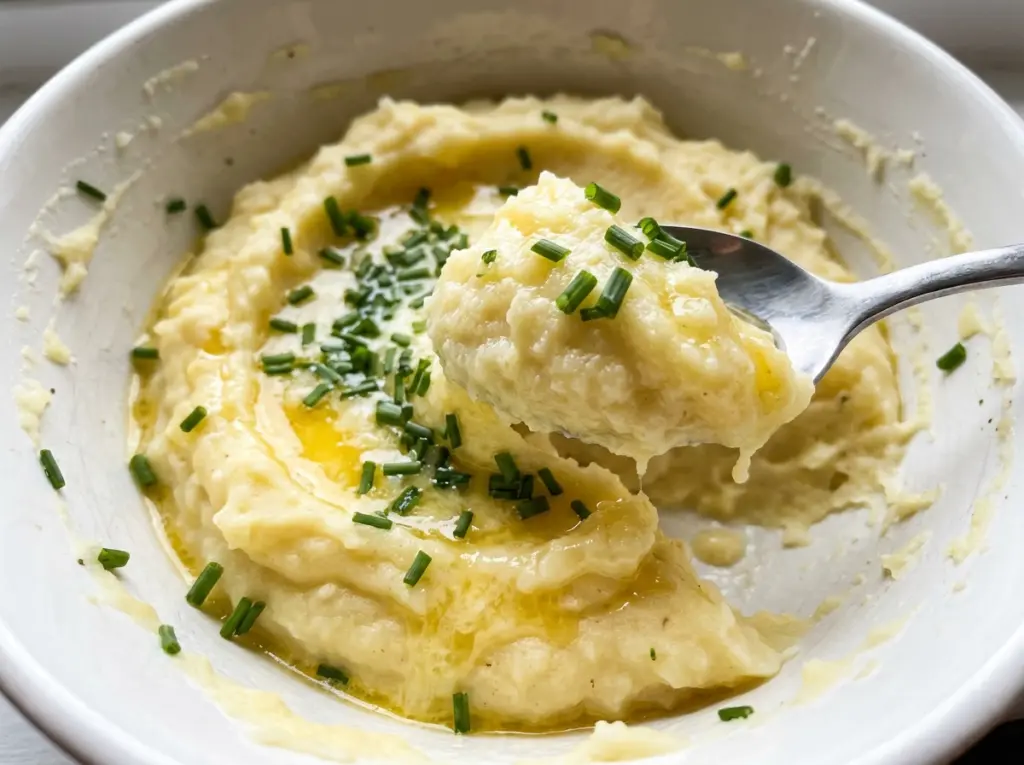
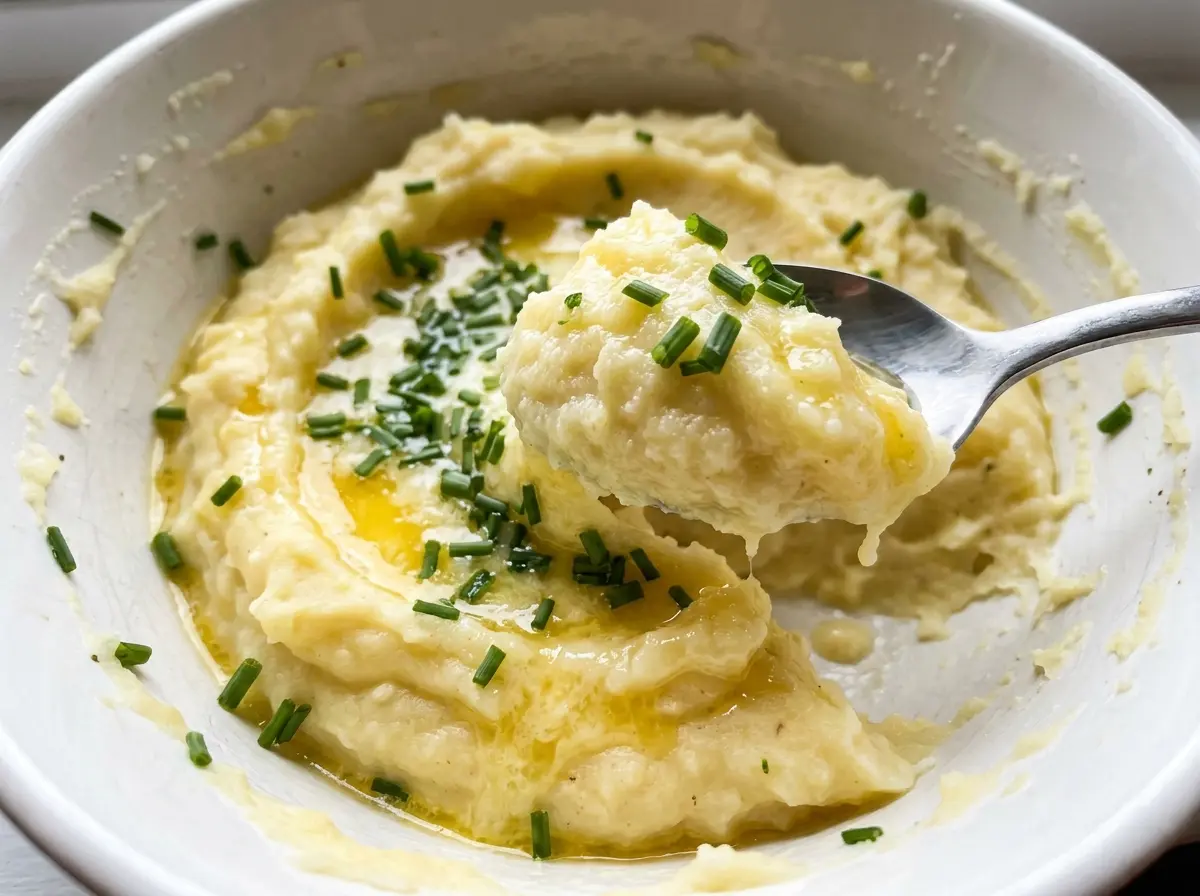
The first thing you notice is how the potatoes soften at different speeds: the little pieces are ready, but the largest ones still resist the fork. Cutting them evenly and checking the biggest chunk keeps this batch of sour cream mashed potatoes from turning into a mix of firm bits and mush. Yukon Golds make a naturally creamy mash, and sour cream gives it a gentle tang that keeps the butter from feeling too heavy.
I start the potatoes in cold, salted water, then warm the butter and milk separately while they cook. That small bit of timing means the dairy is ready when the potatoes are drained, and the potatoes don’t have to sit around cooling while I get everything together. Once the potatoes are mostly smooth, the warm butter-milk mixture, sour cream, and pepper come in with just enough stirring to bring the bowl together. The result is soft, rich mashed potatoes with a clean, tangy finish.
Kitchen Note
A gentle simmer means small, steady bubbles rather than a hard rolling boil. Keep the heat low enough that the potato pieces aren’t tumbling around in the pot.
Save these sour cream mashed potatoes for a creamy, tangy side with buttery Yukon Golds and a simple stovetop method.
Why Yukon Golds Need a Cold Start, Not a Boiling-Water Shortcut
Potatoes don’t all cook evenly when they’re dropped straight into boiling water. The outside begins softening before the center has had time to catch up, which is how you can end up with ragged edges and a firm middle. Starting the cut Yukon Golds in cold water lets the pieces warm gradually as the pot heats, giving the center and outside a more even chance to become tender together.
Salt in the cooking water matters, too. It seasons the potatoes while they cook instead of leaving all the seasoning to the final mash. That gives the finished potatoes a fuller taste from the inside out, while the sour cream and black pepper round out the flavor at the end. The cold start and the salt work together, but neither needs a complicated technique: cover the potatoes with water, stir in the cooking salt, and bring the pot up to a boil.
Yukon Golds suit this approach because their flesh is creamy without being as dry and fluffy as a russet. They mash smoothly while keeping enough body to hold the sour cream and butter. The result is a mash that feels substantial on the spoon, not loose or pasty.
What the Potatoes, Sour Cream, and Warm Dairy Each Bring

- Yukon Gold potatoes — Their creamy, slightly buttery flesh gives the mash a smooth, substantial texture. Choose firm potatoes without soft spots; ordinary grocery-store Yukon Golds work well here. Russets can make a lighter, fluffier mash, but they’re starchier and need a gentler hand once mashed.
- Unsalted butter and whole milk — Butter brings richness, while whole milk loosens the potatoes without masking their flavor. Unsalted butter gives you more control over the final seasoning; a standard store-brand butter is fine. If you’re out of whole milk, half-and-half can make the mash richer, while lower-fat milk gives a less rounded result.
- Sour cream — This is what sets the mash apart from a standard butter-and-milk version: its tang cuts through the richness and gives each bite a slight zip. Full-fat sour cream makes the smoothest, richest finish, though plain full-fat Greek yogurt can stand in at the same amount for a sharper, thicker result.
- Freshly ground black pepper — Freshly ground pepper brings a more fragrant, noticeable bite than preground pepper. Use preground if that’s what’s in your cabinet; the potatoes will still come together, with a milder pepper flavor.
From Cold Pot to Creamy Mash: The Four Stages That Matter
Start the Potatoes in Cold, Salted Water
Put the peeled, evenly cut potatoes in an 8-quart pot and add cold water until they’re covered by 1 inch. Stir in 1 tablespoon of the kosher salt before turning on the heat. Bring the water to a boil over high heat, then lower the heat to maintain a gentle simmer. Starting with cold water gives the pieces time to heat through evenly.
Simmer Until the Largest Pieces Yield
Cook the potatoes for 15–20 minutes, checking the biggest pieces rather than judging doneness by the smaller ones. A fork should slide easily into the largest chunks. If the center still feels firm, give the pot more time; draining early leaves lumps that are difficult to mash smooth. Keep the simmer gentle while they finish cooking.
Drain, Then Let the Potatoes Steam Dry
Drain the potatoes well and return them to the pot. Let them sit for 1 minute so steam can escape before you add the dairy. This brief pause helps keep extra water from thinning the mash. Meanwhile, warm the butter and milk in a 1-quart saucepan over low heat.
Mash Before Adding the Sour Cream
Warm the butter and milk for 2–3 minutes, until the butter has melted and the mixture is steaming. Mash the potatoes until they’re mostly smooth, then stir in the warm butter-milk mixture, sour cream, remaining kosher salt, and black pepper. Stir just until everything is combined and the texture looks even. If you keep working the potatoes after they’re smooth, the mash can become dense and sticky.
Three Flavor and Dietary Changes That Fit This Mash
Make It Dairy-Free
Replace the butter, whole milk, and sour cream with dairy-free butter, unsweetened oat milk, and dairy-free sour cream in equal amounts. The mash will still be creamy, though the tang and buttery finish will depend on the brands you choose. Use plain, unsweetened oat milk so the potatoes don’t pick up a sweet flavor.
Stir in Roasted Garlic
Mash soft roasted garlic into the potatoes before stirring in the dairy. It adds a mellow, sweet-savory note that sits comfortably beside the sour cream’s tang. The flavor is less sharp than raw garlic, so it won’t take over the bowl.
Give the Finish a Horseradish Kick
Stir prepared horseradish into the finished mash a little at a time, tasting as you go. Its sharp heat works especially well against the creamy potatoes, but it makes the side more assertive. Add it after mashing so you can control the punch without changing the potato texture.
Storage and Reheating
- Refrigerator: Keep leftovers in an airtight container for 3–4 days. They’ll firm up as they chill.
- Freezer: Freeze in airtight portions for up to 1 month. Thaw overnight in the refrigerator; the texture may be a little less smooth after freezing.
- Reheating: Warm gently in a covered saucepan over low heat, stirring often, until the potatoes reach 165°F. If they’ve thickened, loosen them with a small splash of milk; high heat can scorch the bottom before the center warms.
Questions That Come Up When Making Sour Cream Mashed Potatoes
Sour Cream Mashed Potatoes
Ingredients
Method
- Put the potatoes in an 8-quart pot and add the cold water to cover them by 1 inch.
- Stir 1 tablespoon of the salt into the water.
- Bring the water to a boil over high heat.
- Reduce the heat to maintain a gentle simmer and cook for 15–20 minutes, until a fork slides easily into the largest pieces.
- Drain the potatoes and return them to the pot.
- Let the potatoes steam dry for 1 minute.
- While the potatoes drain, warm the butter and milk in a 1-quart saucepan over low heat until the butter has melted and the mixture is steaming, 2–3 minutes.
- Mash the potatoes until mostly smooth.
- Stir in the butter-milk mixture, sour cream, remaining 1 teaspoon salt, and pepper until combined.




