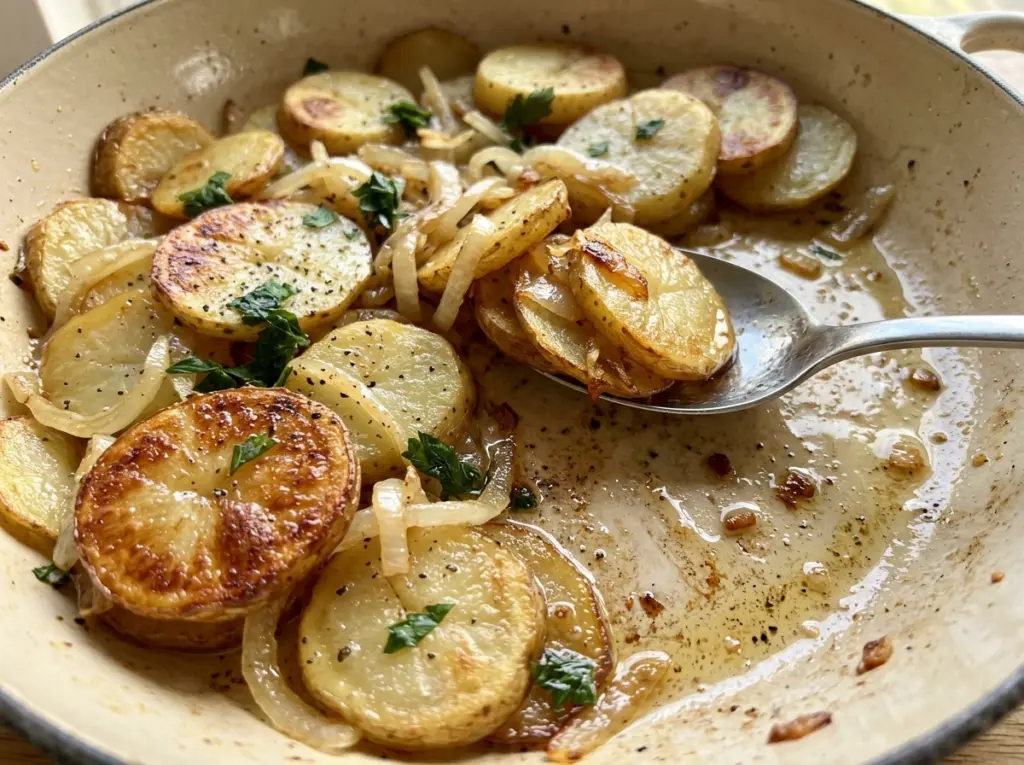
When the oil starts to shimmer in the skillet, the potato slices and onion go in together, and then the lid does a surprising amount of the work. I used to focus on getting color right away, but these Southern Fried Potatoes turn out better when I let them soften first and save the browning for the end. That way, the centers get tender without the edges racing ahead.
The change from covered cooking to uncovered cooking is what gives this skillet its mix of soft centers and browned edges. The lid holds in heat while the potatoes cook through; once it comes off, the surface moisture can escape and the potatoes can take on color. Keep the slices even, turn them gently, and you’ll have a hearty pan of potatoes with sweet, softened onion.
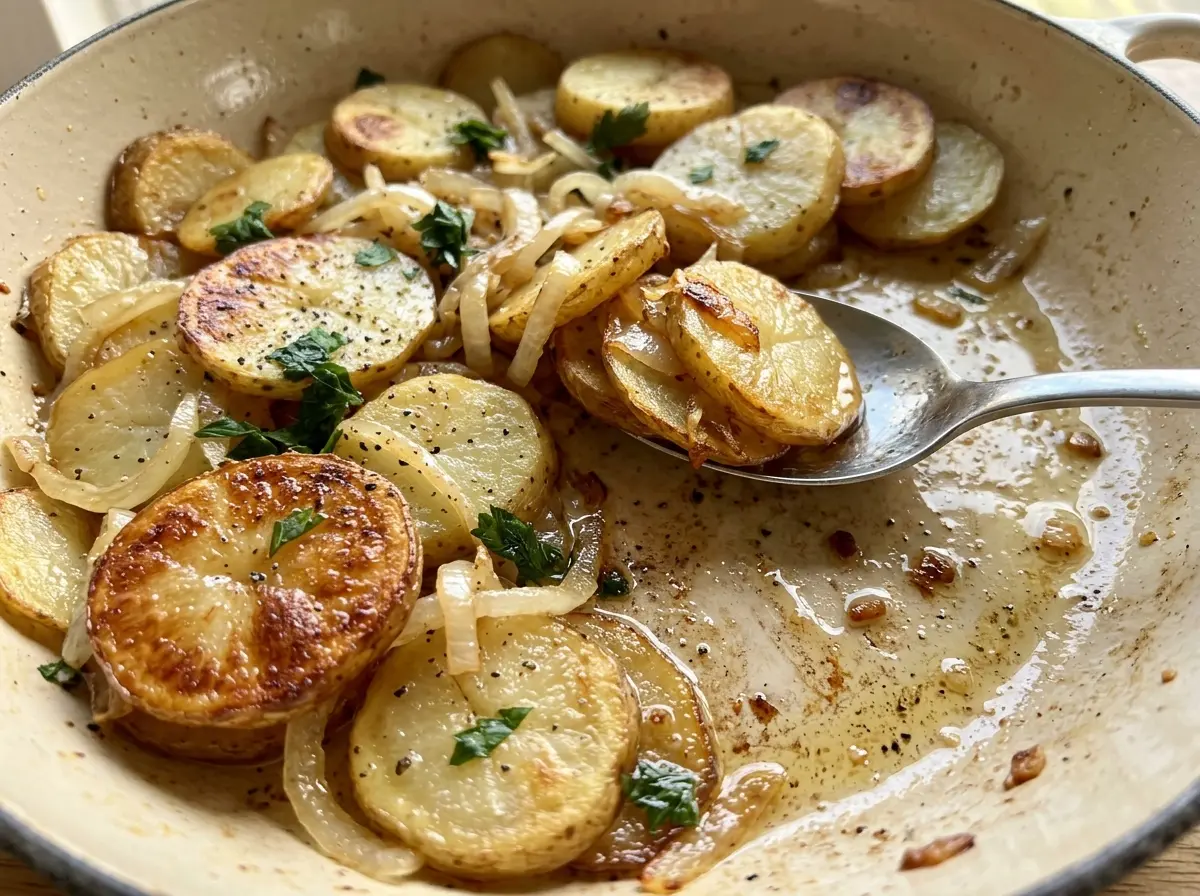
Kitchen Note
Keep the slices close to 1/4 inch thick. Pieces that are too thick and too thin won’t become tender at the same time, and the thinner ones can break before the thicker ones are ready.
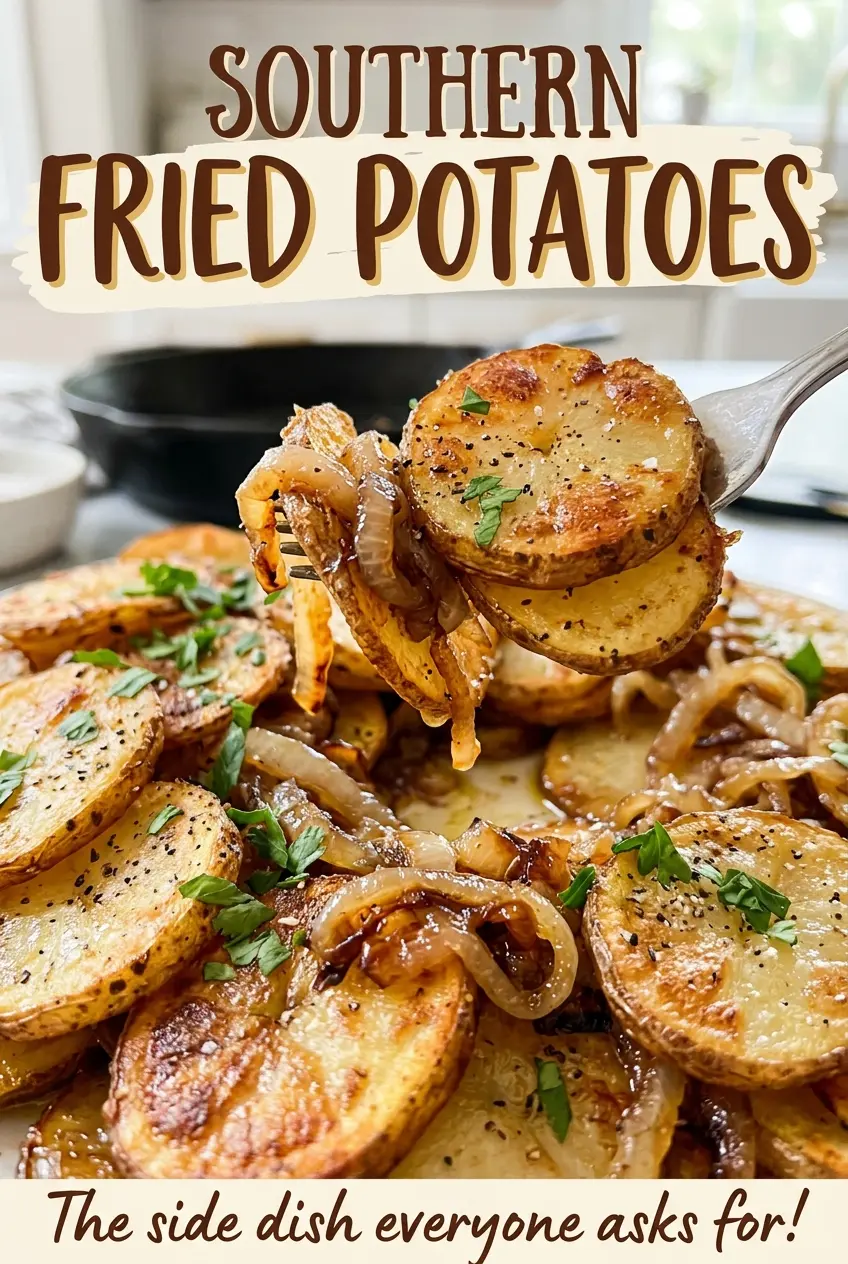
Save these Southern Fried Potatoes for a skillet supper with tender russets, sweet onion, and browned edges.
Why These Potatoes Need a Lid Before They Need a Crust
It’s easy to think fried potatoes should spend the whole time uncovered, but that leaves you managing two jobs at once: softening the middle and browning the outside. The covered part handles the first job. In the covered skillet, heat builds around the potato slices, helping them cook through while the onion softens alongside them.
Then the lid comes off and the cooking changes. Moisture escapes, and the potatoes can brown against the hot skillet. If you try to chase a deep crust before the centers are nearly tender, the outside can get ahead of the inside. If you leave the lid on through the end, the potatoes stay soft but miss out on those browned edges. Splitting the cooking into covered and uncovered stages gives each texture its own time, without needing to stir constantly or press the potatoes against the pan.
What Russets, Onion, and Oil Each Bring to the Skillet
- Russet potatoes — Their starchy texture gives the slices tender centers and helps them brown well in the skillet. Choose firm potatoes without soft spots; an inexpensive bag is fine as long as the potatoes are in good shape. Yukon Gold potatoes can replace them, but they’ll be creamier and less fluffy. Peel them before slicing, as peeling changes the texture you get from the finished dish.
- Vegetable oil — A neutral oil lets the potato and onion flavors come through and handles the hot skillet without adding a strong taste. The standard grocery-store bottle works well here; there’s no need for a specialty oil. Canola oil is a useful one-for-one swap. Use the same amount and heat it until shimmering before adding the vegetables.
- Yellow onion — Thin slices soften while the potatoes cook and bring a gentle sweetness to the pan. A firm, inexpensive onion is all you need. White onion can stand in, sliced the same way, for a sharper onion flavor. Slice it thinly so it softens along with the potatoes rather than staying crisp.
Build Tender Centers, Then Brown the Potatoes
Start with Shimmering Oil and an Even Layer
Heat the vegetable oil in a 12-inch cast-iron or heavy skillet with a lid over medium-high heat. Wait until the oil shimmers, then add the potatoes and onion and spread them into an even layer. Season with the kosher salt and black pepper. If the oil hasn’t begun to shimmer, give it a little more time before adding the vegetables.
Let the Covered Skillet Soften the Slices
Cover the skillet and reduce the heat to medium-low. Cook for 10 minutes, then uncover and gently turn the potatoes. Cover again and cook for 8 to 10 minutes, until a fork meets only slight resistance in the potatoes. Turn gently rather than stirring vigorously; softened slices can break apart.
Uncover for the Browned Edges
Take off the lid and raise the heat to medium. Cook for 8 to 12 minutes, turning the potatoes every 2 to 3 minutes, until they’re tender and browned. Give the slices time in contact with the skillet between turns so they can color. Keep an eye on the onions as the potatoes finish, and turn everything gently to keep the pieces intact.
Simple Swaps for a Different Skillet of Potatoes
Make It Lower in Sodium
Replace the kosher salt with a salt-free seasoning blend and keep the black pepper. The potatoes will have less of the clean, salty taste and take on more of the blend’s herbal or savory notes, so choose a mix you enjoy.
Use Yukon Gold Potatoes
Swap the russets for Yukon Gold potatoes, keeping the same slice thickness. They make a denser, creamier bite rather than the softer, fluffier texture of russets, while still working well with the covered-then-uncovered skillet method.
Trade Yellow Onion for White
Use thinly sliced white onion in place of yellow onion. It gives the pan a sharper onion flavor and softens during the same cooking stages, so the method doesn’t need to change.
Storage and Reheating
- Refrigerator: Transfer leftovers to a covered container within 2 hours and refrigerate for 3 to 4 days. The browned edges soften in storage.
- Freezer: Freezing isn’t recommended for the best texture; thawed potatoes tend to lose their browned edges and turn grainy.
- Reheating: Warm them in a skillet over medium heat, turning occasionally, until they reach 165°F. A microwave works, but it softens the browned surfaces.
Questions That Come Up While Making Southern Fried Potatoes
Southern Fried Potatoes
Ingredients
Equipment
Method
- Heat the vegetable oil in a 12-inch cast-iron or heavy skillet with a lid over medium-high heat until shimmering.
- Add the potatoes and onion, spreading them in an even layer, and season with the salt and black pepper.
- Cover the skillet, reduce the heat to medium-low, and cook for 10 minutes.
- Uncover and gently turn the potatoes.
- Cover and cook for 8 to 10 minutes, until the potatoes are nearly tender when pierced with a fork.
- Uncover and cook over medium heat, turning the potatoes every 2 to 3 minutes, for 8 to 12 minutes, until tender and browned.