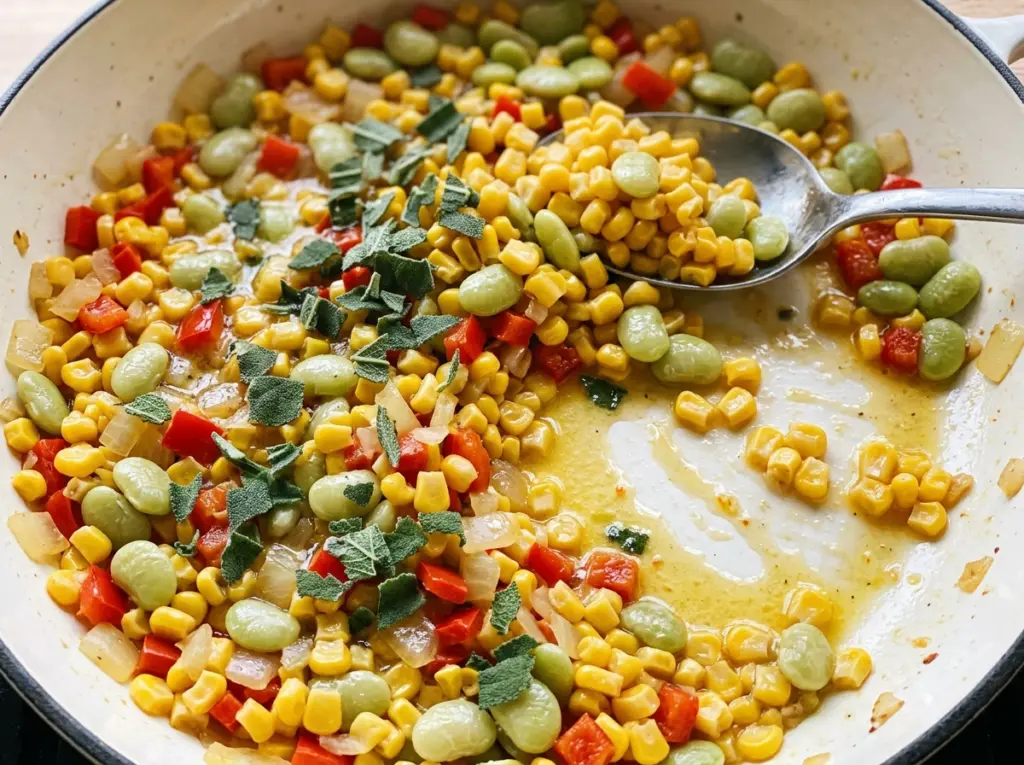
The onion is the first thing to watch in the skillet: after four minutes, it should be soft, not browned. That gentle start gives this Thanksgiving succotash a sweet, mellow base without stealing attention from the lima beans and corn. I like that the vegetables go straight from the freezer into the pan, which keeps the prep simple while the rest of the meal is taking shape.
Frozen baby lima beans need a little covered time with broth to turn tender, so I let them simmer before adding the cream. That order matters: the beans cook in the moist heat, then the cream goes in at the end and has just a few minutes to warm and lightly thicken. The finished skillet is creamy but still full of distinct vegetables, with fresh thyme bringing a gentle savory note.
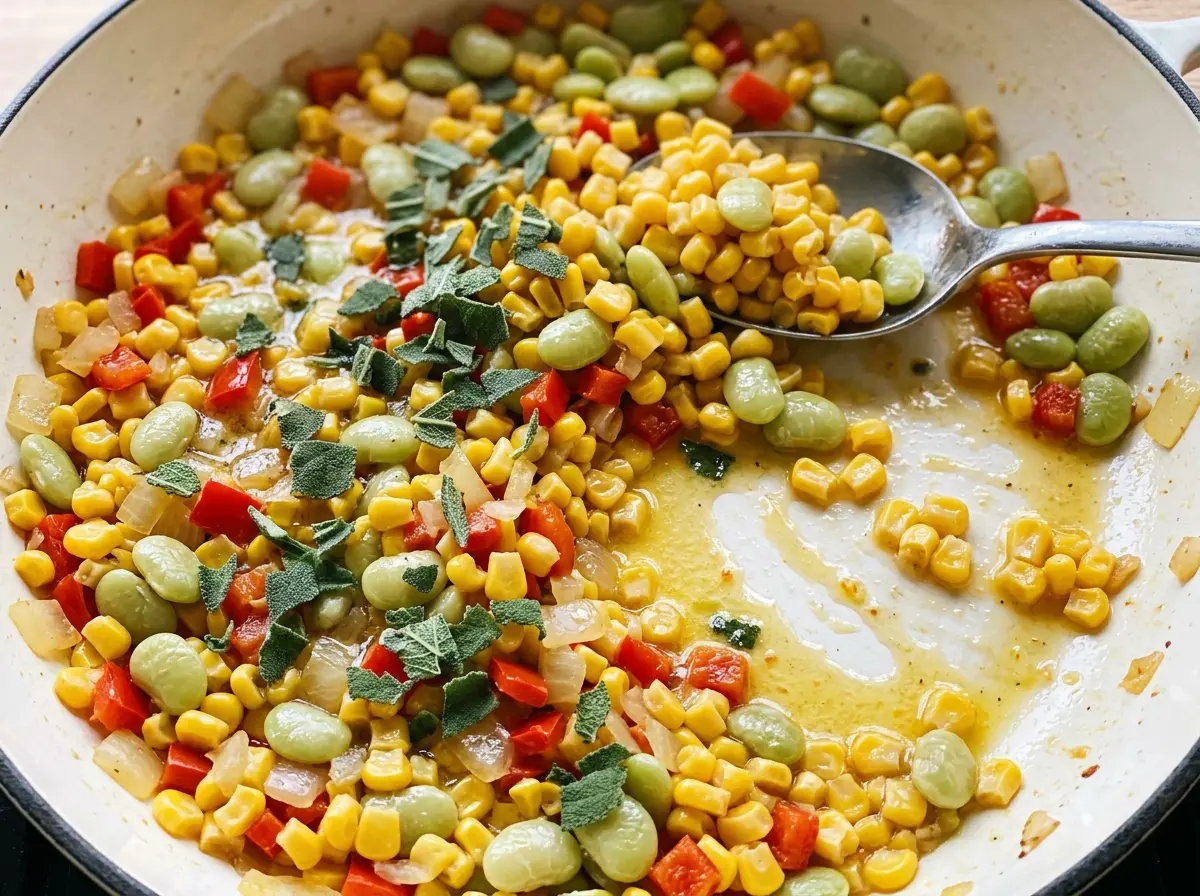
Kitchen Note
Give the onion its full four minutes before adding the bell pepper. It should look softened and glossy, not browned; that gives the vegetables a sweet, gentle start.
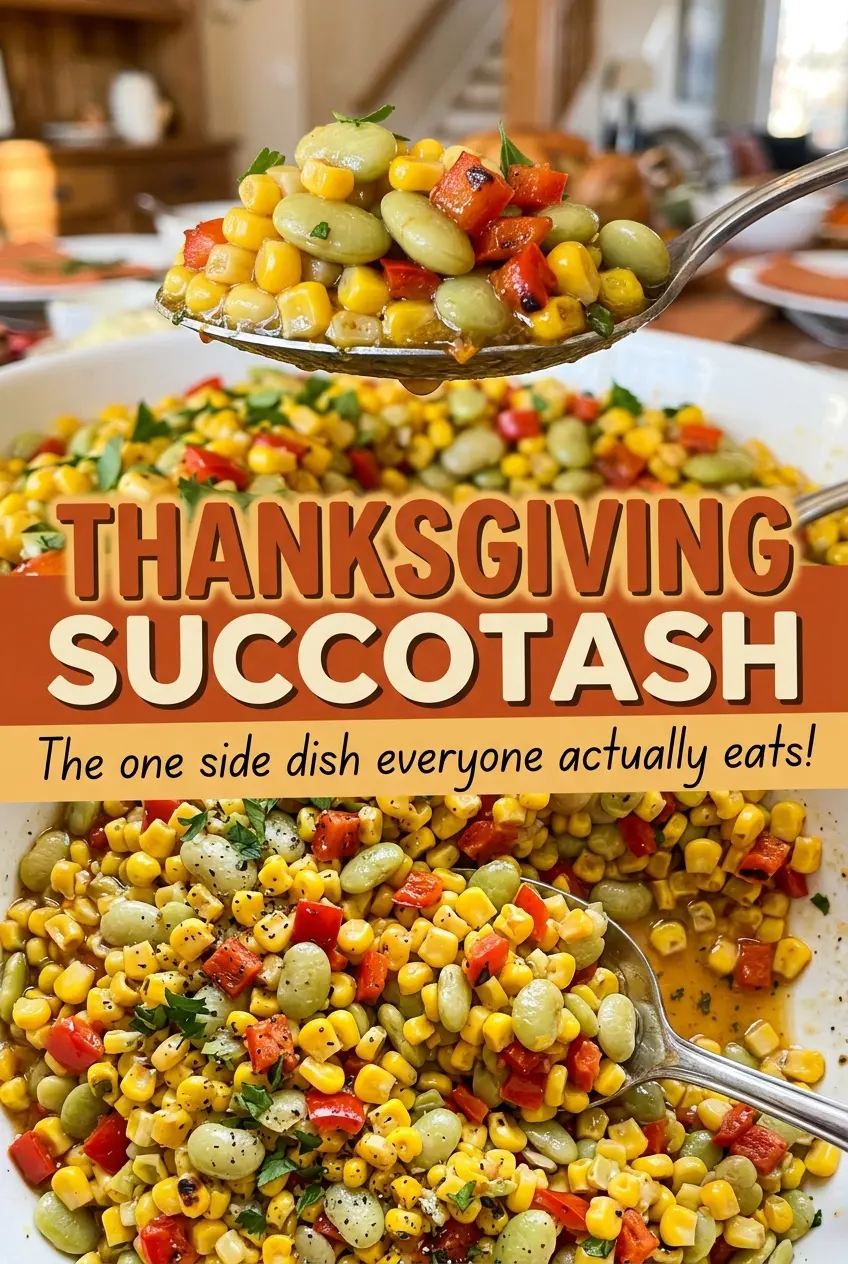
Save this Thanksgiving succotash for a holiday table: tender lima beans, sweet corn, and a lightly creamy thyme sauce.
Why the Lima Beans Need a Covered Simmer Before the Cream Goes In
The lima beans and corn enter the skillet frozen, but they don’t need the same thing from the pan. The corn warms quickly; the baby limas need time in the broth to become tender all the way through. Covering the skillet traps steam and helps the beans cook without requiring a deep pool of liquid. Stir once or twice during the simmer so the vegetables cook evenly and nothing settles against the bottom.
Heavy cream belongs after that covered simmer, not in the beginning. If it goes in while the beans are still firm, you’d have to cook the cream for longer to finish the vegetables, and the sauce could reduce more than you want. Cooking the vegetables first gives you a better cue: taste a lima bean, and wait until its center is tender before moving on. Then uncover the skillet, stir in the cream, and let it thicken lightly. The vegetables stay recognizable, and the sauce coats them instead of turning the skillet into a soup.
What the Lima Beans, Corn, and Cream Each Bring to the Skillet
- Baby lima beans — Frozen baby limas are the hearty center of the dish, and their small size suits the covered simmer. Look for plain frozen beans rather than a seasoned vegetable mix, which could change the salt and seasoning balance. Keep them frozen until they go into the skillet; there’s no need to thaw them first.
- Corn kernels — Frozen corn keeps the preparation easy and gives the skillet its sweet, juicy bites. A standard bag of frozen kernels works well; petite or extra-sweet varieties are fine, though they can taste sweeter than ordinary corn. Canned corn isn’t a direct swap here because it’s already cooked and may soften too much during the bean simmer.
- Heavy cream — Cream adds richness and gives the broth a lightly thickened finish. Use heavy cream for the fullest, steadiest sauce; a lower-fat dairy substitute will make a thinner result and is more prone to splitting if boiled hard. The cream goes in only after the beans are tender.
- Fresh thyme — Fresh thyme leaves bring a mild herbal lift that doesn’t overpower the corn. Strip the leaves from the stems before measuring them, and avoid adding woody stems to the skillet. If fresh thyme isn’t available, dried thyme can work, but its flavor is more concentrated and less bright.
- Yellow onion and red bell pepper — The onion softens into the buttery base, while the pepper brings sweetness and color. Choose a firm pepper with glossy skin; a green bell pepper can stand in, though it tastes sharper and less sweet. Dice the onion finely so it softens in the short first cook.
- Vegetable broth — Broth supplies the liquid for the covered simmer and keeps the dish vegetarian. A regular vegetable broth is fine; choose one whose flavor you like, since it becomes part of the finished sauce. There’s no need to add extra liquid at the start.
How to Simmer the Vegetables Without Losing Their Texture
Soften the Onion in Butter
Melt the butter in a 12-inch skillet over medium heat, then add the finely diced onion. Cook for 4 minutes, stirring occasionally, until the pieces look soft and glossy. Keep the heat at medium rather than rushing them over high heat; browned edges bring a stronger flavor than this mellow side needs. The onion should be softened before the pepper goes in.
Give the Bell Pepper a Short Head Start
Add the diced red bell pepper and cook for 3 minutes, stirring occasionally. It should begin to soften but still hold its shape, since it will cook further with the beans and corn. Stir across the bottom of the skillet so the pepper picks up the buttery onion mixture. If the onion is catching, lower the heat slightly instead of letting it darken.
Cover the Lima Beans, Corn, and Broth
Stir in the frozen lima beans, frozen corn, vegetable broth, thyme, kosher salt, and black pepper. Cover and simmer over medium-low heat for 12 to 15 minutes, stirring once or twice, until the limas are tender. Keep the lid on between stirs so the trapped steam does its job. Check a bean near the end of the range; if its middle is still firm, continue until it turns tender.
Finish With Cream, Uncovered
Stir in the heavy cream and simmer uncovered for 2 to 3 minutes, just until warmed through and lightly thickened. Keep the heat gentle; a hard boil can make a cream sauce look greasy or separated. The sauce should cling lightly to the vegetables, not become thick like a casserole filling. Take the skillet off the heat once it reaches that loose, creamy consistency.
Easy Ways to Adapt Thanksgiving Succotash
Make It Dairy-Free With Olive Oil and Coconut Milk
Replace the butter with the same amount of olive oil, and use unsweetened full-fat coconut milk in place of the heavy cream. Stir the coconut milk in at the same point and warm it gently; the sauce will be less traditionally buttery and will carry a faint coconut note, but it still pairs well with the corn and thyme.
Use Green Bell Pepper for a Sharper, Less Sweet Version
Swap in one medium green bell pepper for the red one and keep the same dice and cooking time. The skillet will taste a little more savory and less sweet, while the pepper still softens alongside the onion and holds its shape in the finished dish.
Add a Gentle Smoky Note
Stir a small pinch of smoked paprika into the skillet with the thyme and seasonings. It adds a toasty edge that stands up to the sweet corn without changing the cooking method; keep the amount modest so it doesn’t take over the fresh thyme.
Storage and Reheating
- Refrigerator: Store leftovers in a covered container for 3 to 4 days. The sauce thickens as it chills, and the vegetables soften a little.
- Freezer: It can be frozen in an airtight container for up to 2 months, though the cream may separate and the limas will soften after thawing. Stir well as it reheats to bring the sauce back together as much as possible.
- Reheating: Warm gently in a saucepan over low heat, stirring often, until the leftovers reach 165°F. Avoid a rolling boil, which can make the cream sauce look broken.
Questions That Come Up While Making Thanksgiving Succotash
Thanksgiving Succotash
Ingredients
Equipment
Method
- Melt the butter in a 12-inch skillet over medium heat.
- Add the onion and cook for 4 minutes, stirring occasionally, until softened.
- Add the red bell pepper and cook for 3 minutes, stirring occasionally.
- Stir in the lima beans, corn, vegetable broth, thyme, salt, and black pepper.
- Cover and simmer over medium-low heat for 12 to 15 minutes, stirring once or twice, until the lima beans are tender.
- Stir in the heavy cream.
- Simmer uncovered for 2 to 3 minutes, until warmed through and lightly thickened.