The first thing I notice when a sheet-pan dinner works is the contrast: browned edges on the potatoes, broccoli that still has a little bite, and turkey that stays juicy instead of drying out while the vegetables finish. That’s what I wanted from this Turkey Veggie Tray. Baby potatoes soften in the middle, carrots turn tender and sweet, and paprika gives the turkey a warm color without masking its mild flavor.
I use a rimmed 18×13-inch baking sheet and spread the vegetables in a single layer instead of piling them up. The turkey gets patted dry before its oil and seasoning go on, which helps the paprika coat the surface rather than clumping against moisture. The ingredient list is familiar, and the oven does nearly all the work. Slice the tenderloins after their short rest, then serve them beside the vegetables while the edges are still golden.
Kitchen Note
Pat the tenderloins dry before adding the oil and paprika. A dry surface lets the rub cling evenly, so you don’t end up with seasoning gathered in damp patches.
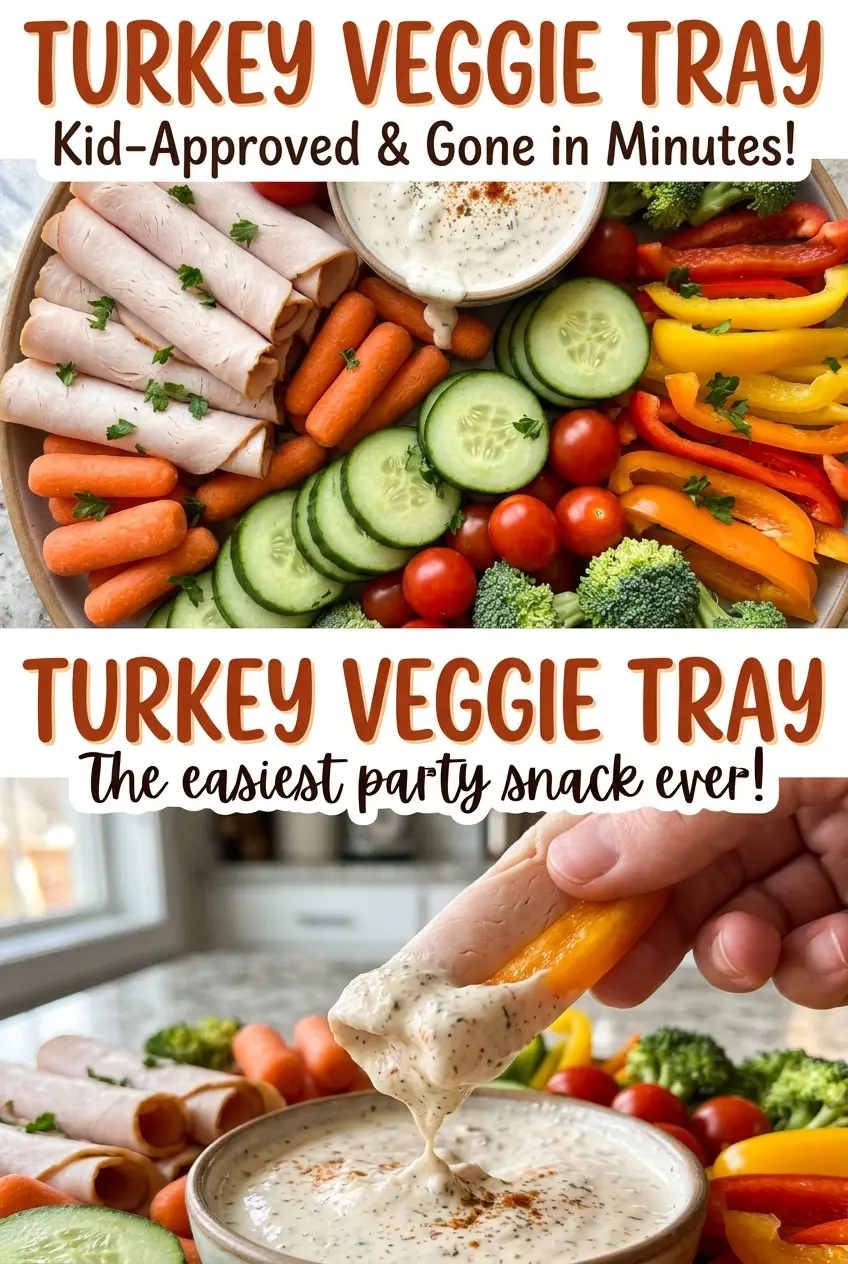
Save this Turkey Veggie Tray for a dinner with paprika-seasoned turkey, tender potatoes, and broccoli that keeps its shape.
Why the Root Vegetables Need a Head Start Before the Turkey Goes In
Potatoes and carrots take longer to become tender than turkey tenderloins do. If everything went onto the pan at the same time, you’d be left choosing between firm vegetables and turkey that has spent too long in the oven. Giving the potatoes, carrots, and onion their own first stretch of roasting lets them get moving before the meat joins them.
Broccoli needs a different schedule again. It’s tender enough to cook through in less time, so adding it near the end helps keep the florets intact instead of limp. That staggered order is what makes one pan work for ingredients with different cooking times; it isn’t a matter of pushing the oven hotter or cutting everything into tiny pieces.
The vegetables also need room. A single layer lets the hot oven reach their surfaces rather than trapping moisture between crowded pieces. Use the full-size rimmed pan and spread them out before roasting. When the turkey and broccoli go in later, nestle them around the vegetables without turning the tray into a pile.
What Each Ingredient Brings to This Turkey-and-Vegetable Tray
- Baby potatoes — Halving them gives the cut sides direct contact with the seasoned oil and makes their size manageable alongside the carrots. If you can’t find baby potatoes, larger potatoes work when cut into pieces about the size of halved baby potatoes; oversized chunks are more likely to lag behind.
- Carrots and red onion — The 1/2-inch carrot pieces cook at a pace that suits the potatoes, while the 1-inch onion wedges are large enough to roast without disappearing. Choose firm carrots; ordinary red onions are fine here, since roasting softens their sharp edge.
- Olive oil — Dividing the oil lets you coat the first vegetables, season the turkey, and dress the broccoli separately. A basic olive oil is all you need; save a more expensive bottle for a dish where its uncooked flavor is the point.
- Dried thyme and garlic powder — These season the root vegetables evenly and stay distributed through the oil as the tray roasts. The powdered garlic is especially handy here because it coats small pieces without leaving large bits that could scorch.
- Turkey breast tenderloins — Their relatively even shape makes them convenient for roasting beside vegetables. Look for tenderloins that are similar in thickness so they cook at a similar pace, and pat them dry before seasoning.
- Paprika — It gives the turkey its color and a mild, savory warmth. A fresh jar has a brighter aroma; if yours smells faint or dusty, the finished turkey will have less of that paprika character.
- Broccoli florets — Similar-size florets are easier to roast evenly. If a few are much larger than the rest, split those florets so they’re closer in size; keep them for the later addition rather than roasting them from the beginning.
Build the Pan in Stages for Tender Vegetables and Juicy Turkey
Give the Potatoes, Carrots, and Onion Their First Roast
Heat the oven to 425°F and set out a large 18×13-inch rimmed baking sheet. Toss the halved potatoes, carrot pieces, and onion wedges on the pan with 2 tablespoons olive oil, 1/2 teaspoon kosher salt, 1/4 teaspoon black pepper, the dried thyme, and garlic powder. Spread everything into one layer and roast for 15 minutes. If the vegetables are heaped together, spread them out before they go in so they roast rather than steam.
Season the Turkey and Nestle It Among the Vegetables
While the vegetables roast, rub the patted-dry tenderloins with 1 tablespoon olive oil, the paprika, and the remaining salt and pepper. When the first roast is finished, nestle the turkey among the vegetables and return the pan to the oven for 10 minutes. Keep the tenderloins in the open spaces rather than stacking them over the vegetables. The pieces should sit securely on the pan with vegetables around them.
Add the Broccoli Near the End
Toss the broccoli florets with the remaining 1 tablespoon olive oil, then add them to the baking sheet. Spread the florets around the turkey and vegetables so they have contact with the pan and aren’t tucked under the meat. The broccoli goes in at this point, not with the potatoes at the start; that shorter roast helps it hold its shape.
Check the Thickest Tenderloin and Rest Before Slicing
Roast for 15 to 25 minutes more, until the thickest part of the turkey registers 165°F and the potatoes and carrots are tender. Tenderloins can vary in thickness, so check the thickest section rather than judging by color alone. Rest the turkey on the pan for 5 minutes before slicing and serving. The vegetables can stay on the pan while the meat rests.
Two Simple Ways to Change the Vegetable Balance
Make It Lower-Carb by Replacing the Potatoes
For a lower-carb version, replace the potatoes with an equal volume of broccoli florets. Add all the broccoli at the later broccoli stage, rather than putting any in for the first roast; the tray will have less of the soft, starchy potato texture and more tender green florets.
Leave Out the Red Onion for a Milder Tray
Skip the onion wedges if you prefer a milder vegetable mix. The potatoes and carrots still roast with the thyme and garlic powder, but you’ll lose the onion’s savory sweetness and the larger, soft roasted pieces it adds.
Storage and Reheating
- Refrigerator: Refrigerate leftovers within 2 hours in a sealed container and use them within 3 to 4 days. The vegetables will soften as they sit.
- Freezer: Freeze cooled portions in airtight containers for up to 2 to 3 months for best quality. The turkey holds up well, though potatoes can turn grainy and broccoli softer after thawing.
- Reheating: Microwave portions in short bursts until steaming hot throughout, turning the turkey pieces once. Long, uninterrupted heating can dry out the lean turkey before the vegetables are hot.
Questions That Come Up When Roasting Turkey and Vegetables Together
Turkey Veggie Tray
Ingredients
Equipment
Method
- Heat the oven to 425°F.
- Set out a large 18x13-inch rimmed baking sheet.
- Toss the potatoes, carrots, and onion on the baking sheet with 2 tablespoons olive oil, 1/2 teaspoon salt, 1/4 teaspoon black pepper, the thyme, and garlic powder.
- Spread the vegetables into a single layer.
- Roast for 15 minutes.
- Rub the turkey tenderloins with 1 tablespoon olive oil, the paprika, and the remaining salt and pepper.
- Nestle the turkey tenderloins among the vegetables.
- Roast for 10 minutes.
- Toss the broccoli with the remaining 1 tablespoon olive oil.
- Add the broccoli to the pan and spread it around the turkey and vegetables.
- Roast for 15 to 25 minutes more, until the thickest part of the turkey registers 165°F and the potatoes and carrots are tender.
- Rest the turkey on the pan for 5 minutes before slicing and serving.