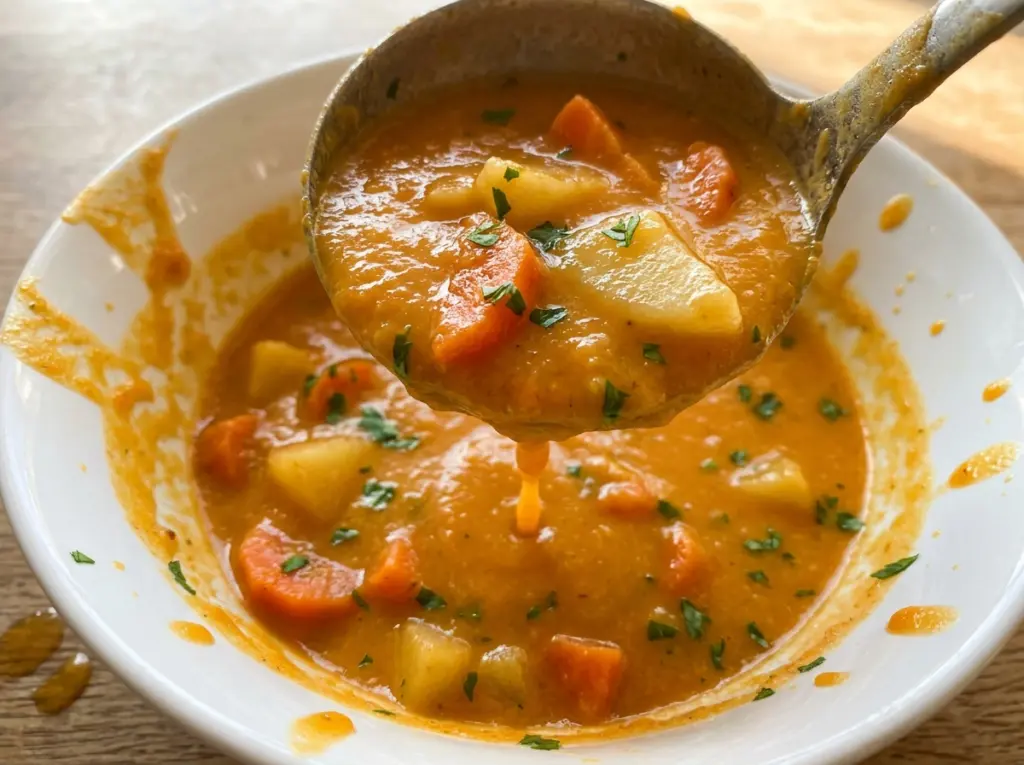
The onion and celery soften first, turning sweet and fragrant before the carrots go into the pot. Give them a minute with the garlic, and the kitchen starts to smell like the beginning of a good soup. I make this vegan carrot potato soup when I want a bowl that feels creamy and filling without needing dairy or a complicated list of ingredients.
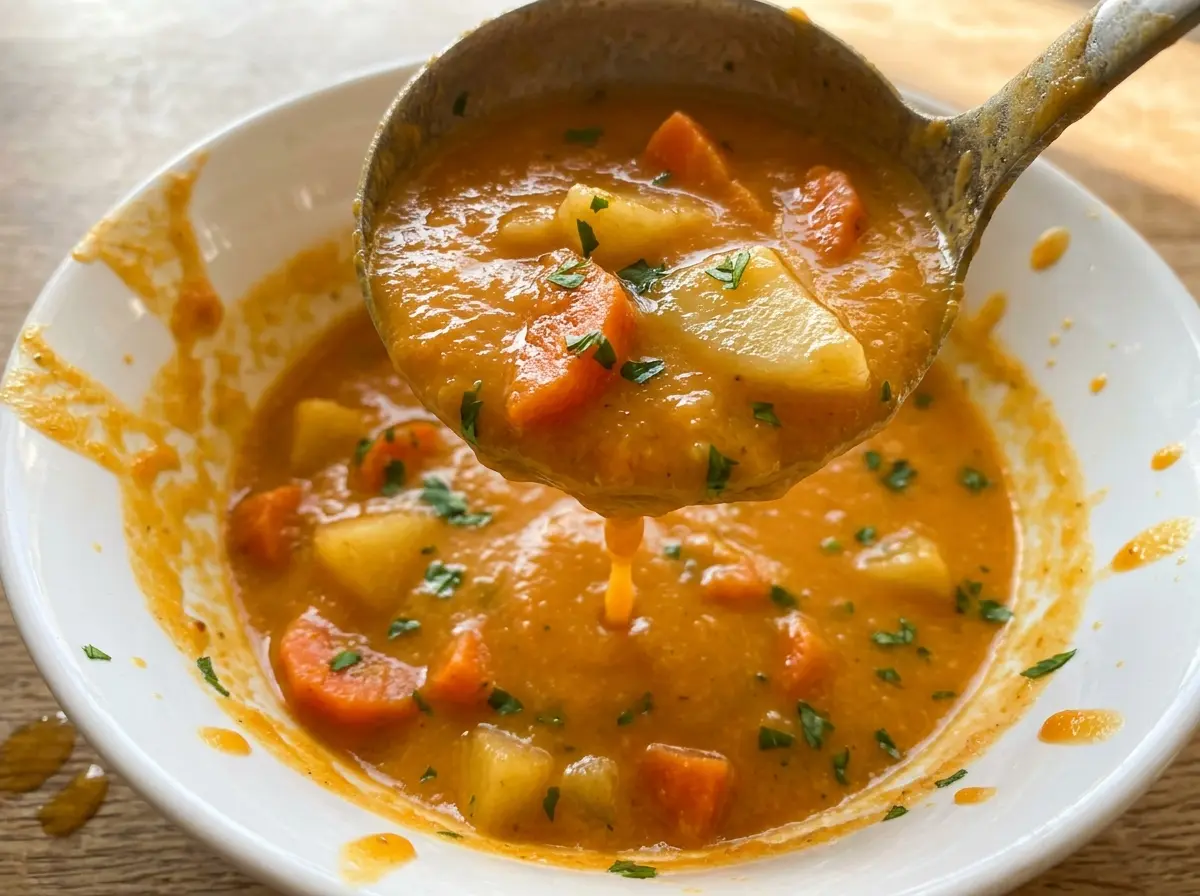
The even cuts do more work than they might seem to: carrots and Yukon Gold potatoes cut into half-inch pieces cook at about the same pace, so both are tender by the time the broth is ready to blend. Yukon Golds bring a naturally velvety texture, while coconut milk rounds out the soup and lemon juice keeps that richness from feeling heavy. The result is smooth, gently savory soup with a bright finish.
It’s a straightforward pot of vegetables, broth, and a few well-chosen seasonings, but the small choices matter. Let the vegetables soften properly, simmer until they pierce easily, and blend only after the bay leaf is out. Each spoonful comes out creamy, warmly herbed, and full of carrot sweetness.
Kitchen Note
Stir in the coconut milk and lemon juice after blending, then give them 2 to 3 minutes over low heat. Keep the pot at a gentle warm-through rather than bringing it back to a boil; the finish stays smooth and the lemon tastes fresh.
Save this vegan carrot potato soup for a cozy batch-cooking day: it blends silky, gets its richness from coconut milk, and finishes with a lift of lemon.
Why Equal-Sized Carrots and Potatoes Make This Soup Silky
Carrots and potatoes don’t soften at quite the same rate when their pieces are different sizes. Keeping both vegetables in half-inch pieces gives them a better chance of becoming fork-tender together, which matters when the whole pot is going to be blended smooth. If some pieces are much larger, the smaller ones can break down while you wait for the stubborn pieces to soften.
There’s another reason to wait for true tenderness before blending: a fork should slide into both the carrots and potatoes with little resistance. A firm piece of carrot can leave tiny bits in an otherwise smooth soup, and undercooked potato won’t blend into the same soft, even texture. The simmer is doing more than heating everything through; it’s preparing the vegetables to turn into the body of the soup.
Yukon Gold potatoes help the finished texture feel creamy without adding dairy. Once they’re tender, their starch blends into the broth rather than leaving the soup thin and watery. The gentle simmer gives the carrots time to soften alongside them, and the immersion blender brings the two together into a cohesive, velvety bowl.
Why Yukon Golds and Full-Fat Coconut Milk Matter Here

- Yukon Gold potatoes — Their naturally creamy texture gives the blended soup body without relying on dairy. If you use russet potatoes instead, keep the same weight; they’re starchier and can make the soup feel thicker, so blend just until smooth rather than continuing to work it.
- Full-fat canned coconut milk — This is what makes the finish rounded and creamy while keeping the soup vegan. Light canned coconut milk works as a one-for-one swap, though the bowl will be less rich and a little thinner.
- Carrots — Fresh carrots are the main source of sweetness and color. Peeling them and cutting them to the same size as the potatoes helps them cook evenly; there’s no need to seek out a specialty variety.
- Yellow onion, celery, and garlic — These build the savory base underneath the sweeter vegetables. Diced onion and celery soften in the olive oil first, while the minced garlic goes in later so its flavor blooms without scorching.
- Vegetable broth — The broth carries the vegetables’ flavor through the pot, so use one you enjoy sipping. Broths vary in saltiness, but the measured kosher salt and black pepper provide the seasoning in this version.
- Thyme, bay leaf, and lemon juice — Dried thyme and the bay leaf give the simmer a gentle herbal note. Fresh lemon juice goes in at the end; it brightens the coconut milk and carrot sweetness without making the soup taste lemony.
From Softened Aromatics to a Smooth, Bright Finish
Soften the Onion and Celery
Warm the olive oil in a 5- to 6-quart Dutch oven over medium heat. Add the diced onion and celery, then cook for 5 minutes, stirring occasionally, until softened. They should look glossy and tender rather than browned; if the pot is sizzling hard, lower the heat so the vegetables soften without catching.
Give the Carrots and Garlic a Head Start
Stir in the carrots and minced garlic, and cook for 1 minute. That short time takes the raw edge off the garlic while letting it perfume the oil. Add the potatoes, vegetable broth, dried thyme, bay leaf, kosher salt, and black pepper, then stir so the seasonings are distributed through the vegetables.
Simmer Until Both Vegetables Yield Easily
Bring the soup to a boil, then reduce the heat to maintain a gentle simmer and cover the Dutch oven. Cook for 20 to 25 minutes, until both the potatoes and carrots are very tender when pierced with a fork. A rolling boil can agitate the vegetables without improving the texture, so look for steady, quiet bubbling under the lid.
Blend First, Then Finish Gently
Remove and discard the bay leaf before blending; it’s there to season the broth, not to end up in the finished soup. Use an immersion blender until the soup is smooth, moving it through the pot so no large pieces are left behind. Stir in the coconut milk and fresh lemon juice, then cook over low heat for 2 to 3 minutes until heated through.
Three Ways to Change the Texture or Richness
Leave Some Vegetables Chunky
For a more rustic bowl, scoop out a portion of the cooked carrots and potatoes before blending. Blend the remaining soup smooth, then stir the reserved vegetables back in. You’ll keep the creamy broth but get tender pieces in each spoonful.
Use Light Coconut Milk for a Lighter Finish
Swap light canned coconut milk for the full-fat version in the same amount. The soup stays creamy and vegan, but the coconut taste and richness are less pronounced, and the finished texture won’t feel quite as lush.
Blend in a Countertop Blender
If you don’t have an immersion blender, let the soup stop bubbling and transfer it to a countertop blender in batches. Don’t fill the blender more than halfway with hot soup, and vent the lid while covering it with a folded kitchen towel. The batches take longer, but the result is just as smooth.
Storage and Reheating
- Refrigerator: Store in an airtight container for 3 to 4 days. The soup may thicken as the potatoes absorb some of the broth.
- Freezer: Freeze in airtight containers for up to 3 months. Thaw overnight in the refrigerator; the potato texture may be slightly less silky after freezing.
- Reheating: Warm gently in a saucepan over low to medium-low heat, stirring often, until steaming hot. Avoid a hard boil, which can make the texture less smooth.
Questions That Come Up With This Carrot Potato Soup
Vegan Carrot Potato Soup
Ingredients
Equipment
Method
- Heat the olive oil in a 5- to 6-quart Dutch oven over medium heat, then add the onion and celery and cook for 5 minutes, stirring occasionally, until softened.
- Stir in the carrots and garlic and cook for 1 minute, then add the potatoes, vegetable broth, thyme, bay leaf, salt, and pepper.
- Bring the soup to a boil, reduce the heat to maintain a gentle simmer, cover, and cook for 20 to 25 minutes, until the potatoes and carrots are very tender when pierced with a fork.
- Remove and discard the bay leaf, then blend the soup with an immersion blender until smooth.
- Stir in the coconut milk and lemon juice and cook over low heat for 2 to 3 minutes, until heated through.