
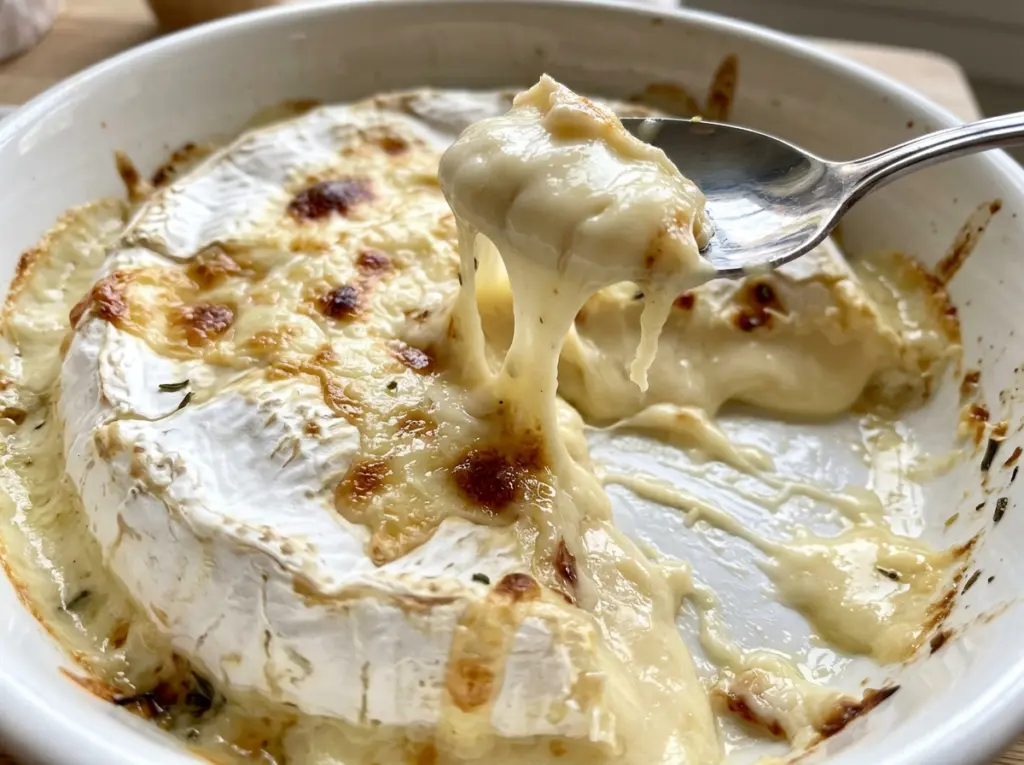
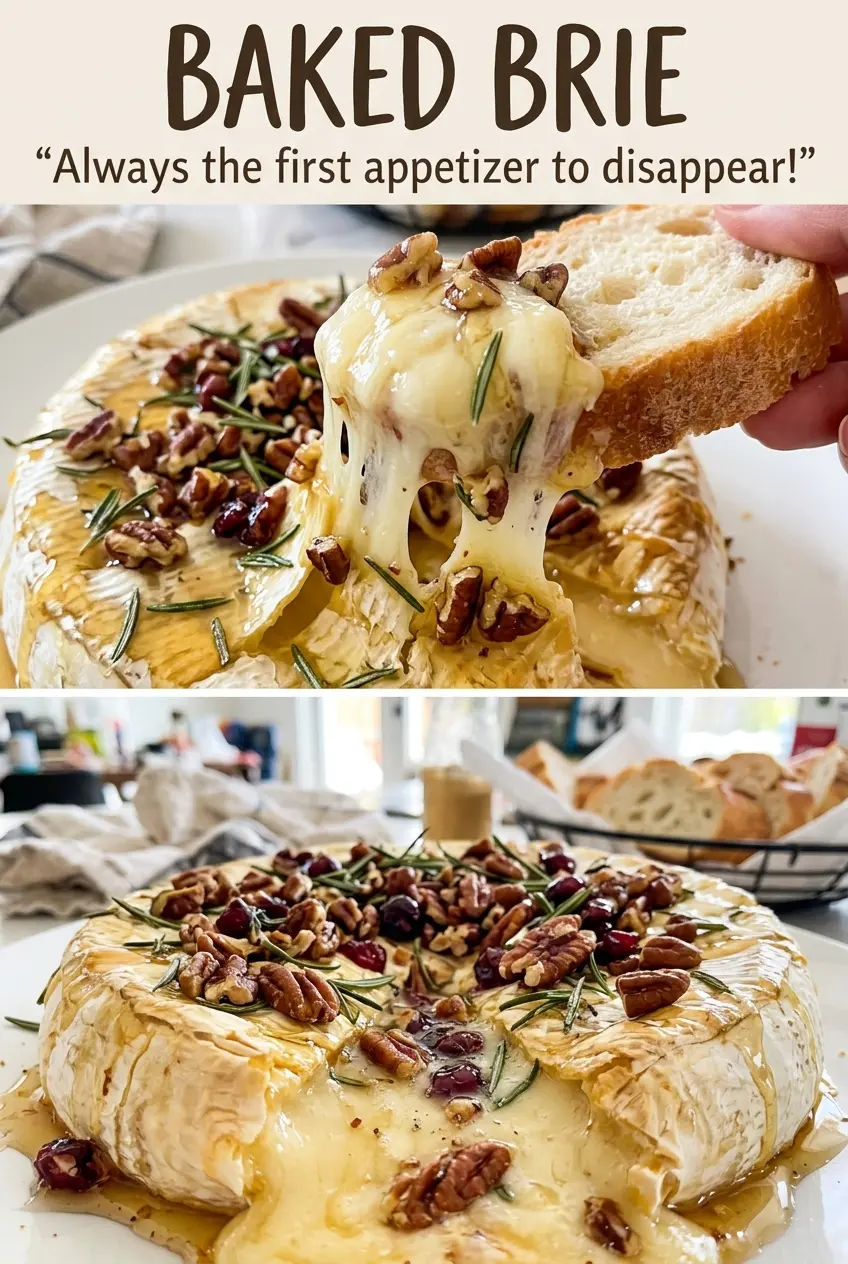
A Brie wheel can look perfectly intact in the oven, then slump if it stays in too long. I watch for the center to soften while the wheel still holds its shape; that small window is what makes this Baked Brie easy to serve instead of turning it into a puddle. Honey, pecans, and fresh rosemary give the top a mix of sweetness, crunch, and a savory herbal note without covering up the creamy cheese.
The topping goes on before the Brie bakes, so the honey warms over the cheese and the pecans and rosemary settle into the crosshatched top. I keep the score shallow and check the center by gently pressing it, rather than judging by color alone. Brie doesn’t need to brown to be ready. Pull it while the middle yields softly and the outside still looks like a wheel, and you’ll have a warm, creamy appetizer with the toppings right where you want them.
Kitchen Note
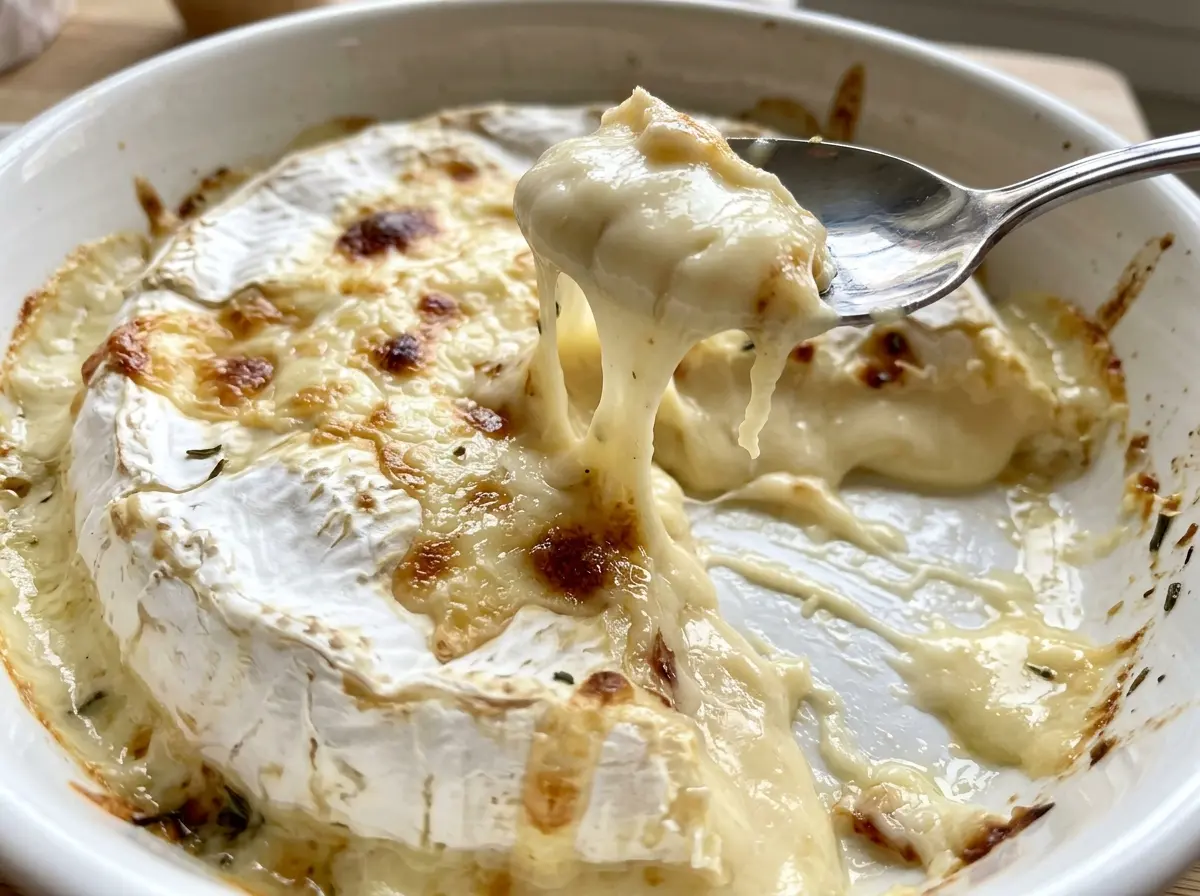
Keep the crosshatch shallow. You want to score the top rind, not cut deep into the cheese, so the wheel has a sturdy surface for the honey and toppings.
Save this Baked Brie for a warm appetizer with a soft center, honey, pecans, and fresh rosemary.
Why This Brie Should Stay a Wheel, Not Turn Into a Dip
Brie softens quickly once it’s hot, but this appetizer is meant to keep its round shape. The rind helps the wheel contain the creamy center as it warms, while the shallow crosshatch gives the topping a textured place to settle. Leave the rind on; cutting it away would remove the outside structure that helps the Brie hold together.
There’s also a useful balance in keeping the topping on the surface. Honey brings sweetness, pecans add a firm bite, and rosemary gives the rich cheese a fresh, savory counterpoint. Stirring everything into the Brie would lose that contrast, and the pecans wouldn’t stay crisp on top. Each bite can pick up a little of the topping and a little of the soft center, rather than tasting like one blended mixture.
For a wheel that’s easy to move and serve, use the full 8-ounce Brie and stop baking as soon as the middle feels soft but the outside still holds its shape. A longer bake doesn’t make the cheese more flavorful; it makes the wheel harder to handle. Keeping the rind intact and paying attention to that soft-center cue does more for the finished appetizer than waiting for a browned top.
What the Brie, Honey, and Rosemary Each Bring to the Topping
- Brie — An 8-ounce wheel gives you a creamy center with enough shape to hold the topping as it bakes. Choose a wheel with an intact rind; the rind is part of the structure, not something to trim off. A standard grocery-store wheel works well here, so there’s no need to seek out a specialty Brie.
- Honey — Honey supplies the sweet, glossy layer that meets the savory rosemary and buttery cheese. Its character comes through in a short ingredient list, so use one whose taste you enjoy; a strongly flavored honey will be more noticeable than a mild one. Drizzle it over the top so it can coat the surface rather than pooling in one spot.
- Pecans — Chopped pecans provide the crunchy contrast that a soft wheel needs. Fresh pecans taste clean and buttery, while older nuts can taste stale and distract from the cheese. Chopped pieces sit more neatly on the wheel than whole pecans.
- Fresh rosemary — The chopped leaves bring a fragrant, woodsy note that keeps the honey from making the topping taste one-dimensionally sweet. Fresh rosemary is the ingredient to use here; its bright aroma is especially noticeable against warm Brie. Chop it finely enough to distribute across the top.
How to Bake the Brie Without Losing Its Shape
Set Up the Wheel
Heat the oven to 350°F and line a small baking sheet with parchment paper. Set the Brie on the lined sheet, then score the top rind in a shallow crosshatch. Keep the cuts on the surface rather than slicing through the wheel. A shallow pattern gives the topping a little texture without compromising the Brie’s shape.
Add the Honey and Toppings
Drizzle the honey over the Brie, then sprinkle the chopped pecans and fresh rosemary across the top. Spread the toppings around instead of piling them in the middle, so each portion gets some of the sweet, crunchy, herbal finish. If a few pieces land near the edge, that’s fine; the parchment is there to catch any sticky drips. Put the topped wheel into the oven once it’s assembled.
Use the Center as Your Doneness Cue
Bake for 12–15 minutes, checking toward the beginning of that window. Gently press the center to see whether it feels soft; the wheel should still hold its shape. Don’t wait for the rind or top to brown as a sign that it’s ready. If the center yields softly and the outside remains intact, take it out rather than baking until the whole wheel collapses.
Two Simple Ways to Adapt the Topping
Nut-Free Honey and Rosemary Brie
Leave off the pecans and keep the honey and fresh rosemary. The result is still sweet and fragrant, but you’ll lose the crunchy contrast; the top will be softer and better suited to anyone avoiding tree nuts.
Milder Brie with Honey and Pecans
Omit the rosemary and keep the honey and pecans. You’ll still get sweetness and crunch, with a gentler finish that lets the creamy Brie stand out more. This is a good adjustment if you want less herbal flavor without changing the basic bake.
Storage and Reheating
- Refrigerator: Refrigerate leftovers within 2 hours in a covered container and use within 3–4 days. The Brie will firm up as it chills, and the pecans will soften.
- Freezer: Freezing isn’t recommended for the baked wheel. Brie can turn grainy after freezing and thawing, and the pecans lose their crunch.
- Reheating: Warm leftovers in a 350°F oven until soft again, checking closely because portions heat faster than a whole wheel. The microwave can heat the cheese unevenly and make it oily.
Questions That Come Up When Baking Brie
Baked Brie
Ingredients
Equipment
Method
- Heat the oven to 350°F and line a small baking sheet with parchment paper. Place the Brie on the sheet and score the top rind in a shallow crosshatch.
- Drizzle the honey over the Brie and sprinkle with the pecans and rosemary. Bake for 12–15 minutes, until the center feels soft when gently pressed but the wheel still holds its shape.