
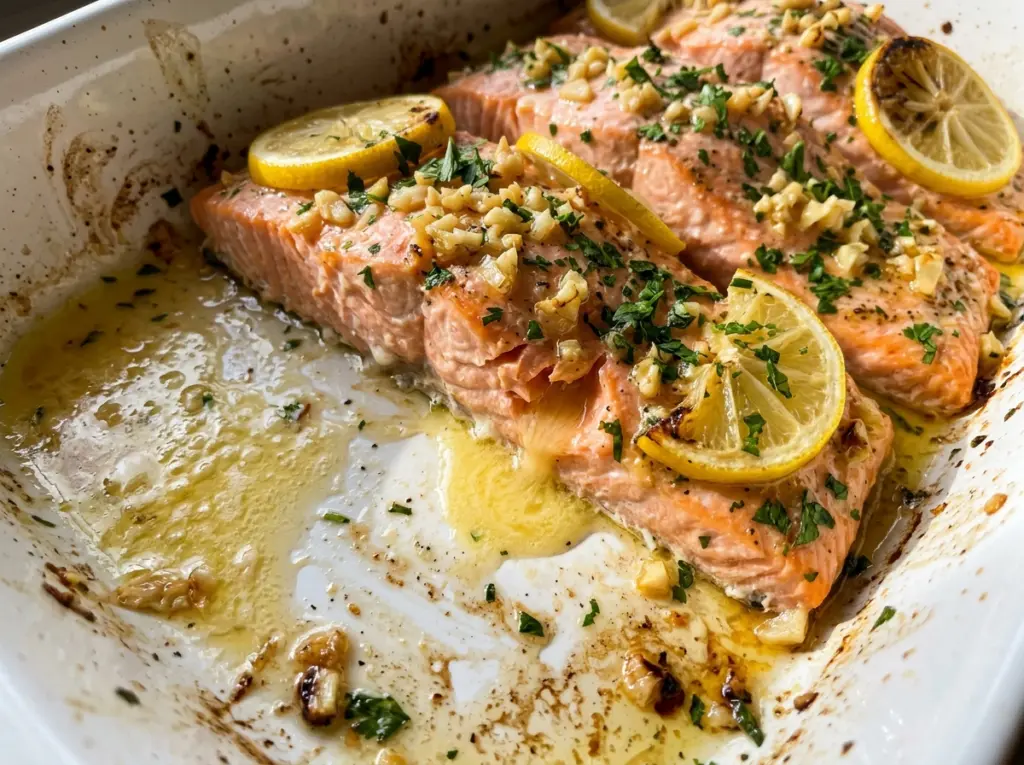
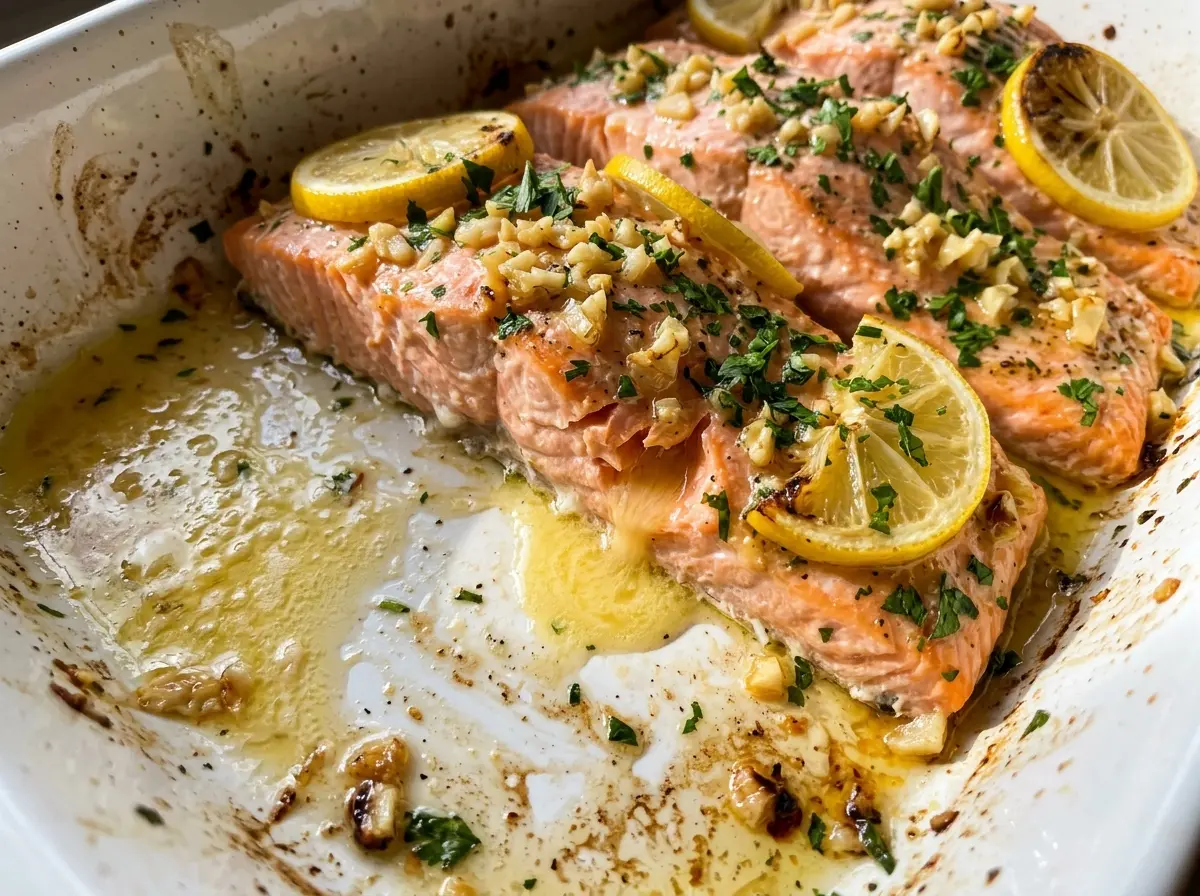
The melted butter turns glossy as soon as the minced garlic and lemon juice go in, and the parsley makes it easy to see when everything is stirred through. I spoon that mixture over each salmon portion before the dish goes into the oven, so the buttery topping is already in place while the fish cooks. This Garlic Butter Baked Salmon keeps the work simple: season the portions, make one quick butter mixture, then let the oven handle dinner.
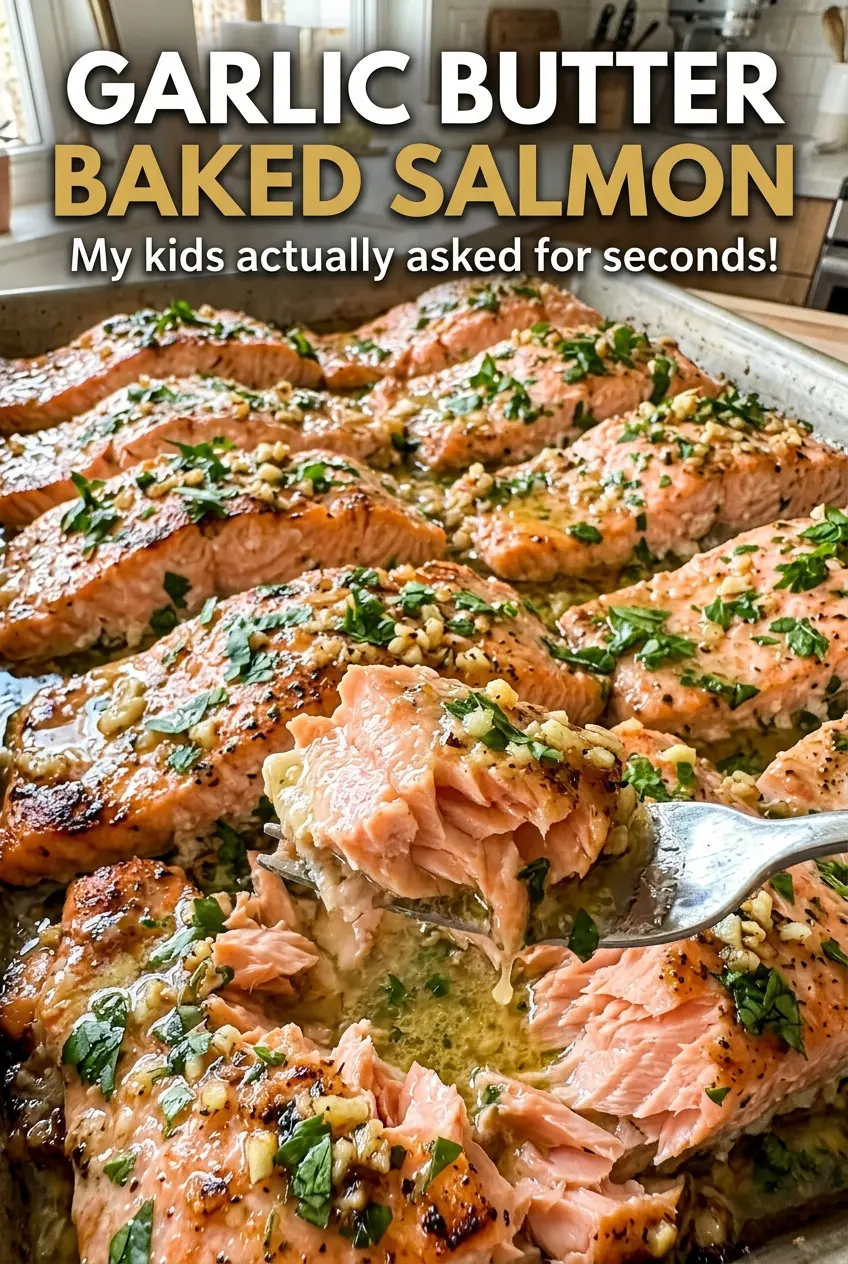
I use a baking dish large enough to lay the four portions out together, which gives me room to spoon the garlic butter over each one instead of leaving it in a puddle at the bottom. The salmon stays the focus, with butter for richness and lemon juice to brighten it. When it flakes easily and has reached the right temperature at its thickest point, a short rest finishes the job without adding another complicated step.
Kitchen Note
Give the salmon its full 3-minute rest before serving. I used to move it straight from the oven to the plate, but a brief pause lets the juices settle and makes the portions easier to lift intact.
Save Garlic Butter Baked Salmon for a night when you want tender fish, a buttery garlic topping, and very little cleanup.
Why the Thickest Salmon Portion Sets the Pace
Four portions in one dish don’t always cook at exactly the same speed. A piece with more thickness through its center takes longer for heat to reach than a thinner tail-end piece, even when both portions look similar from above. That makes the thickest portion the useful place to check rather than judging the whole dish by its edges.
Use the doneness cues together: the salmon should flake easily, and its thickest part should meet the specified temperature. The thinner pieces may look ready sooner, so don’t rely on color alone or assume every portion will change at the same moment. A quick check in the thickest area gives you a more reliable read than poking near an edge, where the fish cooks faster. This is especially helpful when portions aren’t perfectly uniform, because it keeps the timing tied to the part that needs the most heat.
The butter topping doesn’t change that check. It adds flavor across the surface, but the center of the fish is still what determines when the salmon is ready. Keep the portions arranged in one layer, and check the thickest piece near the end of the baking window.
What the Butter, Garlic, Lemon, and Parsley Each Bring
- Salmon fillet — Portions with a similar thickness tend to finish closer together, which makes serving easier. Fresh or previously frozen salmon both work; if using frozen fish, thaw it fully before baking. The center-cut pieces are often more even, while thinner end portions cook sooner.
- Unsalted butter — Butter carries the garlic, lemon, and parsley over the surface and gives the topping its rounded, rich taste. Unsalted butter lets the recipe’s kosher salt stay in control. A standard grocery-store butter works well here; there’s no need for a specialty brand.
- Garlic — Minced garlic spreads through the melted butter and gives each portion little bits of savory flavor. Fresh garlic is the best fit for this quick topping; garlic powder won’t give you the same texture or the same distinct garlic pieces.
- Lemon juice — The acidity cuts through the butter and keeps the topping from tasting heavy. Bottled lemon juice is convenient and works, while fresh juice has a brighter aroma. Measure the juice rather than squeezing extra in by instinct, since too much acidity can take over the buttery balance.
- Fresh parsley — Parsley brings a clean, green note and color to the butter. Choose leaves that look crisp rather than wilted, then chop them just before mixing so they don’t sit around and lose their freshness. If parsley isn’t available, it can be left out; the butter will taste more purely of garlic and lemon.
From Seasoned Portions to Tender, Flaky Salmon
Set Up the Baking Dish
Heat the oven to 400°F and lightly grease a 9×13-inch baking dish. The dish should hold the four portions in a single layer, with enough room to spoon butter over each one. Starting with the oven fully heated keeps the bake time consistent. Keep the fish chilled while you prepare the butter if you need a few extra minutes.
Arrange and Season the Portions
Set the salmon portions in the prepared dish, then season them with the kosher salt and black pepper. Place them so you can reach each piece with a spoon; that makes it easier to distribute the topping evenly. If the portions vary in thickness, note which one is thickest because that will be your best doneness check. Don’t stack or overlap the fish.
Stir Together the Garlic Butter
Melt the unsalted butter, then stir in the minced garlic, lemon juice, and chopped parsley. Mix until the garlic and parsley are spread through the butter instead of sitting in separate clumps. Spoon the mixture evenly over the salmon, giving each portion some of the garlic and herbs. If a little butter runs into the dish, that’s expected; focus on covering the fish rather than trying to keep every drop on top.
Bake Until the Center Is Ready
Bake for 12–15 minutes, checking the thickest part of the salmon for a temperature of 145°F and looking for flesh that flakes easily. The exact point in that window depends on the thickness of the portions and your oven, so use the visual and temperature cues rather than relying on the clock alone. Remove the dish once the salmon meets those cues, then rest it for 3 minutes before serving. Avoid leaving it in the oven for extra browning; salmon can dry out quickly once it’s cooked through.
Two Small Changes to the Garlic Butter
Leave Out the Parsley for a Cleaner Garlic Finish
Omit the chopped parsley and keep the butter, garlic, and lemon juice together. The topping loses its fresh herbal note and green flecks, but the salmon still gets the rich garlic butter and bright citrus.
Skip the Lemon for a Milder Butter Sauce
Leave out the lemon juice if you prefer a softer, less tangy finish. The result tastes richer and more directly garlicky, though it won’t have the same lift that balances the butter.
Storage and Reheating
- Refrigerator: Store leftovers in an airtight container for 3–4 days. The salmon will firm up as it chills, and the butter will set.
- Freezer: Freeze cooked salmon in an airtight freezer-safe container for up to 2–3 months. The texture may be softer after thawing, so freeze it only if you don’t mind a less delicate flake.
- Reheating: Warm it gently in a covered baking dish in a low oven until heated through. Avoid high heat or a long reheat; both can dry out the fish. You can also enjoy cold leftovers, flaked into a salad or grain bowl.
Questions That Come Up Before Baking Salmon
Garlic Butter Baked Salmon
Ingredients
Equipment
Method
- Heat the oven to 400°F and lightly grease a 9x13-inch baking dish.
- Arrange the salmon portions in the dish and season them with the salt and pepper.
- Melt the butter, stir in the garlic, lemon juice, and parsley, then spoon the mixture evenly over the salmon.
- Bake for 12–15 minutes, until the salmon flakes easily and registers 145°F at its thickest part.
- Rest the salmon for 3 minutes before serving.




