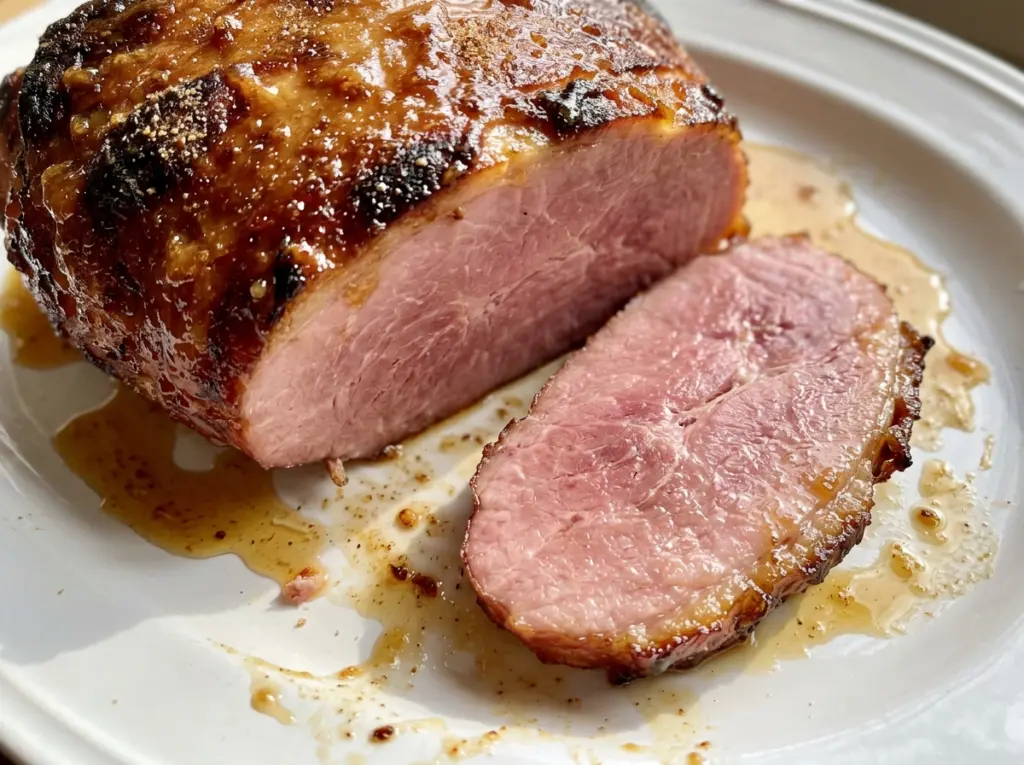
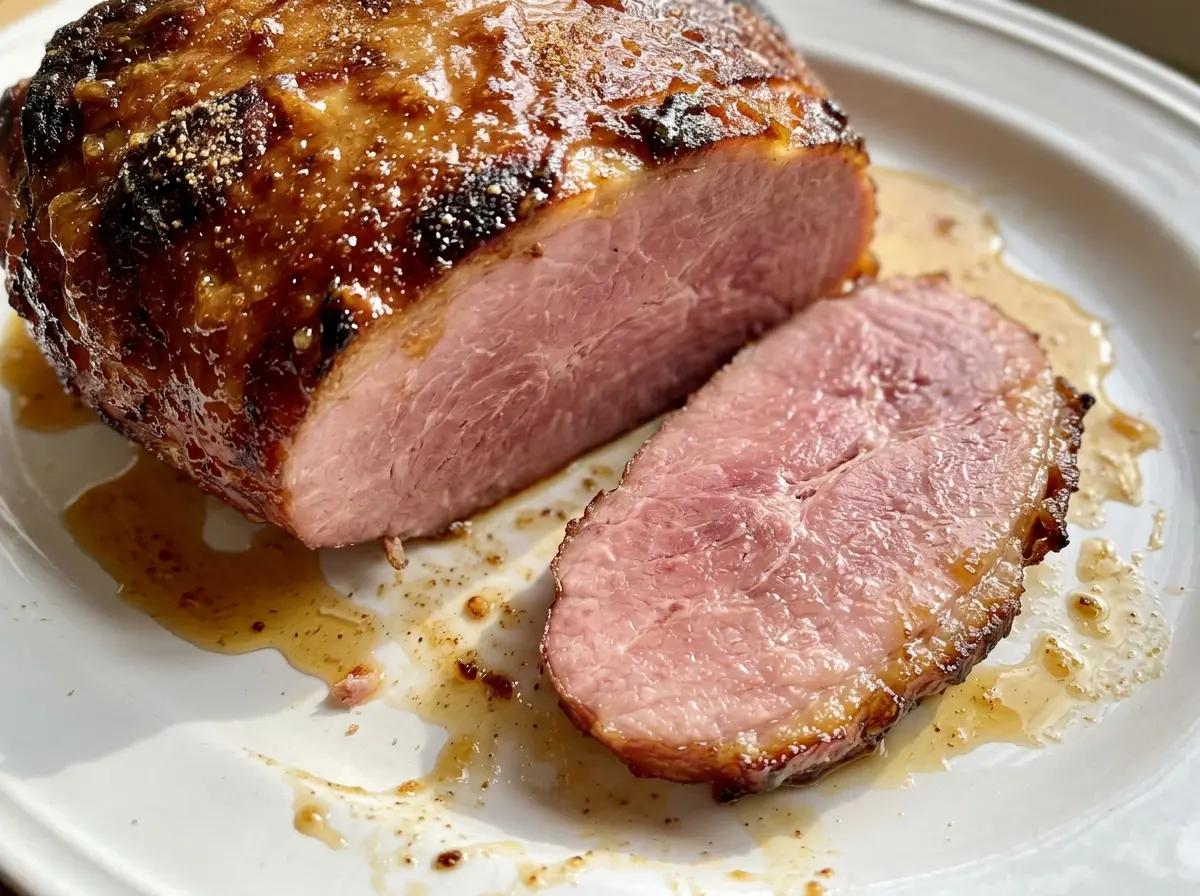
When the foil comes off, the ham is tender and steaming, but the surface still looks pale. That’s expected; the glossy, caramelized finish comes at the very end, not from a long roast. I make this honey baked ham with a fully cooked, bone-in spiral ham, so the oven’s job is to warm it gently before the honey glaze and sugar get their turn.
The spiral cuts make serving easy, but they also leave plenty of exposed edges that can dry out. Keeping the ham covered while it warms helps protect those slices. Then a quick pass under the broiler turns the sugared top bubbly and golden, with a sweet, gently spiced glaze tucked between the slices.
Kitchen Note
When you uncover the ham, leave the liquid in the bottom of the pan instead of spooning it over the surface. That keeps the glaze from getting thinned out just before it goes on.
Save this honey baked ham for a holiday table or Sunday dinner, with tender spiral slices and a bubbling honey-sugar crust.
Why a Spiral Ham Needs a Gentle Reheat Before the Sugar Crust
A spiral ham is already sliced almost all the way to the bone, which makes it easy to serve but gives heat lots of edges to work on. If you roast it uncovered for the whole time, those thin edges are the first places to lose moisture. The cut-side-down position shields much of the sliced face against the pan, and tightly sealed foil keeps the ham from drying as it warms.
There’s another reason to keep the oven gentle: this isn’t a raw roast that needs hours of cooking to become tender. The ham is fully cooked before it goes in, so the goal is to bring the center to serving temperature without pushing the outer slices too far. A covered pan gives you a softer landing before the glaze goes on. The final broil is deliberately brief; it’s there to caramelize the sugar, not to cook the ham through.
What Each Part of the Honey Glaze Adds to the Crust
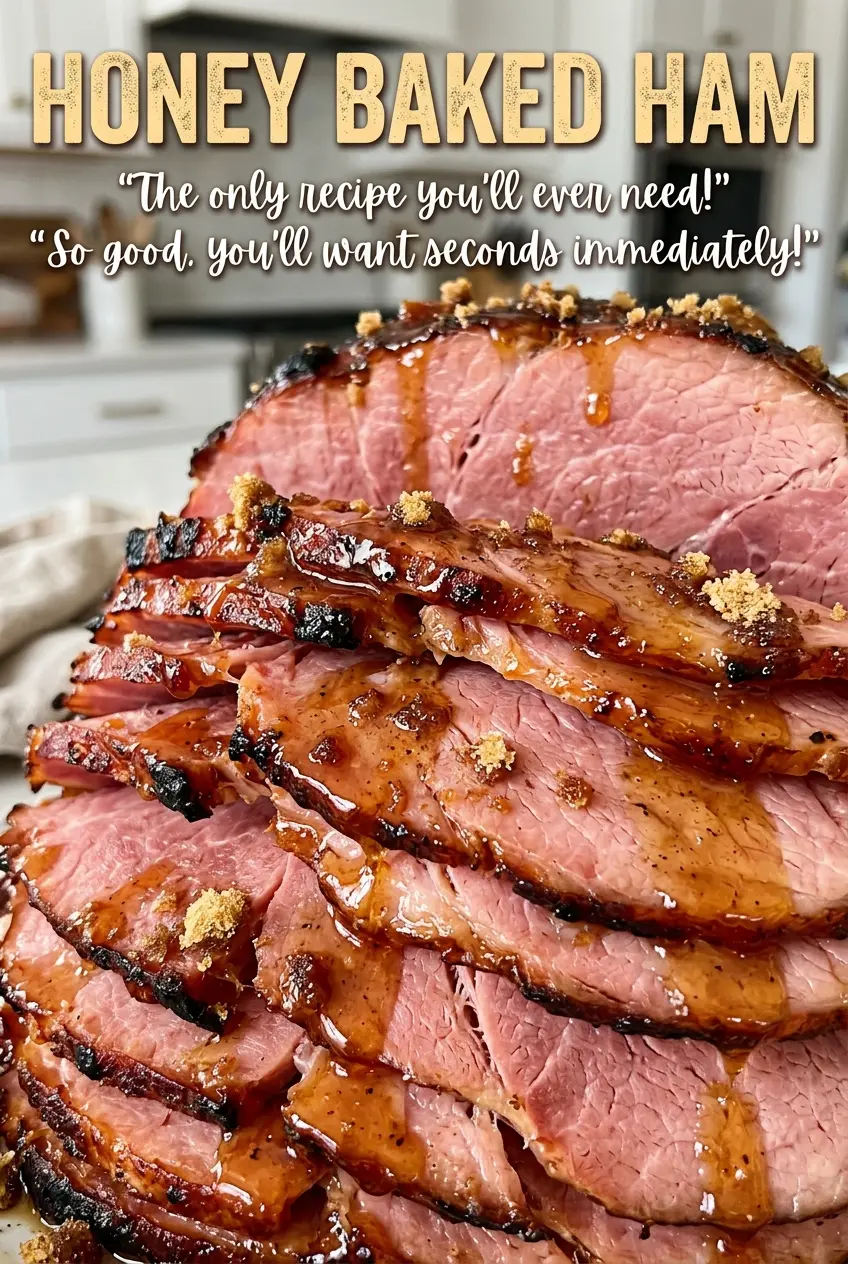
- Bone-in spiral ham — Use a fully cooked ham in the listed size range; the spiral slices take the glaze down into the seams, while the bone gives the center structure. A boneless or unsliced ham won’t warm on the same schedule.
- Honey — Honey gives the glaze its sticky coating and helps it cling to the ham. A mild, everyday honey works well here; a strongly flavored honey can compete with the cinnamon and cloves.
- Light brown sugar — Its molasses notes make the glaze rounder and darker than honey alone. Dark brown sugar works measure-for-measure if that’s what you have, though the glaze will taste deeper and look darker.
- Dijon mustard — Dijon keeps the sweet glaze from tasting one-note by adding a little tang. If you leave it out, expect a sweeter finish; there isn’t a direct replacement in the other ingredients.
- Cinnamon and cloves — These are warm background notes rather than the main flavor. Use spices that still smell fragrant when you open the jar; stale spices can make the glaze taste flat.
- Unsalted butter and granulated sugar — Butter smooths the glaze, and unsalted keeps its seasoning in your control. Salted butter works in its place but makes the finish saltier. The granulated sugar is what gives the top its thin, crisp caramelized shell.
From Foil-Covered Ham to Bubbling Sugar Crust
Warm the Spiral Ham Under Foil
Heat the oven to 300°F and set the ham cut-side down in a 16×12-inch roasting pan. Pour the water around the ham, then cover the pan tightly with foil so steam stays inside. Bake for 1 1/2 to 2 1/2 hours, checking the thickest part away from the bone with a thermometer. It’s ready when that spot reaches 140°F; the exact timing depends on the ham’s size and shape.
Simmer the Honey and Spice Glaze
While the ham bakes, combine the honey, brown sugar, butter, Dijon mustard, cinnamon, and cloves in a small saucepan. Set it over medium heat and stir as it warms; the butter should melt and the mixture should turn smooth rather than look streaky or grainy. Bring it to a simmer, then let it simmer for 2 minutes. Keep stirring so the sugar dissolves evenly and nothing catches on the bottom.
Brush Between the Slices
Take the ham out of the oven and discard the foil. Brush the glaze over the surface, then work it between the slices so it doesn’t sit only on the outside. A pastry brush helps reach the seams without pulling the slices apart. Sprinkle the granulated sugar evenly over the top, aiming for a light, consistent layer rather than thick patches.
Broil Until the Sugar Bubbles
Set the oven to broil and position the ham 4 to 6 inches from the heat. Broil for 1 to 3 minutes, watching constantly; the sugar should bubble and caramelize, and it can go from glossy to too dark quickly. Pull the ham as soon as the top has browned to your liking. Let it rest for 10 minutes before serving so the slices settle and the glaze isn’t scorching hot.
Three Small Changes That Give the Ham a Different Finish
Use dark brown sugar for a deeper glaze
Replace the light brown sugar measure-for-measure with dark brown sugar. Its stronger molasses flavor makes the glaze taste richer and gives it a deeper color, so the spices come through a little differently.
Leave out the cloves for a gentler spice note
Omit the ground cloves and keep the cinnamon. The glaze will still be sweet and warmly spiced, but without cloves’ pronounced, earthy aroma.
Skip the crisp sugar cap
Leave off the granulated sugar and don’t broil the ham. Brush on the honey glaze and serve it with a softer, sticky finish instead of a caramelized top.
Storage and Reheating
- Refrigerator: Refrigerate leftover ham within 2 hours, wrapped or in an airtight container, for 3 to 4 days. The crisp sugar top will soften in storage.
- Freezer: Freeze tightly wrapped slices or portions for up to 1 to 2 months for best quality. Thaw them in the refrigerator; the crust won’t stay crisp after freezing.
- Reheating: Warm slices covered in a microwave-safe dish with a small splash of water, using short bursts until they reach 165°F. Heating them uncovered for too long is the easiest way to dry out the edges.
Questions That Come Up When Making Honey Baked Ham
Honey Baked Ham
Ingredients
Equipment
Method
- Heat the oven to 300°F.
- Set the ham cut-side down in a 16x12-inch roasting pan.
- Pour the water around the ham.
- Cover the pan tightly with foil and bake for 1 1/2 to 2 1/2 hours, until the thickest part away from the bone reaches 140°F.
- While the ham bakes, combine the honey, brown sugar, butter, Dijon mustard, cinnamon, and cloves in a small saucepan.
- Bring the mixture to a simmer over medium heat, stirring until smooth, then simmer for 2 minutes.
- Remove the ham from the oven and discard the foil.
- Brush the glaze over the ham and between the slices.
- Sprinkle the granulated sugar evenly over the top.
- Set the oven to broil and broil the ham 4 to 6 inches from the heat for 1 to 3 minutes, watching constantly, until the sugar bubbles and caramelizes.
- Rest the ham for 10 minutes before serving.